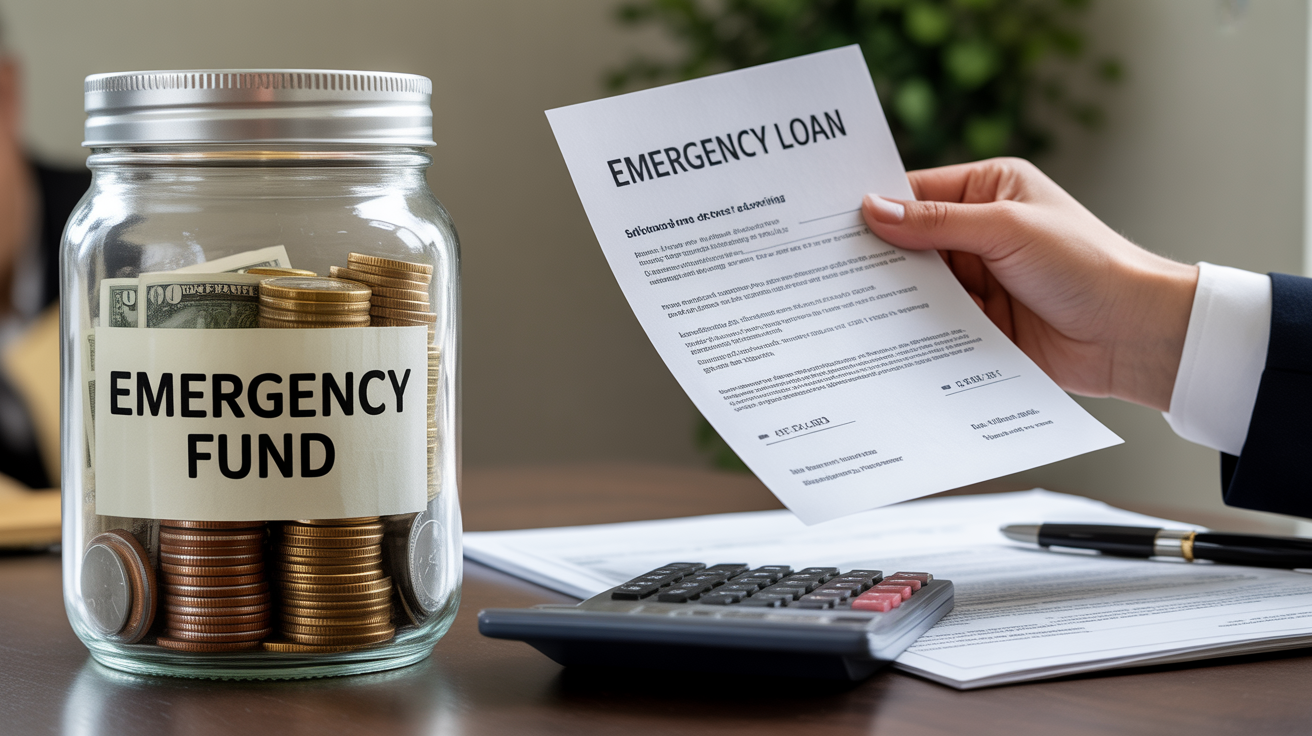
When a bill or crisis lands all at once, the right move is usually to use savings first and borrowing second. A good emergency decision protects today’s problem without creating a bigger one next month.
If you want a broader borrowing overview after this comparison, see when emergency loans make sense.
Best default
Use an emergency fund first if you have one. Borrow only when the expense is urgent, the savings gap is real, and the repayment fits your budget.
Which Should You Use First?
In most cases, the emergency fund comes first because it solves the problem without interest, fees, or a new monthly payment. An emergency loan is a backup option when savings are not enough and the cost is still manageable after the crisis passes.
| Factor | Emergency fund | Emergency loan |
|---|---|---|
| What it is | Money you already saved for shocks | Money borrowed to cover an urgent need |
| Direct cost | Usually no interest or fees | Interest and possible fees |
| Repayment | No repayment required | Must be repaid on schedule |
| Speed | Immediate if the money is accessible | Fast in some cases, but approval may take time |
| Best fit | True emergencies you can cover from cash reserves | Urgent expenses with a repayable shortfall |
A Simple Decision Rule
Use the fund
The expense is essential, the cash is available, and using savings will not leave you unable to cover basic bills.
Use a loan
You have a real emergency, the fund is short, and you can still handle the loan payment after essentials.
Avoid both for now
The expense is not urgent, the borrowing cost is unclear, or repayment would threaten rent, food, utilities, or other essentials.
What An Emergency Fund Is For
An emergency fund is a dedicated cash reserve for surprises such as medical bills, urgent car repairs, job disruption, or essential home expenses. Its job is liquidity: the money should be available quickly, but separate from normal spending so it is not drained casually.
How much should you keep?
A common rule of thumb is three to six months of essential expenses, but the right number depends on your income stability, household size, debt, and monthly must-pay costs. Start with essentials only: housing, utilities, groceries, insurance, transportation, and minimum debt payments.
If you are building your cushion from scratch, a practical place to start is a simple budgeting plan like this beginner budgeting guide so the savings target is realistic instead of guesswork.
What To Know Before You Borrow
Emergency loans are borrowing products used when cash is not available right away. They can be useful when the problem is time-sensitive, but they come with trade-offs: interest, fees, and pressure to repay on a fixed schedule.
The most important question is not just whether money arrives fast. It is whether the payment will still fit your budget once the emergency is over.
Common products people compare include:
- Personal Loans with fixed installment payments in many cases
- Cash Advances that can be quick but often expensive
- Credit Card Cash Access that may cost more if it is not repaid quickly
- Short-Term High-Cost Loans that can be risky in a strained budget
For a closer look at borrowing options, compare personal loans versus a personal line of credit before deciding what kind of backup, if any, fits your situation.
When Borrowing Makes Sense, And When It Does Not
Borrowing may be reasonable when
- The expense is essential and time-sensitive.
- Your savings cannot cover the full amount.
- The repayment still fits after basic bills.
- You have compared lower-risk options first.
Borrowing is a bad fit when
- You do not know the total cost.
- The payment would crowd out essentials.
- You are already behind on other bills.
- You are using new debt to cover unstable old debt.
How To Build Or Rebuild The Fund
The best emergency strategy is not only saving once, but replenishing quickly after you use the money. That keeps the next crisis from turning into a borrowing decision by default.
- Set a target based on essential monthly costs.
- Automate transfers so the fund grows without friction.
- Pause non-essential spending while you rebuild.
- Use windfalls to refill the cushion faster.
- Reset the goal after every withdrawal.
If You Need A Borrowing Next Step
If savings won’t cover the shortfall, choose the least risky option you can realistically repay.
Start with the broad borrowing guide, then compare terms carefully before you decide whether a personal loan, line of credit, or another short-term option makes more sense.
Common Questions
Is An Emergency Fund Always Better Than An Emergency Loan?
Usually yes. Savings are the lower-risk first choice because they do not add interest or a future payment obligation.
What If My Emergency Fund Is Not Enough?
Use what you can from savings, then compare borrowing options based on total cost, payment size, and how urgent the expense really is.
Should I Empty My Emergency Fund Before Borrowing?
Not always. Some people keep a small buffer and borrow only the gap, especially if more uncertainty could follow soon.
How Much Should I Aim To Save First?
A useful starting point is a small buffer, then a larger target that covers several months of essential expenses.

Oliver Pearson is a dedicated writer at QuickLoanPro, where he explores a wide range of general topics, focusing on financial literacy and innovative lending solutions. With a keen eye for detail and a passion for empowering readers, Oliver simplifies complex financial concepts, making them accessible to all. His ability to engage audiences with informative and relatable content has established him as a trusted voice in the financial writing community.



This is an important discussion, particularly as many of us navigate uncertain financial waters. I completely resonate with the idea that an emergency fund should be leveraged first in times of crisis. Having that cushion feels like a safety net made up of our past diligent savings—it’s money we’ve worked hard to set aside, and using it first can prevent us from falling into a debt cycle that’s hard to escape.
It’s interesting to see the emphasis on using savings first in emergency situations. I’ve been in a tough spot before where unexpected expenses cropped up, and I remember how stressed I was about dipping into my emergency fund. On one hand, it felt like I was erasing my safety net, but on the other hand, it was better than the alternative of tackling a debt with interest looming over me.
This post raises some crucial points about emergency planning and the importance of prioritizing savings over borrowing. I’ve often found myself in situations where I had to weigh the immediate relief of borrowing against the longer-term implications of that decision.
This is a really practical take on handling emergencies. I’ve personally faced the dilemma of whether to dip into savings or take out a loan when unexpected expenses hit. I remember a couple of years ago when my car broke down right before I was about to head out of town for a family event. I had to weigh my options: I could either drain my meager emergency fund, or I could look for a quick loan.
This is such a vital topic, especially in today’s unpredictable financial landscape. I’ve found that relying on my emergency fund first not only alleviates immediate pressure but also fosters a sense of security. A couple of months ago, I faced a sudden car repair expense that threatened to derail my budget. Using my emergency savings meant I could address the issue without the stress of looming debt.
You bring up such an important and often overlooked aspect of personal finance. It struck me while reading your post that many people don’t even think about emergency funds until they’re in the middle of a crisis. I’ve definitely been there—scrambling to figure out how to handle an unexpected car repair or medical bill, all while feeling the weight of financial pressure.