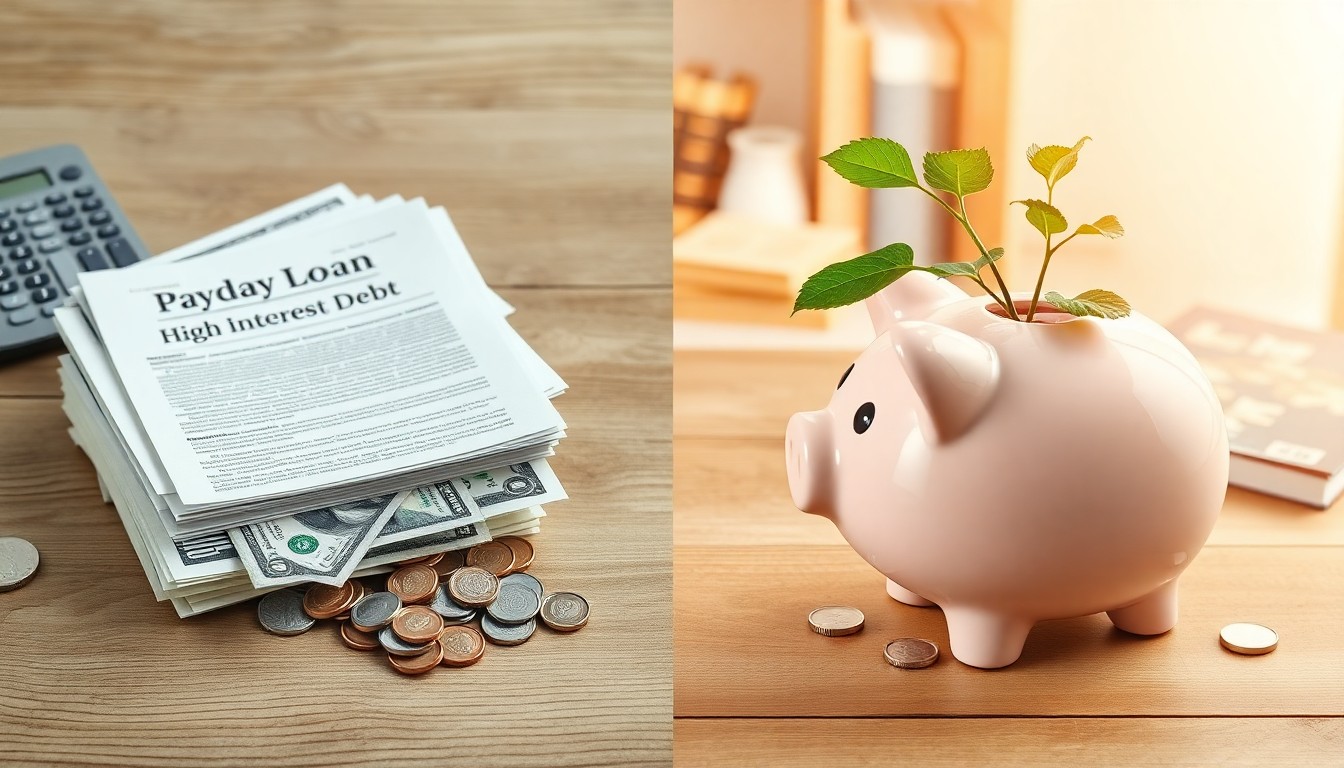
Replacing payday loans with savings is not about perfection; it is about building enough cash flow and cushion to avoid the next expensive borrow-and-repay cycle. If you want the broader planning framework alongside this savings-first approach, start with payday-loans-essential-strategies-for-financial-planning and use this page to turn that plan into a savings habit.
What changes first
A payday loan solves a cash gap for a few days or weeks. Savings solve the same gap without adding fees, APR, or repayment pressure.
- Start with a small automatic transfer, even if it is only $10 to $25 a pay period.
- Keep the first savings goal practical: one bill, one repair, or one week of essentials.
- Use the emergency fund only for true shocks, not routine spending.
- If debt already exists, pair savings with a repayment plan so you do not create a new emergency while fixing an old one.
Payday Loan Vs. Savings: The Real Tradeoff
The best replacement for a payday loan is not another short-term borrowing product unless the situation is truly unavoidable. In most cases, a small savings buffer is cheaper, safer, and easier to reuse the next time life gets expensive. For readers comparing options, payday-loans-and-their-impact-on-your-savings adds useful context on why repeat borrowing erodes financial progress.
| Option | Cost | Speed | Risk | Long-term result |
|---|---|---|---|---|
| Payday loan | High fees and high APR can make a small loan cost much more than the cash you received. | Fast, usually same day or next day. | High. Missed repayment can trigger rollovers, extra charges, and stress. | Often repeats the cash shortage and can damage credit and stability. |
| Savings | No borrowing cost when the money is already set aside. | Slower to build, but instant to use once the fund exists. | Low. The main risk is not saving enough or spending it too early. | Builds resilience and reduces future borrowing pressure. |
| Emergency fund plus budget | Requires discipline, not interest. | Builds over time with automatic deposits. | Low to moderate, depending on job stability and spending habits. | Best long-term path for replacing repeat payday borrowing. |
A Practical Savings-First Replacement Plan
The most effective way to leave payday loans behind is to make savings automatic, visible, and easy to maintain. You do not need a perfect budget to begin; you need a repeatable system that protects a small amount of money before it disappears into everyday spending.
1. Pick a starter goal
Aim for one small emergency buffer first: $250, one utility bill, or one repair estimate.
2. Automate the transfer
Move money to savings right after payday so the decision is made once, not every week.
3. Protect the fund
Keep it separate from checking so routine spending does not absorb the balance.
4. Rebuild after use
If you spend from savings, return to the automatic transfer immediately.
Start With Amounts You Can Keep
Small contributions matter because they create consistency. Saving $15 twice a month is more useful than promising $100 and stopping after one pay cycle. A sustainable habit also makes it easier to increase contributions later when you find extra room in the budget.
Use Budgeting To Create Spare Cash
A savings-first plan works best when you know where your money goes. Review fixed bills, variable spending, and recurring subscriptions, then cut one or two items you do not truly need. If you want a deeper budgeting framework, the article on common-budgeting-mistakes-draining-your-wallet-save-more-now pairs well with this recovery approach.
How To Build The Emergency Fund That Keeps You Out Of Repeat Borrowing
The goal is not just to save once. The goal is to create a buffer that replaces the old habit of using payday loans for every surprise expense. A strong emergency fund should be easy to access, clearly reserved for emergencies, and large enough to absorb the kind of expenses that normally trigger panic borrowing.
Emergency-fund targets by stage
| Stage | Goal | Why it helps |
|---|---|---|
| Starter fund | $250 to $500 | Handles a small bill, copay, or repair without a loan. |
| Intermediate fund | One month of essentials | Covers a bigger interruption in income or a chain of expenses. |
| Full cushion | Three to six months of essentials | Reduces the odds of turning to high-cost borrowing during a major setback. |
A savings account for emergencies should be accessible, but not so easy that you spend it casually. Many people use a separate high-yield savings account or a money market account so the money stays visible and earns a modest return. That approach also fits well with the recovery ideas in financial-recovery-plans-for-payday-loans-your-essential-guide.
Use The Fund For Emergencies, Not Leaks
True emergencies are the kinds of expenses that are urgent, necessary, and hard to absorb from the regular budget: job loss, car repair, medical costs, or an essential household problem. Planned purchases, vacations, shopping, and convenience spending belong in a different bucket.
When Savings Should Replace Borrowing, And When You Need A Backup Plan
Savings should be the first line of defense for recurring emergencies and predictable surprises. If you are already stuck in debt, though, the better move may be to combine savings with a repayment strategy so one problem does not create another. The broader debt-recovery path in payday-loan-steps-for-achieving-financial-freedom is a useful next read once you have the emergency-fund basics in place.
A simple decision rule
- If the expense is small and predictable, save for it before it happens.
- If the expense is urgent but not life-threatening, use the emergency fund first.
- If the emergency fund is empty, cut nonessential spending immediately and rebuild from the next paycheck.
- If debt payments are crowding out savings, focus on the smallest workable buffer before expanding to larger targets.
Ways To Free Up Cash Without Making A New Loan
Many people assume they cannot save until income rises. In practice, most savings plans start by re-routing money that is already being spent. Even a few small changes can create enough room to begin an emergency fund and reduce the odds of reaching for a payday loan later.
Trim Recurring Spending
Review subscriptions, delivery charges, and premium plans. Cancel or downgrade anything that does not support your daily life.
Redirect Windfalls
Put tax refunds, bonuses, overtime, and gifts into savings before they disappear into routine spending.
Sell What You Do Not Use
Unused electronics, clothing, furniture, or tools can become the first deposit to your fund.
Add Flexible Income
A small side hustle or gig shift can speed up savings when the budget is too tight to absorb shocks.
What To Do If Payday Loans Already Created The Problem
If you are already caught in payday-loan repayment, the savings habit still matters, but your first goal may be stability rather than a big emergency fund. Build a tiny buffer while you work the debt down so any new shock does not force another loan. For more direct damage control, payday-loans-ruin-credit-key-steps-for-recovery is a helpful companion article.
If the payment cycle is overwhelming, use a structured approach: list every due date, prioritize the highest-cost debt, and preserve enough cash for essentials. That is often the fastest way to stop the cycle from spreading into late fees, overdrafts, and renewed borrowing. When a loan has already been repaid, the best next move is to preserve the extra room you just created by sending part of it directly into savings each pay period.
Build the plan, then keep it simple
A savings-first strategy works when it is easy to repeat. Pick a starter goal, automate the transfer, and protect the account from everyday spending. If you need the broader financial roadmap that connects savings with debt management and expense control, visit payday-loans-essential-strategies-for-financial-planning next.
The long-term win is not only avoiding one payday loan. It is building a routine that makes the next emergency manageable without panic, rollovers, or expensive short-term borrowing.
Frequently Asked Questions
What Is The Best Alternative To A Payday Loan?
For most people, the best alternative is a small emergency fund paired with a budget, because it solves the cash gap without creating new debt.
What To Do Instead Of A Payday Loan?
Use savings first if you have it, then look at a budget cut, a payment extension, a credit union option, or help from family before you borrow high-cost cash.
What Is A Flipper Loan?
A flipper loan is a short-term loan that is often rolled over repeatedly, which can make the original balance much more expensive over time.
Are There Payday Loan Alternatives?
Yes. Common alternatives include emergency savings, credit union small-dollar loans, negotiated payment plans, and short-term help from community resources.

Megan Hannford is an insightful author at QuickLoanPro, where she explores a diverse array of general topics related to finance, personal development, and lifestyle. With a passion for empowering readers through accessible information, she distills complex concepts into engaging content that resonates with a wide audience. Megan holds a degree in Communications and brings her expertise in writing and research to create valuable resources that guide individuals toward informed financial decisions.



Your exploration of the realities surrounding payday loans is both timely and necessary. I find it particularly insightful how you highlight the initial appeal of these loans, juxtaposed with the crushing long-term consequences for many borrowers. As someone who has seen friends and family struggle with debt from payday loans, I can personally attest to the reality of falling into a vicious cycle that seems almost impossible to escape.
It’s really striking how you’ve captured the dual nature of payday loans—the initial appeal versus the long-term fallout. This contradiction is definitely something many don’t see until they’re deep in it. I’ve had friends go through similar struggles, and it can feel like such a trap.
I recently came across an article that offers a thoughtful perspective on breaking free from the payday loan cycle by focusing on building savings instead, and I think it could really resonate with anyone who’s seen the struggles you’ve described.
‘Replace Payday Loans With Savings: A Smarter Financial Plan’
https://quickloanpro.com/payday-loans-and-savings-plans-a-wise-financial-approach/.
You’ve made some excellent points about the hidden dangers of payday loans. It’s striking how they’re marketed as quick solutions, yet they can ensnare borrowers in cycles of debt that feel impossible to escape. I remember encountering a friend who took out a payday loan to cover a car repair; what started as a seemingly manageable amount quickly escalated into a financial nightmare. The interest rates are often predatory, and without proper understanding, individuals can end up borrowing more just to cover the original debt.
Your exploration of payday loans really sheds light on a pressing issue that many face, often in silence. I’ve seen friends and family caught in that cycle of debt, and it’s heartbreaking to witness how one seemingly small financial decision can snowball into a major crisis. It reminds me of the broader conversation about financial literacy that is so critical in today’s society.
You bring up such a crucial point about the dangers of payday loans. I’ve seen friends get into these situations, thinking they’re making a short-term solution, only to find themselves in a long-term spiral of debt. It’s like they’re buying temporary relief with a heavy toll down the road.
This perspective on replacing payday loans with a savings-first approach truly resonates with me. It’s so easy to fall into the trap of relying on quick fixes when faced with financial stress, but shifting that mindset to building a cushion really does create a more sustainable path forward.
Your thoughts on the shift from payday loans to a savings-first approach really highlight something important: it’s all about perspective and mindset. Many people find themselves caught in a cycle of relying on quick fixes, especially when life throws unexpected expenses our way. It’s almost a knee-jerk reaction to seek out immediate relief, but that can leave us in a tough spot down the road.
This is a truly insightful perspective on the importance of fostering a savings habit as a way to break free from the cycle of payday loans. It’s a reminder that financial health isn’t just about managing debt; it’s about cultivating positive, proactive habits that lay the groundwork for long-term stability and peace of mind.
You raise an important point about the role of positive financial habits. It’s easy to focus on the immediate pressures of managing debt, but developing a savings habit can provide a crucial buffer against unforeseen expenses. Even small, regular contributions to savings can create a sense of security and reduce reliance on high-cost loans.
Thank you for your kind words! If you’re interested in more strategies for building healthy financial habits, I invite you to check out this helpful resource.
https://quickloanpro.com/payday-loans-harvey-la
Your emphasis on replacing payday loans with a savings-first strategy really resonates with me. It’s a refreshing approach to tackling financial stress. I’ve seen how a small automatic transfer can accumulate over time—after starting with just $10 from my paycheck, I gradually increased it as I became more comfortable. In just a few months, I had enough to cover an unexpected car repair, which took a huge weight off my shoulders.
I really resonate with the idea that building savings is a way to create a financial cushion rather than relying on payday loans. This approach not only helps you avoid high fees and stress but also fosters a sense of security. I’ve tried setting aside just $15 from each paycheck, and it’s surprising how quickly it adds up! It feels empowering to have even a small buffer for those unexpected expenses.