Bathroom Remodel Financing: Personal Loans vs HELOCs, Credit Cards & Cash
The best way to finance a bathroom remodel depends on how much the project will cost, how quickly you need the money, whether you have home equity, and how comfortably you can repay the financing. A personal loan can be attractive when you want a lump sum and predictable installment payments without using your home as collateral, while a HELOC or home equity loan may fit homeowners with sufficient equity who are comfortable securing the debt with their property.
Important: This guide provides general educational information and is not individualized financial advice.
QuickLoanPro helps consumers understand personal loan options and connect with participating lenders. Approval, rates, APR, fees, loan amounts, and repayment terms depend on the lender and the applicant’s financial profile.
What is the best way to finance a bathroom remodel?
There is no single best financing method for every remodel. The right choice depends on the size of the project and your financial situation. For a defined project where you know approximately how much you need, an unsecured personal loan may provide a straightforward lump sum and structured monthly repayment. A HELOC can be more flexible when project costs are uncertain, while cash may be the lowest-cost solution when using it does not leave you without adequate emergency reserves.

| Financing option | Best suited for | Main trade-off |
|---|---|---|
| Personal loan | Defined project cost and predictable repayment | Rate depends on credit and lender terms |
| HELOC | Projects with changing or phased costs | Your home secures the debt and rates may vary |
| Home equity loan | Larger project with a known cost | Your home is collateral |
| Credit card | Smaller expenses repaid quickly | Revolving debt can become expensive |
| Cash / savings | Homeowners with sufficient reserves | Reduces your available cash buffer |
How much should you plan to finance?
Start with the project scope, not the maximum amount you can borrow
Before comparing lenders, create a realistic project budget. The amount you can qualify for and the amount you should borrow are two different numbers. Financing should be based on the work you actually expect to complete.
A bathroom remodel budget may include:
- contractor and skilled labor costs,
- tile, flooring, fixtures, vanity, and cabinetry,
- plumbing and electrical work,
- permits and inspections when required,
- demolition and disposal,
- delivery and installation charges,
- a contingency amount for issues discovered after work begins.
For the budgeting side of the decision, see the Beginner’s Guide to Budgeting Finances.
When does a personal loan make sense for a bathroom remodel?
A personal loan may fit a bathroom remodel when you know approximately how much the project will cost and prefer not to borrow against your home’s equity. Personal loans commonly provide funds as a lump sum, followed by scheduled installment payments over an agreed term.

A personal loan can be worth comparing when:
- you want financing without pledging your home as collateral,
- you have a contractor estimate or reasonably defined project budget,
- you prefer a structured repayment schedule,
- you want to fund the project without draining all of your savings,
- the offered APR and monthly payment fit comfortably within your budget.
Learn more about personal loans and how personal loans work step by step.
How is a personal loan different from a HELOC or home equity loan?
The most important difference is collateral. An unsecured personal loan does not normally use your home as security. A HELOC or home equity loan is secured by the equity in your property.
A home equity loan generally provides a lump sum. A HELOC works more like a reusable line of credit that can be drawn from during a specified period. According to the Consumer Financial Protection Bureau, both use the home’s equity as collateral, and failure to repay can place the property at risk.
Official consumer guidance:
CFPB: Home Equity Loan vs. HELOC.
Practical distinction
A personal loan exchanges potential home-equity pricing advantages for the simplicity of unsecured borrowing. A home-equity product may offer different pricing, but it also places your home behind the obligation. Compare total cost and risk, not only the monthly payment.
Can you use a credit card to finance a bathroom remodel?
A credit card can work for a smaller remodel component or individual purchases that you expect to repay quickly. The main risk is allowing a short project expense to turn into long-term revolving debt.
For a larger remodel, compare the card’s APR and payoff timeline against a structured personal or installment loan. A predictable monthly payment can make project costs easier to integrate into a household budget.
How should you compare bathroom remodel financing offers?
Compare total borrowing cost, not just the advertised rate
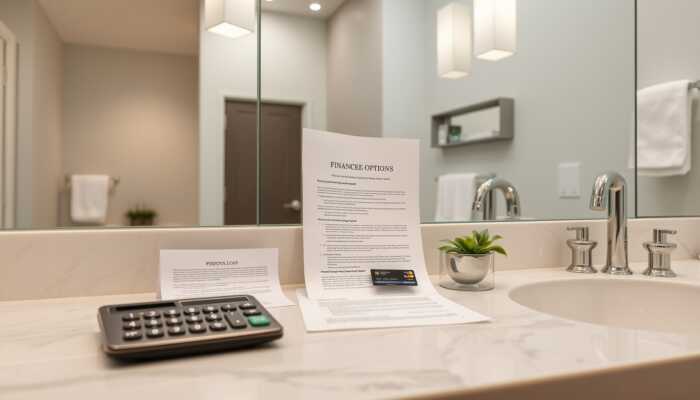
Financing decisions should be based on the entire repayment structure. Two offers with similar monthly payments can have very different total costs.
- APR: use it to compare borrowing costs more consistently.
- Loan term: a longer term can lower the payment while increasing the amount of time you pay interest.
- Origination and closing costs: determine which fees apply before accepting financing.
- Monthly payment: confirm that it fits after your essential household expenses.
- Collateral: understand whether the loan is secured by your home or another asset.
- Variable versus fixed pricing: understand whether the rate or payment can change.
QuickLoanPro’s Rates and Fees page explains the cost information borrowers should review, while Responsible Lending covers broader borrowing considerations.
How does your credit profile affect bathroom remodel financing?
Credit history can influence which financing options are available and the terms a lender may offer. Income, existing debt, loan amount, and other underwriting factors can also matter.
Checking your credit before seeking financing can help you understand what lenders may see and gives you time to identify errors or reduce expensive revolving balances.
Related guide: Should You Review Your Credit Score Now?
What should you do before applying for a bathroom remodel loan?
- Get a realistic project estimate. Separate essential work from optional upgrades.
- Determine how much cash you can contribute. Avoid unnecessarily financing the entire project.
- Choose the type of financing to compare. Personal loan, HELOC, home equity loan, card, contractor financing, or cash can solve different problems.
- Review your credit and monthly budget.
- Compare APR, fees, payment size, term, and total repayment.
- Borrow only the amount needed for the planned project and contingency.
What if the bathroom remodel goes over budget?
First separate unexpected essential work from optional upgrades. A plumbing problem discovered behind a wall is different from deciding mid-project to upgrade every fixture.
Before borrowing more, ask whether part of the project can be deferred, whether the contractor can change the scope, and how another loan or draw would affect the total monthly payment.
The goal is not simply to finish the remodel. It is to finish it with a repayment obligation your household can sustain.
Bathroom Remodel Financing FAQs
Can I use a personal loan for a bathroom remodel?
A personal loan can often be used for home improvement expenses, including bathroom renovation, subject to the lender’s permitted uses and your loan agreement.
Is a personal loan or HELOC better for a bathroom remodel?
A personal loan may suit a defined project when you want unsecured financing and predictable installments. A HELOC may suit a project with changing costs when you have sufficient home equity and accept the risks of home-secured borrowing.
Should I finance the entire remodel?
Not necessarily. Using some cash can reduce the amount of interest-bearing debt, provided doing so does not leave your household without an adequate financial buffer.
Is a longer loan term better because the monthly payment is lower?
A lower payment can improve monthly affordability, but a longer repayment period can also keep the debt outstanding longer. Compare both the monthly payment and total repayment.
What should I compare before choosing bathroom remodel financing?
Compare APR, fees, repayment term, monthly payment, total repayment, approval requirements, funding speed, and whether the financing uses your home or another asset as collateral.

Megan Hannford is an insightful author at QuickLoanPro, where she explores a diverse array of general topics related to finance, personal development, and lifestyle. With a passion for empowering readers through accessible information, she distills complex concepts into engaging content that resonates with a wide audience. Megan holds a degree in Communications and brings her expertise in writing and research to create valuable resources that guide individuals toward informed financial decisions.



You’ve raised some compelling points about financing options for bathroom renovations. I’ve often found that the choice between personal loans, HELOCs, and credit cards can feel overwhelming, especially with the unique financial landscape we’re navigating today.