
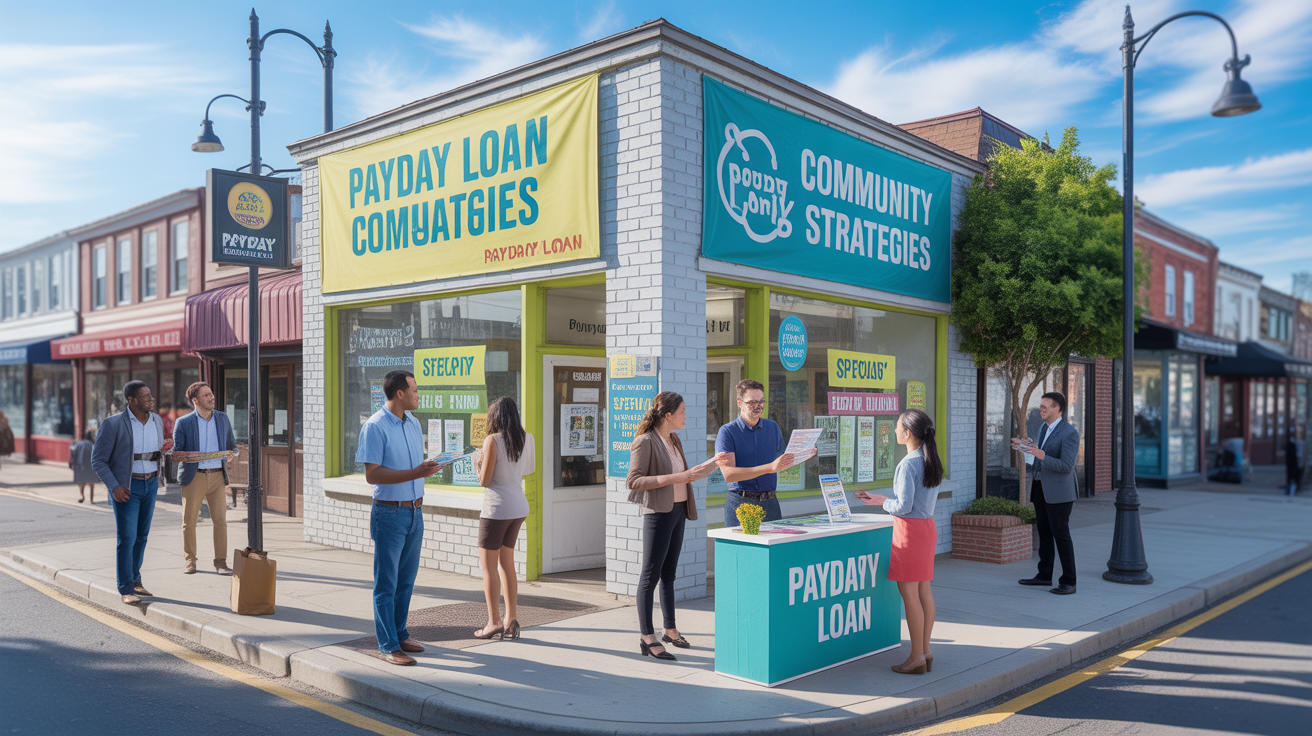
If your payday loan business serves a specific city or parish, local visibility is won with a short list of moves done well: a complete business profile, location-specific pages, strong reviews, and search terms tied to real neighborhoods. For broader strategy context, see the main payday loan marketing guide.
What matters most first
For lenders, the best local SEO order is: Claim And Polish Your Profile, Match Your Location Page To The Service Area, Target High-Intent Local Keywords, then Build Reviews And Local Proof. If you only have time for one pass, start with your business listing and your nearest-location page.
Local Visibility Checklist For Payday Loan Lenders
The strongest local marketing approach is not to scatter effort across every channel. It is to build a visible, trustworthy local footprint that makes your business easy to find, easy to contact, and easy to compare against nearby competitors. That means your Google Business Profile, location page, reviews, and local keywords should all tell the same story.
| Local tactic | Best use | What it helps most | Priority |
|---|---|---|---|
| Google Business Profile | Businesses with a physical or service-area presence | Map visibility, calls, directions, hours, trust signals | Highest |
| Location pages | Multi-location or city-specific service areas | Organic rankings, local relevance, conversion clarity | Highest |
| Local keyword research | Pages and content aimed at nearby searchers | Relevance for “near me,” city, and neighborhood searches | High |
| Reviews and responses | Reputation building and conversion support | Trust, click-through rate, call confidence | High |
| Local citations | Consistency across directories and listings | Address/phone consistency and local validation | Medium |
Build The Listing First, Then The Local Proof
A complete Google Business Profile remains the fastest way to establish local presence. Use the exact business name, accurate address, main phone number, hours, and website URL. Keep every detail identical wherever your business appears online. Even small mismatches can weaken trust and create friction for users deciding whether to call or visit.
Photos matter too, but the goal is not to decorate the profile. Add clear storefront images, team photos, and a few current images that show the business is active. If you run promotions or publish updates, use posts sparingly and only when they add genuine value. That gives searchers a better reason to choose your location over a nearby competitor.
Review management is the next layer. Encourage happy customers to share feedback, then reply to both praise and concerns in a calm, professional tone. That interaction helps your local reputation and signals that the business is attentive. For more on the broader marketing side of that reputation work, paid search strategy often works best when it sends traffic to a strong local page and a well-managed profile.
A Practical Local SEO Order Of Operations
- Claim and fully verify your business profile.
- Make sure your contact details match across your website and directory listings.
- Build one strong location page for each real service area.
- Target city, neighborhood, and “near me” search phrases that match demand.
- Collect reviews consistently and respond to them.
- Support it all with useful local content and a few relevant citations.
Use Local Keywords That Match Real Borrower And Lender Intent
Local keyword research should stay close to how people actually search. For a lender, that usually means combinations of service plus location, such as city names, neighborhoods, parish names, and “near me” phrasing. Terms like “payday loans in [city]” or “emergency cash in [area]” are more useful than broad phrases that could attract mixed intent.
Do not just stuff keywords into page copy. Put them where they help readers decide: titles, headers, location pages, meta descriptions, FAQs, and page copy that explains where you serve customers. The original article’s keyword list was directionally right, but this narrower approach reduces overlap with broader marketing content and gives each page a cleaner job.
If your business serves more than one area, build the page structure around location-specific pages rather than one oversized catch-all article. That is usually stronger for local search and easier for users to scan. When you are planning that structure, the broader content framework in content strategy for payday loan marketing can help you decide which topics deserve their own page and which should stay supporting material.
When To Refresh Local SEO
| Monthly | Check hours, photos, posts, and unanswered reviews. |
| Quarterly | Review keyword targets, page titles, and citation consistency. |
| Seasonally | Update offers, local content, and service-area pages around demand changes. |
What To Avoid
- One page that tries to cover every city and every service.
- Borrower-focused advice that distracts from lender visibility.
- Duplicate business details across multiple listings.
- Reviews without responses or follow-up.
- Generic “SEO tips” that never mention the actual service area.
Community Tactics That Support Local Visibility
The original post spent a lot of time on sponsorships, charities, workshops, and local business partnerships. Those ideas still matter, but they work best when they support local search rather than replace it. A sponsorship or community workshop can generate mentions, backlinks, reviews, and brand familiarity, but only if it is tied back to a clearly maintained local presence online.
Use these tactics as proof points. Sponsor a local event when it also gives you a real chance to meet nearby customers. Partner with a neighboring business when the collaboration produces a local citation, a referral path, or a useful content mention. Host a workshop only if you can turn that event into on-site photos, a listing update, a post, or a neighborhood page that supports search visibility.
This is also where email, social, and local media fit in. They are not separate strategies; they are reinforcement channels. A social post that points to your location page, a local mention in a newspaper article, or a radio sponsorship that sends people to the right city page all support the same goal: make the lender easier to find locally and easier to trust once found.
Before You Spend On Local Promotion, Tighten The Page That Converts The Click
A local campaign works better when the website and profile already answer the basics: where you are, who you serve, when you are open, and how to contact you. Start with your location page, then compare it with the broader marketing roadmap.
A Focused Local Plan For The Next 30 Days
If you want a usable plan instead of a long list of ideas, keep the next month simple. Week one should fix your profile and make sure all business details match. Week two should sharpen your location page and confirm the page speaks the language of the area you actually serve. Week three should build review requests and response habits. Week four should tighten citation consistency and identify one content piece or local partnership that can produce a real mention or link.
For broader campaign choices like paid search or social, keep the local page in view so traffic has somewhere relevant to land. That keeps the local guide in its lane and avoids competing with the broader marketing content already handled elsewhere in the cluster.
Frequently Asked Questions

Jacob Harrison is a dynamic author specializing in a broad range of topics for QuickLoanPro. With a keen eye for detail and a passion for making financial concepts accessible, he helps readers navigate the complexities of personal finance, loans, and budgeting. Jacob’s insightful articles aim to empower individuals with the knowledge they need to make informed financial decisions, blending informative content with practical advice. Through his engaging writing style, he strives to connect with audiences, providing them with valuable resources for their financial journeys.



Ah, the classic payday loan business dilemma! Kind of like trying to find a decent loaf of bread in a city full of gluten-free bakeries. Your tips here are like a treasure map for any lender trying to avoid becoming a ghost in the local SEO cemetery.
This post highlights crucial steps for payday loan businesses to enhance their local SEO, and I appreciate the emphasis on a well-rounded approach. One aspect that particularly resonates with me is the importance of reviews and local proof—these elements can significantly influence consumer trust in this industry. For instance, I’ve seen local businesses in other sectors, like restaurants, thrive by actively engaging with customer feedback and showcasing testimonials prominently.