Borrowing comparison
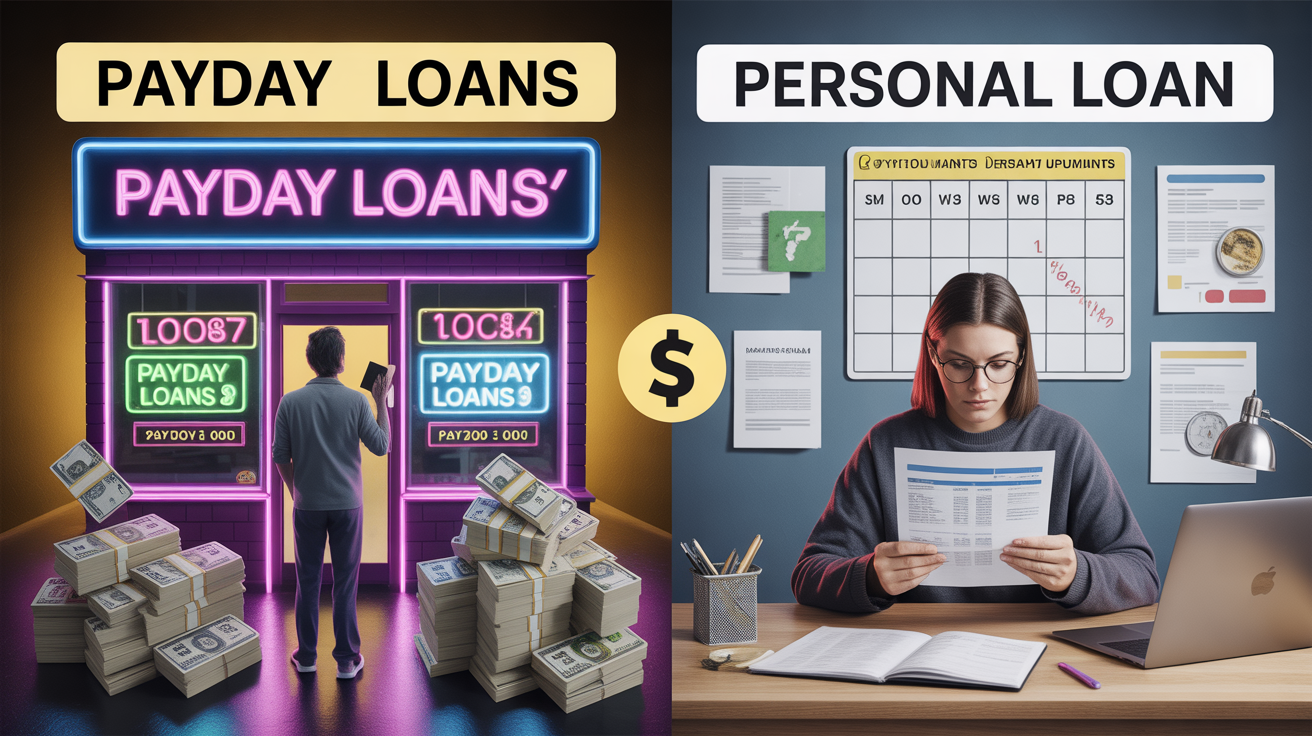
For beginners, personal loans are usually the safer and cheaper choice. Payday loans can be faster, but they typically cost much more and are harder to repay without stress.
If you want the wider borrowing context, start with personal loans as a smarter alternative to payday borrowing. This guide focuses on the decision itself: which option is safer, cheaper, and more realistic for a first-time borrower?
The Quick Verdict
If you can qualify, a personal loan is usually the better fit. It gives you fixed payments, a longer repayment term, and a much lower chance of getting trapped in repeat borrowing. Payday loans are built for access and speed, not affordability.
That does not mean every personal loan is automatically a good deal. If your need is truly tiny, immediate, and you know exactly how you will repay it on time, a payday loan may look convenient. Even then, many borrowers are better served by the broader set of options covered in this guide to payday-loan alternatives.
Best beginner rule:
Choose a personal loan if you want lower cost, predictable payments, and possible credit-building benefits. Only think about a payday loan if you have no better option, need cash immediately, and can repay the full balance on your next payday without borrowing again.
Decision Checklist
- Can you repay the full amount in 2 to 4 weeks?
- Would a fixed monthly payment be easier to manage?
- Is your credit strong enough for a personal loan?
- Do you need more than a few hundred dollars?
- Would a lower APR make a real difference to your budget?
Choose A Personal Loan If…
- you want lower borrowing costs,
- you need a structured repayment schedule,
- you care about building or maintaining credit,
- you are financing a larger expense, or
- you want to avoid rollover risk.
Only Consider A Payday Loan If…
- the amount is small,
- the expense is urgent,
- you are certain you can repay in full on time,
- you have already checked lower-cost alternatives, and
- you understand the total fee before signing anything.
Why The Cost Difference Matters So Much
The biggest reason personal loans usually win is simple: borrowing costs. Payday loans may look cheap at first because the fee is framed as a small dollar amount, but the short repayment window makes the effective annual cost extremely high. A small loan can become expensive very quickly.
Personal loans work differently. Instead of repaying everything at once, you make fixed monthly payments over a longer period. That spreads the cost out and usually reduces the pressure on your budget. For many beginners, the difference between a single lump-sum repayment and a predictable monthly payment is the difference between control and financial strain.
A helpful way to think about it is this: payday loans solve a timing problem, while personal loans solve a borrowing problem. If your issue is just that your paycheck arrives after a bill is due, a payday loan can look like a bridge. But if the real issue is that you need money you can repay responsibly, the personal-loan structure is usually more sustainable.
What A Small Loan Can Really Cost
If you borrow a few hundred dollars through a payday loan, the main question is not just whether you can get approved. The real question is how much you will have to repay once fees are added and how quickly that payment will hit your checking account. For many borrowers, the full balance comes due before their finances have recovered from the original emergency.
A personal loan may still cost money in interest, but it is usually far easier to absorb into a normal monthly budget. That predictability is one of the main reasons the comparison tends to favor personal loans unless speed is the only thing that matters.
Eligibility: Easier To Get Is Not The Same As Better
Payday loans are often easier to qualify for because lenders rely heavily on proof of income and an active bank account rather than a strong credit profile. That is exactly why they appeal to people with poor credit or no credit history. In some cases, benefits income may also count, which can widen access further.
Personal loans are stricter. Lenders usually look at your credit score, income, existing obligations, and overall repayment capacity before approving the loan. At first glance, that can feel less convenient. But the stricter process exists because the loan is meant to be repaid over a longer period and at a more manageable rate. In other words, the screening is often what keeps the loan from becoming unaffordable later.
If you are worried that your credit is too weak for a personal loan, you are not alone. That is where emergency loans and short-term relief options can help you think through the broader picture, because not every short-term need should be handled with the same product.
How Each Loan Affects Your Credit
Credit reporting is another major difference. Payday lenders often do not report regular on-time payments to the major credit bureaus. That means a payday loan usually does not help your score even if you repay it successfully. If the loan goes unpaid, however, the debt may be sent to collections, which can damage your credit.
Personal loans are more likely to be reported to credit bureaus such as Experian, TransUnion, and Equifax. That creates both opportunity and risk. On-time payments can support your credit history, while missed payments can hurt it. For borrowers who want to improve their profile over time, the reporting structure of a personal loan is usually more useful than the silent status of a payday loan.
If you want a follow-up on what can happen when high-cost borrowing starts affecting your score, this recovery guide for payday-loan credit damage is a practical next read.
Repayment Structure Is Where Borrowers Get Trapped
Repayment is the point where the comparison becomes most important. A payday loan is designed to be repaid in a very short period, usually by your next paycheck. That creates an intense deadline. If money is already tight, the loan can force you to choose between paying it back and covering essentials like rent, groceries, fuel, or utilities.
When the balance cannot be repaid on time, borrowers are often offered a rollover or another short-term extension. That can feel helpful in the moment, but the extra fees can quickly create a borrowing loop. People who intended to solve a one-time problem sometimes end up paying for the same loan repeatedly.
Personal loans reduce that pressure by giving you a set number of months or years to pay. The payment is usually the same each month, which makes it much easier to plan ahead. If you are trying to avoid surprises, this predictable structure is a major advantage. It also makes the personal loan a more realistic fit for debt consolidation or planned expenses, because the repayment schedule works with your budget instead of against it.
A beginner should ask one simple question before borrowing: will this payment create room to breathe, or will it make the next month harder? If the answer is the latter, the loan may be too expensive for the problem it is meant to solve.
What Makes A Personal Loan Safer?
A personal loan is usually safer because the repayment is built around normal budgeting. You know the payment amount, the number of months, and the likely total cost up front. That structure reduces surprises and gives you more room to absorb a temporary setback.
Why Payday Loans Feel Easy
Payday loans feel easy because the approval bar is often lower and the money can arrive quickly. That convenience is the appeal, but it also hides the risk: the repayment date arrives fast, and the borrower has very little time to recover.
Loan Amounts And Use Cases
The amount you need matters just as much as the interest rate. Payday loans generally cover smaller sums, often in the low hundreds to around a thousand dollars depending on the lender and state rules. They are designed for short-term gaps, such as a minor car repair or a temporary cash-flow issue.
Personal loans can range much higher, which makes them better for larger expenses like debt consolidation, home repairs, medical bills, or other planned costs. A larger loan amount is not automatically good, of course. But if you need more than a tiny emergency bridge, the flexibility of a personal loan usually makes far more sense than trying to stretch a payday loan beyond its design.
This is where beginners often make an important mistake: they choose the easiest loan instead of the most appropriate one. A small loan with a huge fee can still be a bad deal if the repayment date arrives before your budget has recovered. By contrast, a personal loan may require more paperwork up front, but the structure often matches a real-life financial need much better.
Monthly Cost: Think In Budget Terms, Not Loan-Size Terms
Beginners often compare loans only by how quickly they can get the money. That is a mistake. A better method is to ask what the payment will do to your budget next week, next month, and over the full life of the loan.
With a payday loan, the total might look tolerable if you focus only on the immediate fee. But because the repayment is compressed, the payment can land when your account balance is already near zero. That is when overdrafts, missed bills, and follow-up borrowing can begin.
With a personal loan, the monthly payment may last longer, but it is usually smaller and easier to absorb. The overall result is a calmer repayment pattern and fewer surprises.
Where Payday Loans Still Appear Attractive
It is worth being fair: payday loans are popular because they solve a real problem. They are accessible, fast, and often available to borrowers who have weak credit, thin credit files, or urgent needs. If your car breaks down and you need it to get to work, the speed of a payday loan can feel like the only thing standing between stability and a bigger crisis.
That said, the convenience is exactly why these loans are risky. The lender gets paid quickly. The borrower has very little time to recover. If your income is unstable, the next payday may already be committed to essentials before the loan is repaid. That is why payday loans can seem helpful while quietly making the next financial week harder.
Beginners should also watch for warning signs: repeated borrowing, unclear fee disclosure, pressure to roll over the loan, and the sense that the loan is covering ordinary living costs rather than a one-time emergency. Those are signs that the loan may be solving symptoms instead of the underlying budget problem.
A Simple Recommendation Framework
Use this rule of thumb if you are deciding today:
- Pick A Personal Loan if you can wait a little, want lower costs, and need a repayment plan that fits a monthly budget.
- Consider A Payday Loan Only As A Last Resort if the amount is small, the emergency is immediate, and you are fully confident you can repay on time.
- Look At Alternatives First if the loan would simply keep you afloat until the next bill, because that is often how short-term debt becomes long-term stress.
What To Do Before You Borrow
Before signing anything, compare the total repayment, not just the fee. Check whether the lender reports to credit bureaus, whether there are prepayment penalties, and whether missed payments trigger extra charges or collections activity. If the product is a payday loan, ask yourself whether the repayment date is realistic without taking out another loan.
If the answer is uncertain, pause and look at the wider set of options. Sometimes the best borrowing decision is to choose a smaller, safer loan; sometimes it is to avoid new debt and solve the problem another way. For readers who are already under pressure, the emergency-focused guide on emergency loans is a logical next stop because it keeps the focus on short-term relief without jumping straight to the highest-cost product.
If you are leaning toward a personal loan, gather your documents early: proof of income, identification, bank details, and recent credit information if available. Preparation can shorten the approval process and help you compare offers more confidently. The more organized you are, the easier it becomes to judge whether the loan terms are actually favorable.
Next Step: Compare The Safer Route
If this comparison has already pushed you toward lower-cost borrowing, the next logical page is personal loans as smarter alternatives. That guide expands on the practical reasons many borrowers move away from payday loans and toward installment borrowing.
If you are still deciding whether any emergency borrowing makes sense at all, read emergency loans and short-term relief options before you commit. A little more context can prevent an expensive mistake.
Frequently Asked Questions
For most beginners, the safest move is to compare lower-cost alternatives first and use high-cost short-term credit only when the emergency is immediate and the repayment plan is certain.

Oliver Pearson is a dedicated writer at QuickLoanPro, where he explores a wide range of general topics, focusing on financial literacy and innovative lending solutions. With a keen eye for detail and a passion for empowering readers, Oliver simplifies complex financial concepts, making them accessible to all. His ability to engage audiences with informative and relatable content has established him as a trusted voice in the financial writing community.

Your discussion on payday loans raises some critical points that merit deeper consideration, particularly regarding the socio-economic implications of these financial products. As you mentioned, payday loans can serve as a quick fix during unexpected financial emergencies, which is undoubtedly appealing to many individuals facing immediate cash flow issues. However, this allure often obscures the long-term consequences associated with such borrowing, especially considering the exorbitant interest rates that typically accompany these loans.
Your exploration of payday loans raises critical points about both their immediate appeal and the inherent risks they pose. I find it particularly interesting how you likened payday loans to a “financial Band-Aid.” This analogy resonates deeply, as many individuals undoubtedly turn to these loans in moments of vulnerability when faced with unexpected expenses, like medical emergencies or urgent repairs. However, as you noted, this quick fix can often lead to a more severe financial wound if not managed prudently.
You bring up such an important aspect of payday loans when you describe them as a “financial Band-Aid.” It really captures the essence of why people turn to them in the first place—in desperate times, a quick solution feels like the only option. I’ve seen friends and family members caught in that cycle; it’s often a bid for relief that spirals into a deeper crisis.
You hit the nail on the head with that “financial Band-Aid” remark. It’s such a short-term fix for what often turns into a long-term headache. I’ve seen that pattern play out, too—friends chasing that quick relief only to find themselves deeper in a hole. It’s wild how a moment of desperation can lead to a cycle that feels almost impossible to escape.
“I’m glad you resonated with that analogy! If you’re interested in exploring more sustainable alternatives to payday loans, check out this resource that offers valuable insights and options.”
https://quickloanpro.com/payday-loans-slidell-la
I really appreciate how you’ve broken down the specifics of payday loans and the potential pitfalls they come with. I’ve found myself in a situation where an urgent expense popped up right before payday, and it felt like a payday loan was the only viable option at that moment. It’s definitely a tempting solution when you’re in a tight spot, and I can see how the easy accessibility can sway someone into making that decision without fully considering the long-term implications.
This post really highlights the double-edged sword of payday loans. While they can be a lifesaver in urgent situations, I’ve seen so many friends caught in a cycle of debt because of them. It’s striking how these quick fixes can sometimes lead to longer-term financial struggles, like a trap that seems to pull you deeper when you just needed a little help.
You’ve captured the essence of payday loans beautifully, particularly the tension between immediate relief and long-term repercussions. I remember a time when I faced unexpected car repairs and considered a payday loan. It felt like the only option available, promising a quick fix. However, I eventually opted for a payment plan with my mechanic instead. While it required some budgeting, it allowed for a more manageable approach to my finances without the steep interest rates looming over me.
It’s interesting how those unexpected moments, like car repairs, can really throw us off balance. Your experience with considering a payday loan highlights a common dilemma that so many people face. The immediate relief they offer can seem so appealing, especially when we feel squeezed financially. I’m glad you found an alternative that worked for you with the payment plan.
You’re so right about those unexpected moments, like car repairs, really shaking things up. It’s like they appear out of nowhere and suddenly shift your entire focus. I’ve been in that tight spot myself, feeling the urgency to address something while also juggling the financial strain it can cause.
It’s really interesting how you framed payday loans as a financial Band-Aid. I think that captures the essence of the situation perfectly. Many people might initially feel a sense of relief when they find a quick solution to their financial problems, but as you pointed out, the long-term implications can be quite daunting.
I really appreciate how you unpack the dynamics of payday loans in your post. It’s such a relevant topic, especially when you consider how many people find themselves in tight spots financially. Your mention of the “financial Band-Aid” metaphor resonated with me, as it highlights the immediate relief these loans can provide, but also the potential long-term consequences.
I’m really glad you connected with the “financial Band-Aid” idea. It’s such a fitting way to describe payday loans. They can feel like a quick fix when things get tough, right? But the catch is that they often lead to a cycle that can be hard to escape.
I’m glad to hear you found the metaphor impactful! If you’re interested in exploring more about managing finances and finding alternatives to payday loans, check out this resource for helpful insights.
https://quickloanpro.com/payday-loans-belle-chasse
You raise some critical points about payday loans. I’ve seen friends and family members experience the weight of that initial convenience but then drown in repayment struggles when the interest spikes. It’s crucial to recognize that while these loans can solve a cash flow issue in the short term, they often lead to a cycle of debt that’s hard to escape.
You’ve touched on something that many people don’t fully see until they’re caught in that cycle themselves. The initial convenience of payday loans can almost appear like a lifeline, offering a quick fix when you need cash the most. But once that relief fades, the impact of high-interest rates becomes all too clear, leaving borrowers trapped in a cycle that’s challenging to break.
“Absolutely, it’s a cycle that many find themselves trapped in. If you or someone you know is facing challenges with payday loans, check out this resource for insights on more sustainable financial options.”
https://quickloanpro.com/payday-loans-laplace-la
You’ve really captured the essence of the struggle many face with payday loans. What starts as a seemingly harmless solution in a tight spot can quickly morph into a daunting weight. Those interest rates creep up before you even notice, turning what felt like a lifeline into a noose that tightens month after month.
It’s so true. The initial convenience of payday loans can really give a false sense of security. It’s heartbreaking to see people in our lives struggle once the reality of those high-interest rates sets in. I’ve had close friends who thought a payday loan was a quick fix, only to find themselves in deeper trouble a few months later.
Your exploration of payday loans really sheds light on a growing concern that many individuals face in our fast-paced, often unpredictable world. The scenario you’ve outlined—being hit with unexpected expenses just when financial resources seem stretched to their limits—is something that resonates deeply with many. I remember a time in my own life when a sudden car repair left me scrambling for quick funds. Though I ultimately chose to reach out to a friend, I completely understand the allure of payday loans in that moment of desperation.
You’ve touched on a critical aspect of financial management that often gets overlooked in conversations about payday loans. It’s true that while these loans can provide immediate relief during emergencies, they often lead individuals into a cycle of debt that’s hard to escape. In my experience, I’ve seen friends and family members turn to payday loans during tough times, only to find themselves in a more precarious position after the repayment comes due, often leading them to seek another loan just to cover the previous one.
You really captured the essence of the payday loan dilemma. It’s a tough spot for many people—not just the financial strain, but the emotional toll it takes on individuals and their families. I’ve seen similar situations unfold where the initial quick fix spirals into a more complicated mess. It makes you wonder about the broader financial education that’s so necessary but often overlooked in our society.
It’s interesting how you highlighted the appeal of payday loans during emergencies; I’ve definitely found myself considering them when unexpected expenses come up. However, I’ve learned the hard way that the high-interest rates can quickly turn a short-term solution into a long-term burden. I’ve started exploring alternatives, like credit unions or personal loans from family or friends, which often have lower rates and more manageable terms. It’s crucial to really weigh the pros and cons and consider how these financial decisions affect not just our immediate needs but our overall financial health. Has anyone else found effective strategies or alternatives that worked better during tough times? I’m curious to hear others’ experiences!
Ah, the classic dilemma of choosing between personal loans and payday loans—it’s almost like debating whether to spend your weekend at a cozy cabin in the woods or at a ‘you’re-gonna-need-a-sunblock’-style beach party. On one hand, you’ve got the personal loan, which feels like a sensible cup of herbal tea: it may take a bit longer to brew, but it leaves you feeling warm and calm over time. Then there’s the payday loan, a flashy energy drink that promises an immediate buzz but might just leave you crashing hard and looking for the nearest couch to nap on.
You’ve touched on a very pertinent issue regarding borrowing options that many people grapple with, especially in today’s economic climate. The comparison between payday loans and personal loans is indeed crucial for first-time borrowers. From my experience, which is admittedly not exhaustive but has some relevance, the emotional aspect tied to these financial decisions cannot be underestimated.
I really appreciate how you broke down the differences between personal loans and payday loans. I’ve seen friends get into trouble with payday loans, thinking they were just a quick fix for their cash flow issues, but the stress of high fees and looming repayment deadlines can really take a toll. It’s like a trap that becomes hard to escape from, especially when life throws unexpected expenses their way.
I really appreciate how you’ve laid out the differences between payday loans and personal loans. As someone who faced a financial crunch a few years back, I found myself drawn to payday loans for their quick approval times and ease of access. At first glance, it seemed like the solution I needed. However, looking back now, I realize how misleading that perception can be, especially for someone lacking in financial literacy.
This analysis of borrowing options is so timely and really sheds light on a crucial aspect many beginners often overlook! I can definitely relate to feeling overwhelmed when searching for the right loan. When I was first exploring my options, I started down the path of payday loans, thinking they might give me quick relief. It wasn’t until I stumbled upon personal loans that I realized not only are they generally much safer, but they also provide a clearer payment structure, which is less stressful in the long run.
It’s refreshing to see a discussion centered on the crucial differences between personal and payday loans, especially considering how easily one can find themselves trapped in a cycle of borrowing. I think your emphasis on personal loans as the safer and typically cheaper option is spot on, and it’s important to break down these complexities for new borrowers.