Blockchain can make payday lending easier to verify, harder to tamper with, and clearer to audit, but it does not erase the high-cost, short-term nature of these loans. The real value is in security and record integrity, not in turning payday loans into a low-risk product.
What blockchain changes in payday lending
- Security transaction records are harder to alter after the fact.
- Transparency loan terms and repayment events can be easier to track.
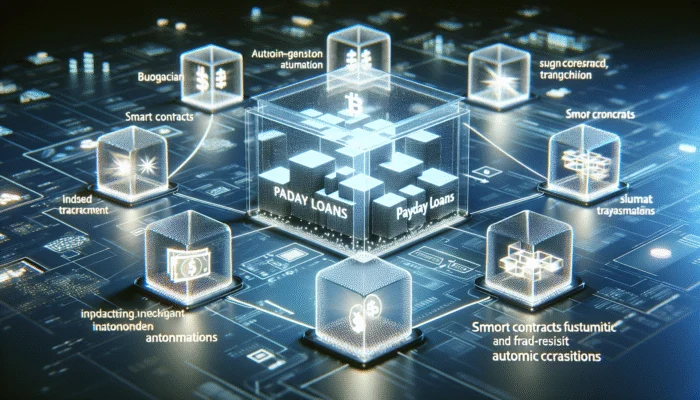
- Automation smart contracts can trigger funding or repayment steps with less manual handling.
- Limits the borrower still faces fees, repayment pressure, and lender compliance risk.
If you want the broader lending context, start with our payday loans overview and then compare this technology angle with safer borrowing paths later in the article.
At A Glance
| Area | Traditional payday loan process | Blockchain-enabled workflow |
|---|---|---|
| Record Keeping | Stored in lender systems or third-party databases, which may be easier to edit internally. | Recorded on a distributed ledger with an audit trail that is much harder to change. |
| Fraud Risk | Higher exposure to identity theft, duplicate records, and hidden changes. | Better traceability can reduce tampering, though it cannot remove bad underwriting or predatory pricing. |
| Speed | Can involve manual checks, back-office review, and paper-heavy reconciliation. | Smart contracts may shorten approval, funding, and repayment steps when rules are well designed. |
| Borrower Clarity | Terms may be harder to verify across multiple systems or disclosures. | A shared record can make fees, dates, and repayment events easier to confirm. |
Why This Matters For Us Payday Borrowers
The payday loan market is already defined by urgency, short repayment windows, and unusually high costs. That combination leaves little room for mistakes, which is why fraud, misleading practices, and unclear documentation matter so much. Blockchain is attractive because it can add a stronger record of what happened, when it happened, and who approved it.
That does not make payday loans safer by default. It only means the transaction layer may become more visible and more resistant to tampering. For readers comparing lending options, it helps to place this discussion next to broader borrower concerns in payday loans and financial stress and the practical exit paths outlined in alternatives to payday loans.
How Blockchain Helps Secure The Loan Process
Immutable Records Reduce Tampering
In a conventional lending system, information can be stored in centralized databases that are easier to alter or compromise. Blockchain distributes the record across multiple nodes, so changing a transaction requires control over the network rather than a single database. For payday loans, that matters because loan terms, approvals, disbursements, and repayment updates can be logged in a way that is harder to quietly adjust later.
Smart Contracts Reduce Manual Friction
Smart contracts can automatically carry out parts of the loan agreement once agreed conditions are met. In practice, that could mean releasing funds after approval, logging repayment when a payment clears, or triggering reminders if a due date passes. The appeal is not just speed; it is consistency. Automated rules reduce the chance that a lender or processor handles the same agreement differently from one borrower to the next.
Transparency Supports Audits And Borrower Confidence
A clear transaction history makes it easier to review fees, repayment timing, and any changes to the agreement. That can help lenders document compliance and help borrowers confirm what was actually agreed to. Transparency is useful only when the underlying terms are fair, but it can still lower confusion and reduce disputes.
A useful way to think about blockchain here
Blockchain is best viewed as a trust-and-records layer, not a cure-all. It can strengthen how a payday loan is documented and verified, but it does not automatically improve affordability, repayment ability, or consumer protections.
Borrower And Lender Tradeoffs
For Borrowers
- Faster processing may matter in emergencies.
- Clearer records can reduce disputes about fees or dates.
- Automation may cut down on avoidable administrative errors.
- But the loan can still be expensive and short-lived.
For Lenders
- Better audit trails can reduce fraud losses.
- Automated workflows may lower operating costs.
- Compliance reviews may become easier when data is standardized.
- Technical integration and rule design still require investment.
If your main question is whether technology makes payday lending more responsible, the honest answer is mixed. Blockchain can make transactions more secure and traceable, but it does not solve the core affordability issue. That is why comparisons with younger borrowers’ payday loan risks and broader borrower stress patterns are still essential.
Where Blockchain Helps Most, And Where It Does Not
| Scenario | Blockchain can help | Blockchain cannot fix |
|---|---|---|
| Fraud Prevention | Reduce tampering and create a stronger audit trail. | Stop poor screening, predatory pricing, or identity misuse before it starts. |
| Process Automation | Automate approval logic, funding steps, and repayment triggers. | Replace sound underwriting or good customer support. |
| Compliance | Create consistent records that help during audits. | Remove the need to follow state and federal rules. |
| Borrower Affordability | Can reduce processing waste if the lender passes savings through. | Guarantee lower APRs, longer repayment, or lower risk to the borrower. |
Regulation, Privacy, And Implementation Hurdles
The strongest blockchain use case in payday lending still depends on regulatory fit. Payday lending rules vary by state, and a blockchain system does not exempt a lender from disclosure, lending, servicing, or privacy requirements. In practice, that means adoption has to be designed around compliance rather than sold as a shortcut around it.
Privacy is another issue. A shared ledger can improve transparency, but lenders still need to protect sensitive data. Permissioned networks, data minimization, and privacy-preserving techniques such as zero-knowledge proofs are more realistic than a fully public record for consumer lending. That balance matters because borrowers need confidence that their financial information is secure even when transaction verification is visible.
Implementation is also more complex than the marketing sometimes suggests. Lenders need integration with existing systems, staff training, legal review, and ongoing monitoring. Without those pieces, blockchain can add cost without producing meaningful consumer benefit.
What A Responsible Rollout Usually Requires
- Clear loan terms written into the contract logic.
- Privacy safeguards for borrower data.
- Regulatory review before launch.
- Staff training and security audits.
- Fallback processes when automation fails.
Should Borrowers Care About Blockchain-Powered Payday Loans?
Borrowers should care if the technology actually improves clarity, reduces processing errors, or makes a lender more accountable. They should be skeptical if blockchain is used mainly as a buzzword that distracts from high fees, short repayment windows, or weak consumer protections. The best question is not whether a lender uses blockchain, but whether the total loan terms are easier to understand, verify, and manage.
For readers evaluating a real borrowing decision, the practical next step is to compare this technology story with safer alternatives and with the broader payday lending ecosystem. If you are weighing options, the most useful comparison point is often not another payday product, but a different type of borrowing entirely.
Compare Options Before You Borrow
If your concern is security, speed, and less confusion, blockchain may improve the plumbing behind a payday loan. If your concern is affordability and long-term financial stability, the better move is usually to review alternatives first.
Start with alternatives to payday loans, then compare that guidance with the specific product details offered by any lender. For broad market context, you can also revisit the main payday loans page.
Faqs
What Is Blockchain And Is It Legit?
Blockchain is a decentralized digital ledger that can be legitimate when it is used responsibly, but its value depends on the system built around it.
What Is A Blockchain Lender?
A blockchain lender is a lender that uses blockchain-based records, smart contracts, or related infrastructure to process or document loans.
How Risky Is Blockchain?
The technology itself is not automatically risky, but implementation, regulatory mismatch, privacy failures, and poor lending design can create real risk.
Can I Borrow Money From Blockchain?
Not in the sense of borrowing directly from a network itself; rather, you borrow from a lender or platform that uses blockchain in its loan process.
Want the broader payday-lending context?
Read the main payday loans page for product basics, then compare any technology claim against the actual fees, terms, and state rules.



Oliver Pearson is a dedicated writer at QuickLoanPro, where he explores a wide range of general topics, focusing on financial literacy and innovative lending solutions. With a keen eye for detail and a passion for empowering readers, Oliver simplifies complex financial concepts, making them accessible to all. His ability to engage audiences with informative and relatable content has established him as a trusted voice in the financial writing community.



It’s fascinating to see how blockchain technology is increasingly being integrated into the payday loan sector. The issue of fraud and misleading practices within this industry is something that has affected so many individuals, often disproportionately impacting those who are already in precarious financial situations. The emphasis on enhancing transaction security and transparency with a technology like blockchain could potentially reshape the entire landscape of lending, especially for those who might have previously felt trapped in a cycle of debt with traditional payday loans.
It’s interesting to see how blockchain could reshape the payday loan landscape. The idea of automating processes through smart contracts is particularly appealing. I’ve often found the lending process daunting, with so many unclear terms and hidden fees. If blockchain can really enhance transparency, it might help consumers better understand what they’re getting into—something that’s essential, especially for those who may not have a strong financial background.
Your analysis of blockchain’s role in payday lending is quite insightful, particularly in highlighting its potential for enhancing security and record integrity. However, I believe it’s also important to consider how this technological advancement interacts with broader systemic issues within the payday lending industry.