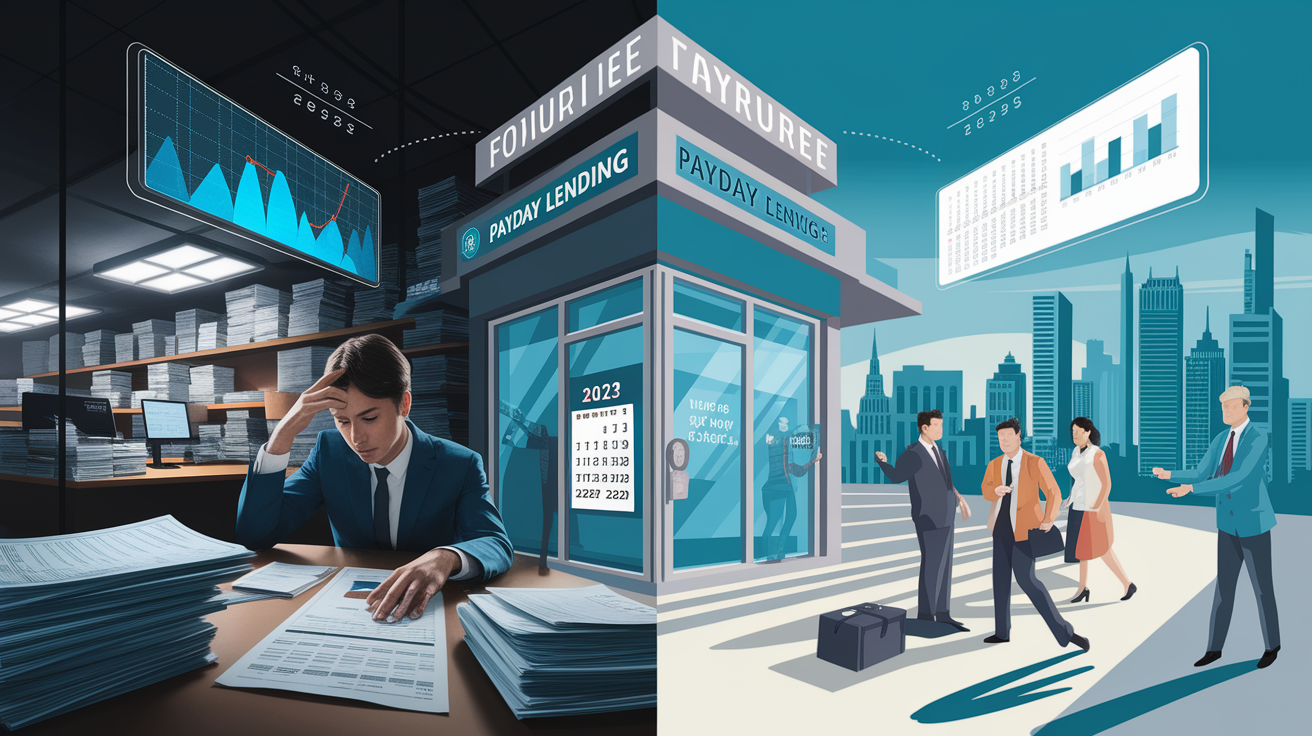
Payday lending in 2025 is likely to be shaped less by broad growth stories and more by regulation, compliance, and consumer protection. That shift will affect lenders, borrowers, and anyone comparing short-term credit options, including readers weighing alternatives to payday loans.
The strongest way to read the 2025 outlook is through a compliance lens: federal oversight, state-by-state rules, underwriting pressure, and disclosure requirements are the factors most likely to reshape the market.
The biggest changes are likely to come from tighter underwriting expectations, clearer fee and APR disclosures, stronger borrower-protection rules, and more state-level variation. Those shifts may narrow product design for lenders while making the true cost of borrowing easier for consumers to compare.
- Lenders with high-fee or short-term products
- Borrowers comparing cost, APR, and repayment terms
- Multi-state operators navigating uneven rules
2025 Payday Lending Outlook At A Glance
The page role here is a forecast-and-compliance explainer, not a general industry trends roundup. For readers who want the broader market view, the closest contextual companion is the main 2025 industry trends overview; for readers focused on legality by state, the better next step is state regulations in 2025.
| Area | Likely 2025 change | Impact on lenders | Impact on borrowers |
|---|---|---|---|
| Federal oversight | More pressure on fair lending, disclosures, and ability-to-repay checks | Higher compliance costs and tighter underwriting standards | Greater clarity on loan cost and repayment expectations |
| State rules | More variation in caps, terms, and licensing requirements | Complex multi-state compliance and product tailoring | Different access and pricing depending on location |
| Disclosures | More visible APR, fee, and repayment information | Need to update marketing, application flow, and documents | Easier comparison across lenders and products |
Regulation Is The Main Story, Not Just Another Trend
The original article covered regulation, technology, consumer protection, and market behavior at once. That breadth created overlap with other forecast pages and blurred the page’s main job. The tighter reading is simpler: 2025 is likely to bring a more compliance-driven payday lending environment, with regulators pushing lenders toward clearer pricing, stronger underwriting, and less room for opaque loan design.
At the federal level, the Consumer Financial Protection Bureau remains the most important reference point in the conversation about consumer protection. The likely direction is not a single dramatic rule change so much as continued pressure on how lenders present cost, assess repayment ability, and communicate risk. For borrowers, that means the headline APR matters more, but so do fees, rollovers, and the total amount due at repayment.
State-level law is even more consequential because it can change the practical availability of payday lending from one market to the next. Some states already cap rates, limit loan size, or restrict repayment structures. In 2025, the result is likely to be a patchwork market where a lender’s product, pricing, and approval criteria depend heavily on where the customer lives.
How Lenders Are Likely To Adapt
If 2025 brings the expected compliance pressure, lenders will probably respond in three ways: they will simplify disclosures, tighten underwriting, and rethink product structure. That may mean smaller loan sizes, more careful borrower screening, and a shift away from models that depend on repeat borrowing.
This is where broader industry-change content becomes relevant. Technology can help lenders adapt, but it is not the main story in this article. Readers who want the technology side can explore fintech disruption in payday lending and AI scoring in lending, but those are supporting themes rather than the primary 2025 forecast.
For compliant lenders, the opportunity is not simply to survive regulation, but to earn trust. Transparent cost breakdowns, clearer repayment terms, and better borrower education can reduce friction and lower the reputational risk that has long followed this industry.
What Borrowers Should Watch Before Taking A Payday Loan
For borrowers, the 2025 forecast matters because a more regulated market changes both access and decision-making. A loan that looks fast and simple can still be expensive, and tighter rules may make the real cost easier to spot.
Look beyond the loan amount and focus on APR, fees, due dates, and what happens if you cannot repay on time.
State limits can affect whether the product is legal, what it costs, and how it can be repaid.
Credit unions, installment loans, and other options may offer more room to repay without repeating the borrowing cycle.
If the purpose is emergency cash, it still makes sense to compare emergency-loan options before choosing a payday loan. For some readers, the better move is to step sideways into a different product rather than accept a short-term loan with high rollover risk.
Where The Market May Be Headed Next
The broader market trends still matter, but they belong in the background of this article. Consolidation, new fintech entrants, and shifting borrower preferences will influence who wins share, yet those changes are most meaningful when viewed through regulation. The lenders most likely to hold ground in 2025 are the ones that can operate cleanly under stricter rules and explain their products without confusing consumers.
That is also why the dominant trend hub still belongs elsewhere. The broader perspective sits on the industry trends page, while this article should stay focused on what 2025 regulation means in practice. Keeping that separation helps readers and reduces overlap between pages that otherwise chase the same forecast query.
If you are tracking the broader market direction, start with the 2025 industry trends overview. If you need help comparing safer borrowing paths, review the best alternatives to payday loans. If your main concern is whether a loan is allowed where you live, the most relevant next read is state payday loan laws in 2025.
Frequently Asked Questions
Which States Banned Payday Loans?
Several states tightly restrict or effectively prohibit traditional payday loans, but the exact rules vary by jurisdiction and can change over time. The safest reference point is a state-specific legality guide before applying.
Have Payday Loans Shut Down?
No, payday lending has not disappeared, but the market has changed as regulation, enforcement, and consumer demand have increased pressure on older business models.
What Is The Apr Of A Payday Loan For $1,400 Due In 5 Days?
The APR can be extremely high because payday loans are short-term and fee-heavy, but the exact figure depends on the lender, fees, and state rules. Always compare the total dollar cost, not just the headline rate.
Do Payday Loans Go Away After 7 Years?
A debt may become harder to collect or report over time depending on the situation, but that does not automatically erase every obligation. Borrowers should verify state law and any active collection activity.

Megan Hannford is an insightful author at QuickLoanPro, where she explores a diverse array of general topics related to finance, personal development, and lifestyle. With a passion for empowering readers through accessible information, she distills complex concepts into engaging content that resonates with a wide audience. Megan holds a degree in Communications and brings her expertise in writing and research to create valuable resources that guide individuals toward informed financial decisions.



Ah, payday lending—a topic that’s as popular as kale at a barbecue! It’s fascinating to see how the winds of change are blowing through this sector as we gear up for 2025. The thought of regulatory transformations feels a bit like waiting for a new season of your favorite show—exciting yet suspenseful.
You’ve hit the nail on the head! The changes in the payday lending sector really do feel like a plot twist. As we look toward 2025, the potential regulatory shifts could reshape how these loans are structured and accessed. It’s interesting to consider both the intentions behind these regulations—like improving consumer protections—and the realities of how they’ll impact those who rely on such services for quick cash.
It’s fascinating to consider how these transformative regulatory changes will reshape the payday lending industry by 2025. Given the CFPB’s focus on consumer protection, I can’t help but think about how these adjustments might also influence borrower behavior. For instance, if lenders are forced to adopt more transparent practices, could we see a shift in public perception of payday loans?
It’s interesting to think about how these transformative regulatory changes could impact not just the payday lending industry, but also the wider landscape of personal finance. The CFPB’s emphasis on consumer protection is certainly a pivotal point. If lenders start adopting more transparent practices, it might lead to a gradual shift in public perception of payday loans. Many people view payday lenders with skepticism due to the often predatory nature of the loans, so transparency could help demystify some of the practices and make borrowers feel more informed about their options.
It really is intriguing to think about how these transformative regulatory changes will reshape the payday lending industry by 2025. The CFPB’s emphasis on consumer protection might drive lenders to be more transparent, and that could lead to a significant shift in borrower behavior. If people start to see payday loans in a more favorable light due to better practices, it might also encourage those who have historically avoided them to consider their options more openly.
The impending changes in payday lending regulation are indeed a pivotal moment for the industry, especially as we approach 2025. I find it particularly interesting how consumer protection is becoming a focal point in the discussions led by the CFPB. As someone who has studied the impacts of financial regulations on vulnerable populations, I believe these shifts could result in a significant reorientation of the payday lending landscape.
It’s definitely an interesting time for the payday lending industry, especially with the focus on consumer protection. The Consumer Financial Protection Bureau’s initiatives have the potential to reshape how these services operate, which could be crucial for vulnerable populations who often rely on them during financial emergencies.
The anticipated regulatory changes in the payday lending sector are indeed significant and underscore a growing recognition of consumer protection as a priority. As the CFPB positions itself at the forefront of these reforms, we might also see an increase in the scrutiny on interest rates and loan terms, which often trap borrowers in cycles of debt.
Your insights into the impending changes in the payday lending sector resonate deeply with the ongoing conversations around consumer protection. It’s fascinating how regulatory shifts can catalyze not just compliance but also a broader reassessment of lending practices. For many consumers, payday loans can be a double-edged sword, providing immediate relief while potentially leading to a cycle of debt.
It looks like payday lending is about to head into a whirlwind of change—who knew getting a loan could feel like a rollercoaster ride? It’s like the economy decided it needed a makeover, and payday lenders just got called to the salon!
It’s interesting to reflect on the impending regulatory changes within the payday lending landscape and the multifaceted implications they carry for all stakeholders involved. As you’ve pointed out, the upcoming shifts present a complex mix of challenges and opportunities. It’s crucial for consumers to not only arm themselves with knowledge about fees and APR but also to grasp the broader implications of these changes on their financial health.
It’s fascinating to see how the landscape of payday lending is evolving, especially with the emphasis on regulation and consumer protection in the 2025 outlook. The idea that compliance will drive the future of this market resonates with my experiences in financial literacy advocacy. I often encounter borrowers who feel overwhelmed by the myriad of options and hidden fees. Stricter underwriting expectations and clearer disclosures could really empower consumers to make better-informed choices.
The outlook for payday lending in 2025 presents a fascinating intersection of consumer protection and the evolving financial landscape. It’s refreshing to see a shift towards prioritizing compliance and transparency, particularly considering the often predatory nature of high-fee lending practices. As someone who has navigated short-term credit options in the past, I can appreciate the potential benefits of clearer APR disclosures and stronger borrower protections. Such changes could empower consumers to make more informed decisions, ultimately fostering a healthier borrowing environment.
The upcoming regulatory changes in payday lending, as you’ve outlined, certainly set the stage for a critical evolution in the industry by 2025. It’s quite fascinating to consider how these regulations will not only alter the landscape for lenders but also have a significant impact on consumer behavior. As someone who has closely observed the changes in the financial sector, I can’t help but draw parallels between the shifts in payday lending and the broader trends in consumer finance driven by technology and changing consumer expectations.
It’s interesting to see how the landscape of payday lending is evolving, particularly in light of increased regulation and compliance measures. The focus on clearer fee disclosures and stronger borrower protections seems crucial, especially for consumers who often struggle to understand the true cost of borrowing.
The evolving landscape of payday lending and the emphasis on regulatory changes in 2025 is indeed a fascinating development. It raises critical questions about the balance between providing access to credit and ensuring consumer protection. As you’ve pointed out, compliance will play a pivotal role in shaping the industry, which is particularly significant given that payday loans often target vulnerable populations facing financial instability.