
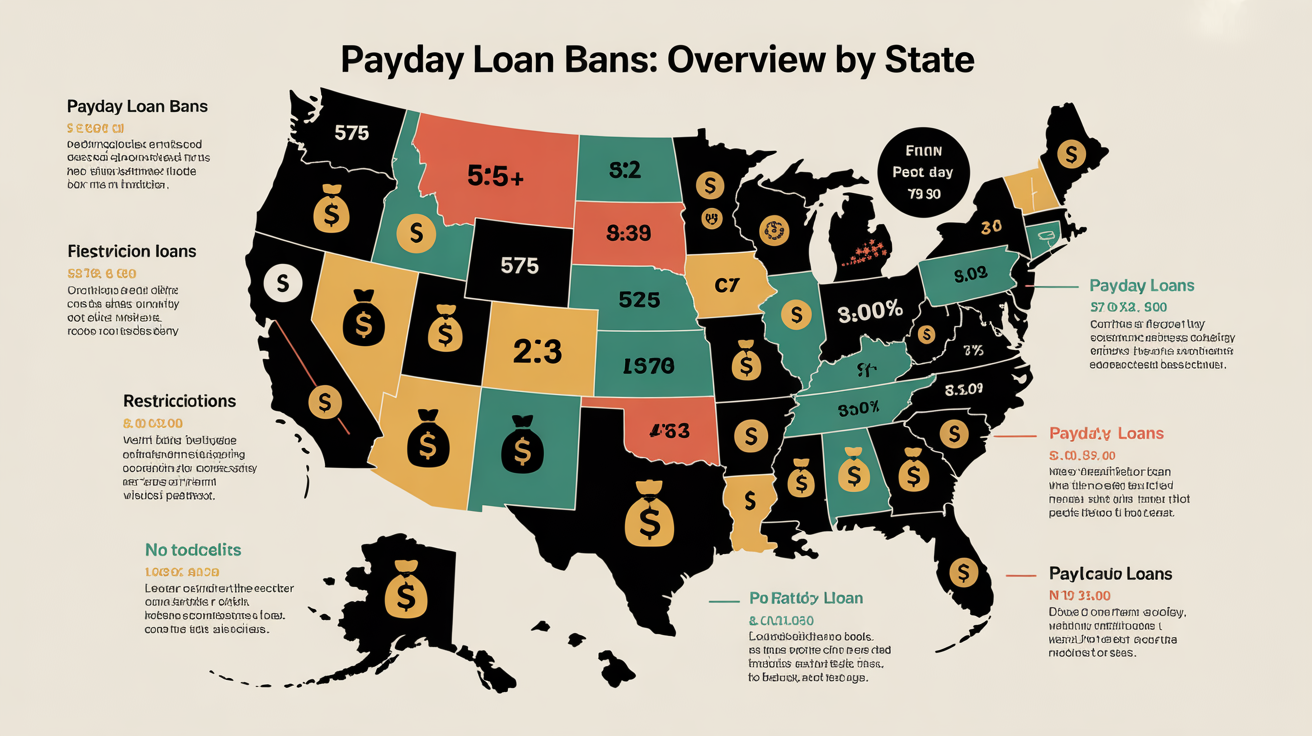
Payday loan laws are not uniform, and the rules that matter most can change sharply from one state to the next. If you need a fast way to compare the basics, start with our state-by-state bans overview and then check the details that apply where you live.
At a glance
- Some states cap payday loans tightly; others allow much higher costs, and some ban them outright.
- The most important differences are APR caps, rollover limits, cooling-off periods, and required disclosures.
- Before signing, confirm the lender is legal in your state and read the loan terms line by line.
What Payday Loan Laws Actually Control
Payday loan laws are state rules that control whether a lender can operate, how much it can charge, how long a loan can last, and whether the borrower can renew or roll the loan over. That is why two payday loans that look similar at checkout can be governed very differently once you cross a state line.
The federal CFPB also publishes a useful overview of payday loan regulations, but state law often decides the real cost and legality of the loan. For a quick legality check before you borrow, use this lender-legality guide alongside your state’s rules.
| What to compare | Why it matters | What to watch for |
|---|---|---|
| APR or fee cap | Sets the maximum cost of borrowing. | Some states cap rates tightly; others allow very high charges. |
| Rollover rules | Controls whether a loan can be extended. | Frequent rollovers can trap borrowers in repeated fees. |
| Cooling-off period | Creates a waiting period between loans. | This can prevent back-to-back borrowing. |
| Disclosure requirements | Forces lenders to explain the terms clearly. | Look for finance charges, due dates, and repayment examples. |
| Legality or bans | Determines whether payday lending is allowed at all. | Some states ban payday loans or limit them so heavily that they are uncommon. |
How State Rules Differ In Practice
Strict States
These states often impose lower rate caps, ban rollovers, or require longer repayment windows. Borrowers usually get stronger consumer protection and clearer disclosures.
Middle-Ground States
These states may allow payday lending but place limits on fees, loan size, or repeat borrowing. The total cost still depends heavily on the lender’s terms.
Highly Permissive Or Banned States
In some states the market is heavily restricted or effectively banned. In others, high-cost lending may still be permitted under specific licensing or fee rules.
If you want a broader map of where payday lending is blocked, start with payday loan bans by state. If you are trying to understand whether a loan can be renewed or extended, the next most useful read is cooling-off periods explained.
Borrower Checklist Before You Sign
- Confirm the lender is licensed and legal in your state.
- Check the APR, total fees, due date, and repayment method.
- Ask whether rollovers, extensions, or renewals are allowed.
- Read the disclosures carefully and keep a copy of everything you sign.
- Compare the loan against a lower-cost alternative before you commit.

Why Disclosures And Repayment Rules Matter So Much
Many borrowers focus on the loan amount and miss the details that create the real cost. Clear disclosures should spell out the finance charge, the annual percentage rate, the payment schedule, and any fees tied to late payment or renewal.
That is why a state that requires strong disclosures can be materially safer than one that leaves more room for confusing contract language. For a deeper look at what lenders should disclose, read payday loan disclosures explained.

What Happens If A Lender Ignores The Law
When lenders violate state rules, the consequences can include fines, license loss, refunds, and lawsuits. In serious cases, regulators may also pursue broader enforcement actions if the lender repeatedly charges illegal fees or misrepresents the loan terms.
For borrowers, the practical takeaway is simple: illegal or unclear terms are a warning sign, not a minor paperwork issue. If the offer looks aggressive, read the fine print again and compare it with the rules in your state before you proceed.
When To Move From Research To Action
If you are still deciding, check your state’s rules first and then compare the lender against the legal checklist. If the lender is not clearly compliant, do not rely on verbal promises.
A good next step is to review how to check lender legality in the U.S. and then compare that result with the state rules that apply to your loan.

Frequently Asked Questions

Jacob Harrison is a dynamic author specializing in a broad range of topics for QuickLoanPro. With a keen eye for detail and a passion for making financial concepts accessible, he helps readers navigate the complexities of personal finance, loans, and budgeting. Jacob’s insightful articles aim to empower individuals with the knowledge they need to make informed financial decisions, blending informative content with practical advice. Through his engaging writing style, he strives to connect with audiences, providing them with valuable resources for their financial journeys.


It’s interesting how the landscape of payday loan laws can feel like a patchwork quilt, with each state stitching its unique rules into the mix. I’ve noticed that many people often overlook the devastating effects of high APR caps and rollover limits—it’s not just about fast cash; it’s about long-term financial health.