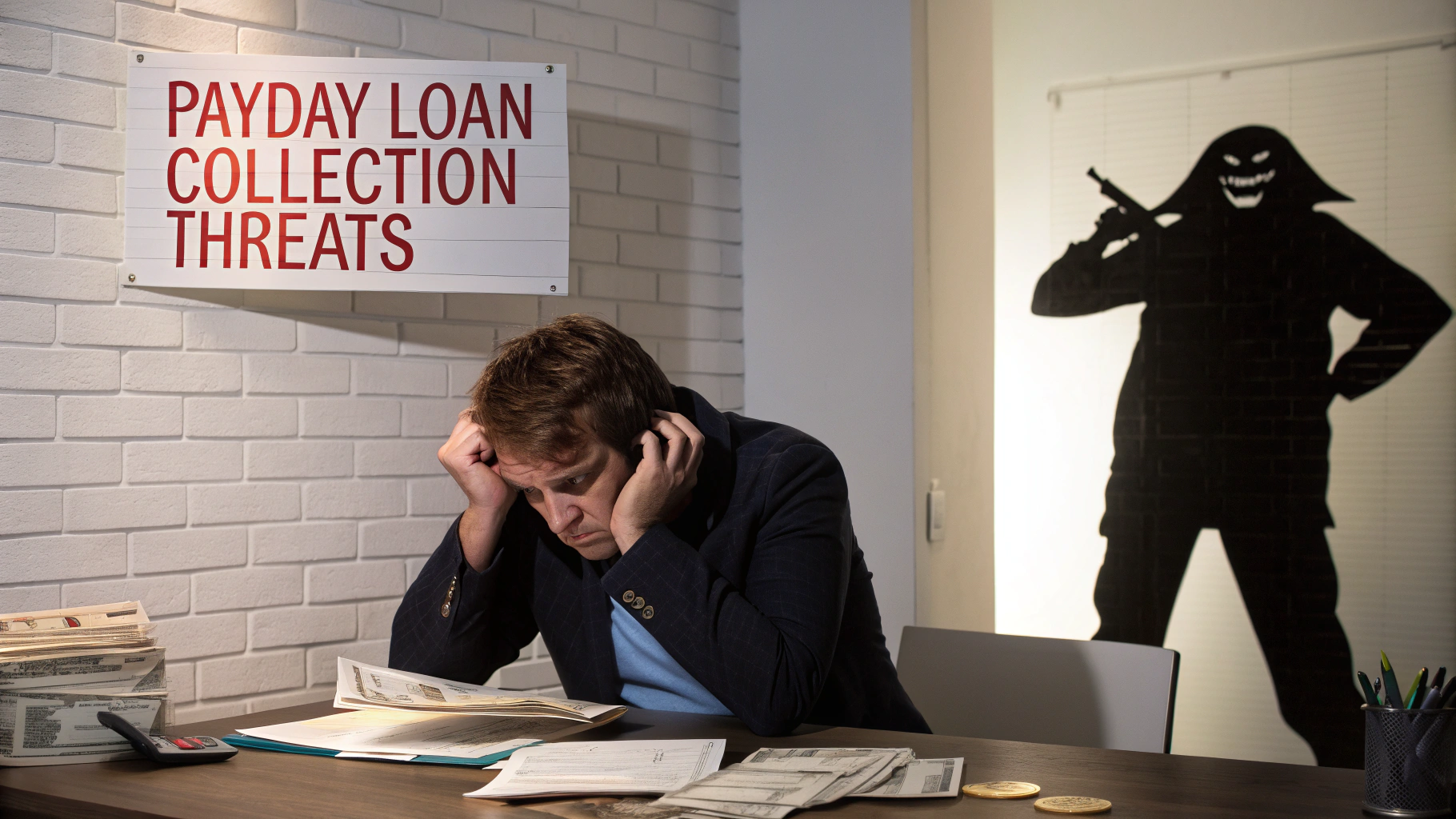
Payday loan collection threats can feel urgent, but not every threat is legal or enforceable. The right response is to slow the contact down, document everything, and force the collector to prove the debt before you agree to anything.
- Ask for the collector’s full name, company, mailing address, and the original creditor.
- Request written validation of the debt and stop giving payment details over the phone.
- Save texts, voicemails, emails, call logs, and letters.
- If the collector threatens arrest, violence, or fake legal action, treat it as a red flag.
If you want broader context on loan strain and repayment pressure, the loan-management resources on QuickLoanPro can help, but this article stays focused on collection threats and consumer rights.
Threat Type And The Best Response
| Threat or tactic | What it usually means | Best response |
|---|---|---|
| Repeated calls or texts | Collection pressure, and sometimes harassment if the contact becomes excessive or abusive. | Start a log, save screenshots, and move the conversation to writing. |
| Threats of arrest or jail | Usually an illegal scare tactic. Civil debt is not the same as a criminal charge. | Do not admit anything on the call; document the statement and consider a complaint. |
| Threats to sue, garnish wages, or serve papers | Could be real, but often exaggerated or premature. | Ask for written proof and, if needed, review the claim under your state law. |
| False claims about the amount owed | Possible misrepresentation or mistaken accounting. | Demand validation and compare the figures to your loan records. |
| Calls from an alleged attorney or law enforcement | Potential impersonation or deceptive collection behavior. | Verify independently and do not pay until the claim is confirmed in writing. |
What Collectors Can And Cannot Do
Most payday loan collection disputes fall under federal and state debt-collection rules, especially the Fair Debt Collection Practices Act (Fdcpa). The FDCPA is aimed at third-party collectors, and it prohibits harassment, deception, and false threats. If a collector lies about the debt, invents legal consequences, or uses abusive language, that conduct may cross the line.
The key distinction is simple: a collector can try to collect a valid debt, but they cannot use intimidation as a shortcut. They also cannot lawfully claim powers they do not have, such as immediate arrest, unless a real legal process exists and is clearly explained. For a broader view of how risky these loans can be before default starts, see payday loan pitfalls.
- Call logs and voicemail recordings where permitted
- Text messages, emails, and letters
- Dates, times, names, and exact statements
- Loan agreement and repayment records
- Do not admit to facts you have not verified
- Do not promise payments you cannot afford
- Do not give bank login details or debit card access
- Do not agree to a settlement without written terms
How To Respond Without Making The Situation Worse
Your first goal is not to “win” the call. It is to move the collector into a paper trail. Keep your tone calm, ask for written confirmation, and avoid debating the debt at length while you are still missing the facts. A brief, controlled response often works better than a long explanation.
A practical script is: “Please send me the debt details in writing. I do not discuss this by phone.” That sentence protects you without escalating the exchange. If the collector continues after you have asked for written communication, note the date, time, and wording exactly as it was used.
If you know the debt is valid and you want to resolve it, a written payment proposal is safer than a verbal promise. The reason is simple: a written agreement lets you verify the balance, the due dates, and whether the collector is waiving any fees or interest. For related repayment strategy content, the repayment tips guide is a better fit than trying to negotiate blindly on the phone.
Validation, Cease-And-Desist Letters, And When To Escalate
A validation request is often the most useful first move because it forces the collector to identify the debt and show the basis for collection. If the debt is unfamiliar, the amount looks wrong, or the caller refuses basic details, validation matters even more. Ask for the original creditor, the current balance, and documentation that links you to the account.
A cease-and-desist letter is different. It does not erase a debt, but it can limit contact. Use it when the calls are repetitive, abusive, or happening at times that disrupt your life. Send it in writing and keep proof of delivery. If the contact continues after that, your evidence is stronger.
Escalate when the collector ignores written requests, threatens illegal consequences, or misrepresents itself as a lawyer, court officer, or law enforcement agent. In those cases, complaints can be appropriate. The state law overview is useful because some states add stronger rules on calling hours, licensing, or collection conduct.
Federal Protections And Where Complaints Usually Go
Fdcpa
This federal law sets boundaries for debt collectors, including bans on harassment, false statements, and deceptive tactics. It is the main law borrowers cite when payday loan collection threats go too far.
Cfpb Complaint Route
The Consumer Financial Protection Bureau accepts consumer complaints and routes them to the company for response. That makes it one of the most practical escalation steps when a collector will not stop abusive contact.
A complaint to your state attorney general or consumer protection office can also make sense, especially if the collector is licensed in your state or the conduct appears to violate state law. Keep your timeline and evidence organized before you file. The stronger your records, the easier it is to show that the problem is not a simple misunderstanding.
When The Debt Is Real And You Still Need A Plan
Some readers are not dealing with a scam or an illegal threat; they are dealing with a legitimate debt that has become hard to manage. In that case, the best strategy is usually to separate the collection problem from the repayment problem. First, stop the harassment. Then decide whether you can negotiate, settle, consolidate, or seek outside help.
A realistic payment plan can work if the collector is willing to negotiate in writing and the balance is verified. If the debt is too large, or if several payday loans are already stacking up, a broader debt strategy may be more appropriate. If you need a wider view of consumer credit damage and recovery, see credit recovery after payday loans.
The dominant site theme around loans and tracking is broader than this article. That is why this page should not try to replace a general budgeting or app-based management guide. If you need that wider toolset, the loan tracker app guide is the better next step after you have handled the threat itself.
Use the collection-threat steps in this article first: request validation, document contact, and stop verbal back-and-forth. After that, move to a broader repayment or tracking plan only if the debt is verified and the collector is acting within the law.
For readers comparing how to handle the debt itself, this guide to payday-loan predators and the state cap overview help place the debt in a larger legal context.
Frequently Asked Questions

Lindsey Moreau is a dedicated author and financial writer at QuickLoanPro, where she explores a range of general topics related to personal finance, lending, and money management. With a passion for making complex financial concepts accessible, she aims to empower readers with the knowledge they need to make informed decisions. Lindsey’s insightful articles are designed to engage and educate, reflecting her commitment to providing valuable resources for individuals seeking financial clarity.



This post raises crucial points about the predatory nature of payday loans and their impact on vulnerable communities. I have seen firsthand how the allure of quick financial relief can lead individuals into a sticky web of debt. It’s disheartening to realize that many borrowers, in dire situations, may not fully comprehend the long-term implications of high APRs that can accumulate rapidly.
Your exploration of payday loan practices highlights a critical issue that often gets overshadowed in discussions about financial options for those in need. The high-interest nature of these loans and their targeting of low-income individuals raises substantial ethical concerns. Many people I know have found themselves in a cycle of debt because they turned to payday loans during a moment of crisis, only to discover that they had inadvertently signed up for a much larger problem.
You’ve made some really important points about payday loan practices that definitely deserve more attention. The cycle of debt you mentioned is heartbreakingly common. It’s like people are pushed into a corner during financial hardship, and these loans seem like the only option. But then they end up deepening their financial struggles instead of providing relief.
You’ve touched on a reality many experience but few acknowledge openly. The design of payday loan practices is insidious—they often present themselves as quick solutions in desperate times, only to ensnare borrowers in a web of escalating debt. It’s frustrating to see how easily individuals facing financial strain can be exploited, making what seems like a straightforward “helping hand” transform into a recurring cycle of hardship.
You bring up such a vital point. The way payday loans prey on people’s vulnerabilities can feel like a perfect storm—financial crunch, quick access to cash, and then suddenly, people find themselves caught in a relentless cycle. It’s frustrating to see how these loans are designed more to trap than to help. Your experience reflects the reality for many; a short-term solution turns into a long-term struggle.
“To delve deeper into the implications of payday loans and explore viable alternatives that empower individuals rather than ensnare them in debt, check out this insightful resource.”
https://quickloanpro.com/payday-loans-westwego-la
You really highlight an important facet of the payday loan issue—the way they can exploit people when they’re most vulnerable. It’s unsettling how quickly those loans can turn from a seemingly harmless way to bridge a gap into a long-term financial burden. I’ve seen friends get caught in that cycle, where the intention was just to get by until payday, but it spiraled into something much more challenging.
You’ve touched on an aspect that really hits home for so many people. The cycle of debt from payday loans can feel like a trap, especially for those just trying to make ends meet in tough situations. It’s alarming how quickly a temporary fix can spiral into long-term problems, isn’t it?
What a compelling examination of the predatory nature of payday loans! It’s heartbreaking to see how many individuals, often already in precarious financial situations, turn to these high-interest loans out of desperation. Your point about the cycle of dependency is particularly striking; it reminds me of how systemic issues frequently compound personal financial struggles.
Your exploration of payday loans really highlights a pressing issue that impacts a significant portion of our society. The cycle of debt these loans create often feels inescapable, especially for those who rely on them in overwhelming financial situations. I have seen friends and family fall into this trap, where a seemingly quick fix morphs into a prolonged struggle due to hidden fees and exorbitant interest rates.
Your exploration of payday loans sheds light on an often-overlooked issue that not only affects financial stability but also dives into broader societal implications. The cycle of dependency that these loans create is alarming, especially when one considers the weakening of community structures that traditionally provided support during financial hardships.
Your observation about the cycle of dependency created by payday loans really gets at the heart of a much larger issue. It’s eye-opening to see how these financial products can lead individuals into a tight spot, and we’re not just talking about money here. It taps into how communities traditionally supported one another through tough times, something that’s increasingly rare today.
Thank you for your thoughtful insights! If you’re interested in further exploring ways to promote financial education and alternatives to payday loans, check out this resource that offers valuable strategies.
https://quickloanpro.com/payday-loans-laplace-la
Your exploration of payday loans reveals a critical issue that often goes overlooked: the compounding effects of financial desperation. Many individuals view these loans as a quick fix, yet the reality is much harsher. I’ve seen friends fall into this cycle, believing they can manage the repayments, only to find themselves entangled in a web of fees that seem insurmountable.
You’ve hit the nail on the head with that observation. It’s wild how easy it can be to fall into that trap. A lot of folks see payday loans as a last resort, but they often don’t realize just how quickly those repayments can spiral out of control. It’s like getting a small taste of relief and then finding yourself stuck in this maze of fees and stress.
It’s heartbreaking to see how payday loans can entrap those already struggling. I remember a friend who, overwhelmed with unexpected medical bills, turned to a payday loan thinking it was the quickest fix. Instead of relief, the mounting interest and fees became a source of additional stress, leading her deeper into debt. It highlights a crucial point: how often these loans can prey on the vulnerable, lacking alternatives.
I can really relate to what you’re saying about payday loans and how they can trap people in a cycle of debt. It’s so frustrating that when someone is already struggling, these loans can seem like a lifeline, but quickly turn into a burden. Your friend’s experience with unexpected medical bills is a situation many can empathize with, especially in a time when healthcare costs are soaring, and many people lack sufficient savings or insurance coverage.
It’s true that payday loans can feel like an easy fix in tough times, but they often don’t provide the relief people hope for. Your connection to that struggle highlights a real issue many face. It’s telling how these loans are marketed as quick solutions, yet they frequently lead to further complications, trapping borrowers in a relentless cycle.
Your exploration of payday loans brings to light a pressing issue that affects many individuals in our society. I find it particularly concerning how these loans, often marketed as quick fixes for financial emergencies, can inadvertently lead to a cycle of debt that feels insurmountable.
It’s interesting to see how payday loans can seem like a quick fix, but they really highlight a broader issue regarding financial literacy and access to sustainable banking options. I’ve noticed that the cycle of debt often becomes exacerbated for those without a safety net, reinforcing economic disparities. It makes me wonder about the potential of community-based financial education programs. By empowering individuals with better budgeting strategies or alternatives to high-interest loans, we may be able to foster more resilience in the face of financial emergencies. Has anyone here encountered effective initiatives or models that provide such support? I’d love to hear your thoughts!
Your insights into the complexities of payday loans and their collection practices are quite salient, and I appreciate how you’ve drawn attention to the often overlooked ramifications of these financial products. The way these loans are structured indeed creates a precarious situation for many borrowers, effectively setting them on a tightrope between immediate relief and long-term financial peril.
This is such an important topic—payday loan threats can be incredibly overwhelming, especially when you’re in a tight spot financially. I remember dealing with a relentless collector years ago; I didn’t know my rights at the time, and it felt like a nightmare. Slowing things down and insisting on written validation really helped me regain some control in that situation. It’s shocking how many people either don’t realize they have rights or feel pressured into making payments without verifying the debt first.
This is such an important topic, especially given how many people find themselves in difficult financial situations. I remember a friend sharing their experience with a payday loan collector who resorted to intimidation tactics, claiming they would come to the house to collect a debt. It added so much stress to an already tough time. Your point about documenting everything is critical; it’s amazing how often these collectors overstep legal boundaries.
This is such an important topic to delve into, especially considering how overwhelming payday loan collection threats can be for many individuals. It’s alarming how often collectors resort to intimidation, and I appreciate your focus on handling these situations with a level-headed approach.