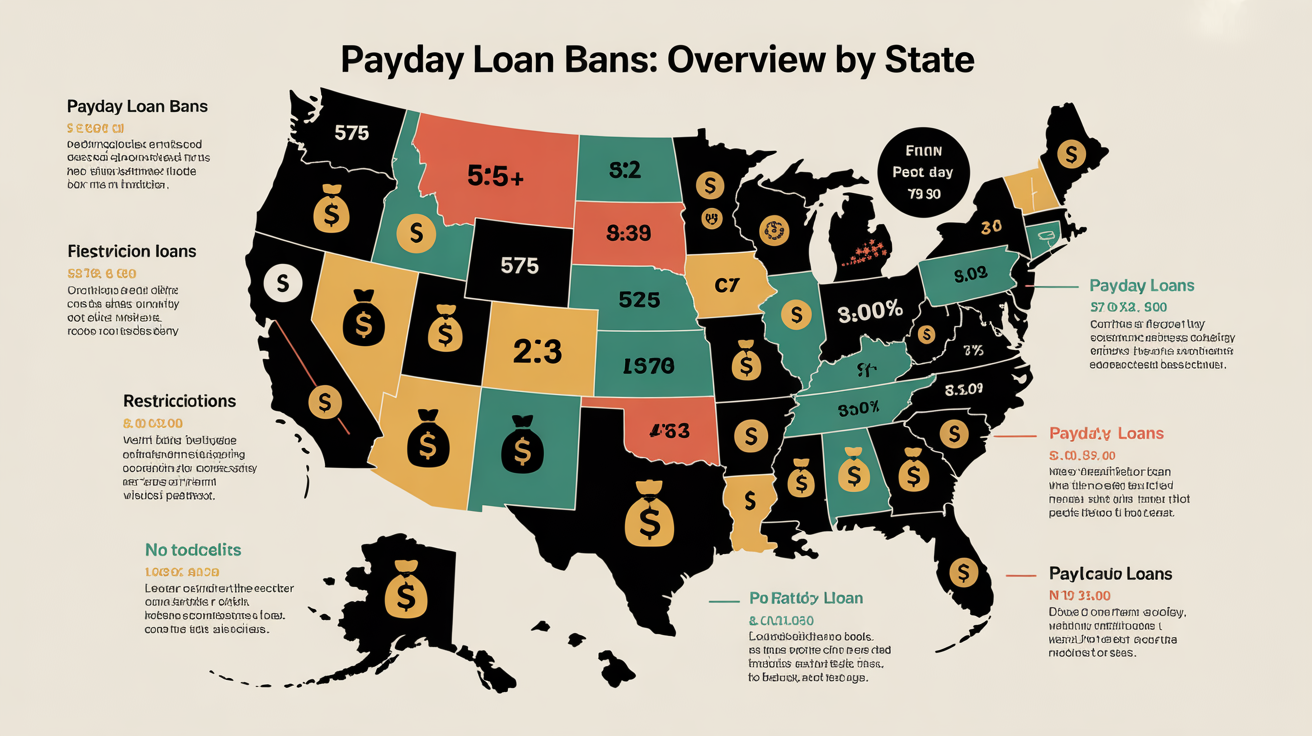
Payday loan bans are not the same as broader payday loan laws. Some states prohibit the product outright, while others allow it only under tight limits or keep the market largely open.
If you want the full legal picture beyond bans, start with our state-by-state payday loan laws guide, then use this page to see where bans, restrictions, and enforcement matter most.
Can You Get A Payday Loan In Your State?
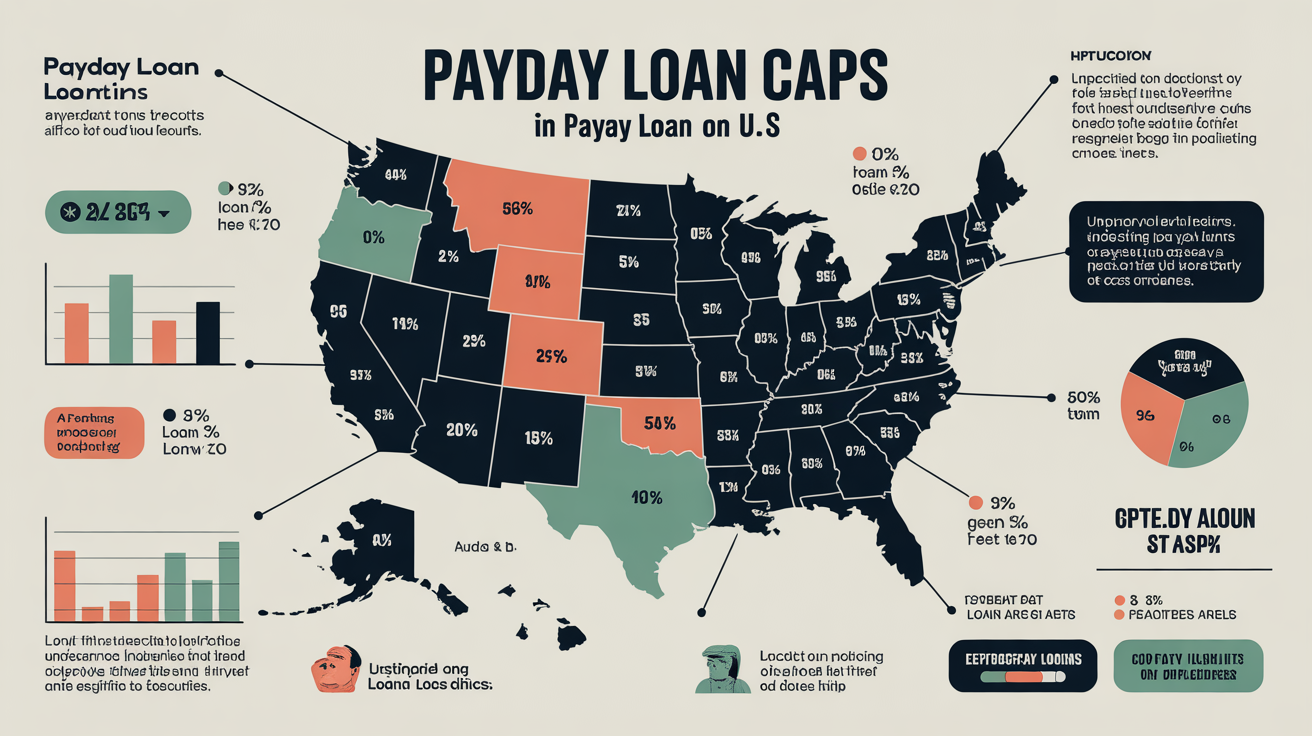
The fastest way to answer that question is to group states into three buckets: complete bans, partial restrictions, and states that still allow payday lending with few limits.
The States That Have Gone The Furthest
A small group of states has taken the strongest stance against payday lending by banning it outright or making it functionally unavailable. In practice, that means borrowers in those states are far less likely to encounter storefront payday lenders, and online lenders face more pressure to comply with state law.
Why The Bans Exist
Supporters of bans point to triple-digit APRs, repeated rollovers, and the way payday borrowing can trap people in a cycle of fees and repayment stress.
What Bans Do Not Solve
A ban does not automatically create affordable emergency credit. It usually shifts the focus to credit unions, small-dollar installment loans, or employer and community-based options.
For readers comparing state rules, the broader 2025 state regulations overview is the better next step when you need rate caps, licensing rules, or repayment details rather than just ban status.
Why States Banned Payday Loans
The case for bans is simple: many payday loans are designed to be repaid in a single lump sum, yet the fees often make that repayment difficult. Once a borrower rolls the loan over or takes a new loan to cover the old one, the cost can rise quickly.
Debt Spiral Risk
High fees, short deadlines, and repeated borrowing can turn a small cash gap into a long-term repayment problem.
Consumer Protection Focus
State lawmakers often argue that borrowers deserve products with clearer pricing, longer terms, and less pressure to refinance.
Alternatives Are Part Of The Policy
States that restrict payday lending often rely on credit unions, installment lenders, or emergency assistance programs to fill the gap.
Federal Rules Matter, But States Still Decide A Lot
Federal policy has shaped the conversation through the CFPB and the Dodd-Frank framework, but payday lending still lives or dies mostly at the state level. That is why two neighboring states can have very different rules, even when consumers face the same emergency expenses.
If you want to check whether a lender can legally operate where you live, use the practical payday lender legality guide before you apply. It is especially useful when an online lender claims it can serve borrowers nationwide.
What Bans Mean For Borrowers In Practice
A ban can reduce exposure to the worst payday loan outcomes, but it also changes how people cover emergencies. The best response depends on whether you need one-time cash, a bridge loan, or a longer repayment structure.
If Payday Loans Are Banned
Look first at credit unions, employer advances, local assistance, or small personal loans with longer terms.
If Payday Loans Are Restricted
Check the rate cap, fees, cooling-off periods, and whether rollovers are limited or prohibited.
If The Market Is Open
Read the APR disclosure carefully and compare it with a safer alternative before agreeing to a loan.
Where To Go Next If You Need Broader Rule Details
When you need the full state-level framework, not just ban status, the right next page is the state-by-state laws overview. If you are weighing safer options after a denial or after learning your state limits payday loans, read what happens when payday loans are outlawed and compare it with payday loan alternatives.
How Enforcement Shapes Real-World Access
A ban only matters if it is enforced. That is why online lending, out-of-state lenders, and legal loopholes matter so much. Even in states with strong restrictions, some lenders try to repackage payday-like loans under different names or route borrowers through less obvious channels.
State agencies often rely on licensing rules, complaint systems, and coordination with federal regulators to stop noncompliant lenders. In states with stronger oversight, it is harder for payday operations to keep functioning under the radar. In weaker markets, the opposite can happen: lenders adapt faster than regulators.
That is one reason the impact of state laws on payday loan terms deserves a separate look. The rulebook is not only about whether a loan exists; it also determines pricing, repayment structure, and whether consumers have meaningful protections.
Common Questions About Payday Loan Bans
Which States Ban Payday Loans?
States commonly identified as having complete bans or near-ban conditions include California, New York, New Jersey, Massachusetts, and Washington, though exact treatment can depend on product structure and licensing rules.
Have Payday Loans Been Shut Down Nationwide?
No. Payday lending is still legal in many states, but the rules vary widely, so the market is best understood as a patchwork rather than a single national policy.
Can You Still Get A Payday Loan If Your State Bans Them?
Sometimes lenders will advertise online, but a state ban can still make the loan illegal or unenforceable in your jurisdiction, so legality must be checked carefully before you apply.
What If I Need Cash And Payday Loans Are Not Allowed?
Start with safer short-term options such as credit unions, emergency assistance, employer advances, or small personal loans before turning to anything with steep fees.
If You Need The Broader Legal Map, Use The Hub Page
This article is meant to help you answer one question quickly: where payday loans are banned, limited, or still widely available. If you need state-by-state details on fees, licensing, repayment rules, and product differences, the broader laws page is the right place to continue.
Go to Payday Loan Laws: A State-by-State Overview for the full comparison, then come back here when you want the bans-only view and the consumer-protection angle.
See also: Finance & Business blog.

Jacob Harrison is a dynamic author specializing in a broad range of topics for QuickLoanPro. With a keen eye for detail and a passion for making financial concepts accessible, he helps readers navigate the complexities of personal finance, loans, and budgeting. Jacob’s insightful articles aim to empower individuals with the knowledge they need to make informed financial decisions, blending informative content with practical advice. Through his engaging writing style, he strives to connect with audiences, providing them with valuable resources for their financial journeys.
Ah, payday loans—the financial equivalent of deciding to jump out of a burning building into a safety net made of spider webs. It’s fascinating to see how different states are handling this issue, each with their own flavor of consumer protection, kind of like a buffet of financial regulations where some folks pile their plates high while others just nibble hesitantly on the salad.
You’ve hit on an interesting analogy with the spider webs. It really does capture the precarious situation many find themselves in when considering payday loans. The way states approach regulation is a fascinating study in both economics and human behavior. Some states seem to take a very hands-on approach, almost like protective parents, while others let the market dictate terms—a decision that can leave vulnerable people in the lurch.
You’ve painted quite the picture with that analogy! It’s true—payday loans can feel like a precarious leap when folks are already in a tough spot. Each state’s approach to regulation does create a unique landscape, almost like a patchwork quilt of protections and pitfalls. It’s interesting to see how some states opt for stricter limits, offering more safety for borrowers, while others leave things pretty loose, which can lead to that overwhelming buffet scenario you mentioned.
I really resonate with your exploration of payday loan bans across the states. It’s fascinating—and somewhat troubling—how different states approach consumer protection in such varying ways. The sheer disparity means that individuals in certain areas still face those predatory lending practices, while others are effectively shielded from the heavy burdens of high-interest debts.
Your analysis of payday loan bans across the United States raises crucial points about the different approaches states have taken to consumer protection. It’s interesting to see how states with complete bans are prioritizing the financial well-being of their citizens, especially given the staggering statistics surrounding payday loan debt. For example, a report from the Consumer Financial Protection Bureau highlighted that nearly 80% of payday loan borrowers re-borrow within a month, indicating how these loans can trap individuals in a continuous cycle of debt.
You’ve hit on a key aspect of the conversation around payday loans—how different states are navigating consumer protection. It seems like each state is making its own call, and some are taking a stand for their residents by enforcing bans. There’s definitely a lot of merit to that approach when you consider studies showing that the majority of borrowers end up in a cycle of debt.
I’m glad you found the analysis insightful! If you’re interested in exploring further, check out this resource that delves deeper into consumer protection strategies and potential alternatives to payday loans.
https://quickloanpro.com/payday-loans-westwego-la
It’s fascinating to see how payday loan regulations vary so significantly across the states. Growing up in a state where payday loans were heavily restricted, I’ve often reflected on how essential these protections are for individuals who might find themselves in a tight financial spot. The whole concept of payday loans can be quite misleading—what seems like a quick solution often turns into a cycle of debt that is hard to escape.