
Payday loans are legal in some U.S. states, tightly restricted in others, and banned outright in a few. What matters most is the state rule that applies to your loan, not the label on the lender’s website.
If you’re trying to verify a lender, start with your state regulator and then compare the lender’s disclosures with official rules. For a broader borrowing context, see our payday loans hub.
How Payday Loan Legality Works In The Us
There is no single nationwide rule that makes payday lending legal or illegal everywhere. Federal law sets some consumer-protection standards, but states usually decide whether payday lending is allowed, what it can cost, and how it must be licensed.
That is why two lenders can look similar online while operating under very different rules. One may be properly licensed and compliant in one state, while the same business model would be restricted, capped, or banned in another.
| State category | What it usually means | What to verify | Best official source |
|---|---|---|---|
| Allowed with limits | Loans may be legal, but APR, fees, loan size, repayment terms, or rollovers may be capped. | License, fee schedule, rollover rules, and required disclosures. | State financial regulator |
| Heavily restricted | The product may exist only in a narrow form or through specific lender structures. | Whether the lender is exempt, registered, or limited to certain loan types. | State statute page or agency bulletin |
| Banned or effectively unavailable | Traditional payday lending is not permitted or is so limited that most borrowers will not see compliant offers. | Whether the offer is actually a payday loan or a different product. | State regulator and CFPB resources |
Federal Rules Versus State Law
The CFPB and FTC focus on disclosures, unfair practices, and consumer protection. Those rules matter, but they do not replace state law.
See what happens when payday loans are outlawed to understand why state rules can change borrower access fast.
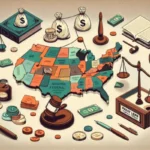
States decide whether payday loans are allowed at all and what limits apply. That means legality in Texas, California, New York, Massachusetts, and similar states can look very different.
Review state-by-state rules for 2025 if you already know your state and need the local framework.
For borrowers, the practical takeaway is simple: don’t assume a lender is legal just because it serves your ZIP code. A lender still needs the right state authorization, and its pricing and repayment terms must stay inside the limits that apply where you live.
How To Check A Payday Lender’s Legality
The fastest way to check a lender is to verify three things in order: the state rule, the license, and the contract. If any one of those fails, pause before signing.
- Confirm The State Rule. Look up whether payday lending is allowed, limited, or banned in your state using the official regulator or state statute page.
- Check The Lender’s License. Search the business name in your state’s licensing database and look for an active status.
- Read The Actual Terms. Review APR, fees, repayment date, rollover language, and debit authorization before you accept anything.
- Compare The Offer With Safer Options. If the product looks expensive or unclear, compare it with alternatives to payday loans first.

What Legal Lenders Should Show On Their Website
A compliant website usually makes it easy to find the lender’s legal name, license number, state of authorization, fees, and repayment terms. That transparency matters because legal lenders should not force borrowers to hunt for basic facts.
If the site buries the rate details, avoids licensing information, or uses vague language like “fast approval” without a readable contract, treat that as a signal to slow down.
- No visible license number or state registration.
- Pressure to sign immediately without time to review the contract.
- Hidden fees, unclear repayment dates, or missing APR details.
- Aggressive collection language or threats before you borrow.
- Loan terms that do not match the rules of your state.

If The Lender Looks Illegal, What To Do Next
When something feels off, the safest move is to stop and verify before money changes hands. If you already borrowed and now suspect the lender is unlicensed or breaking state law, save every message, agreement, payment record, and website screenshot.
Then file a complaint with your state regulator and, when appropriate, the CFPB. The complaint process helps you document the issue and gives regulators something they can investigate.
Start with your state’s financial regulator. If the issue involves unfair lending practices, the CFPB is another useful federal channel.
Keep the lender’s name, website, loan offer, contract, fee schedule, emails, texts, and any debit or payment records.
If you are already under pressure from collections or repeated withdrawals, it may be smarter to step back and look at predatory lender warning signs before you decide how to respond.

Why This Matters Before You Borrow
A legal payday loan can still be a costly loan. Legality only tells you whether the product is allowed under the rules that apply to you; it does not tell you whether it is affordable or a good fit.
That is why many borrowers should compare the loan against lower-cost options first, especially if the amount is small or the repayment window is tight. If you are not sure the loan fits your budget, consider alternative short-term borrowing options before signing.
The main payday loans hub can help you understand the broader product landscape, while the state-law page is the better next stop if you already know where you live.
Faqs

Oliver Pearson is a dedicated writer at QuickLoanPro, where he explores a wide range of general topics, focusing on financial literacy and innovative lending solutions. With a keen eye for detail and a passion for empowering readers, Oliver simplifies complex financial concepts, making them accessible to all. His ability to engage audiences with informative and relatable content has established him as a trusted voice in the financial writing community.

This post sheds light on a crucial aspect of the financial landscape in the U.S. Payday loans can serve as a quick fix for those facing unexpected expenses, but the regulatory environment plays a significant role in shaping the borrowing experience. The variance in state regulations is particularly striking; for instance, states like New York have stringent limits that protect consumers, while others allow much higher interest rates, leading to potential cycles of debt.
It’s interesting to see how the landscape of payday lending is evolving, especially with the emphasis on regulations and consumer protection. In my experience, the variation between states really can make a difference in people’s accessibility to fair lending options. I remember a friend in Texas who found herself trapped in a cycle of debt due to high interest rates, and she wished she’d had better information about her alternatives.
This post really resonates with me, especially the emphasis on the importance of understanding payday lender regulations before committing to a loan. It’s a bit alarming to see how much variability there is from state to state. For instance, states like New York have strict caps on interest rates, while others seem to have few controls at all. This disparity can lead to consumers in less regulated areas falling into debt traps without fully realizing the risks they’re taking.
The varying legality of payday loans across states highlights a larger issue regarding financial literacy and access to credit. Many borrowers, often in distressing situations, may not fully understand the implications of these loans or the regulatory nuances. For example, in states where payday lending is heavily regulated or banned, one can see a shift towards alternative credit options like installment loans or credit unions, which may offer more consumer-friendly terms.
It’s interesting to see how payday loan regulations can vary so much from state to state. I’ve recently looked into this because a friend of mine was considering a payday loan while facing some unexpected expenses. We spent quite a bit of time on state regulations and found that the lack of transparency can really complicate things. It’s definitely a situation where the lender’s website might paint a rosy picture, but the fine print tells a different story.
You’ve highlighted an essential point about payday loans and the often murky waters of state regulations. It’s true that navigating the complexities can feel overwhelming, especially when someone is in a tight spot financially. Your experience with your friend really illustrates the challenges many face when trying to find quick relief from unexpected expenses.
“I’m glad you’re exploring this important topic! If you’re looking for more insights on payday loan regulations and how to navigate them, check out this resource that breaks down the details clearly.”
https://quickloanpro.com/payday-loan-stress-what-to-check-before-you-buy