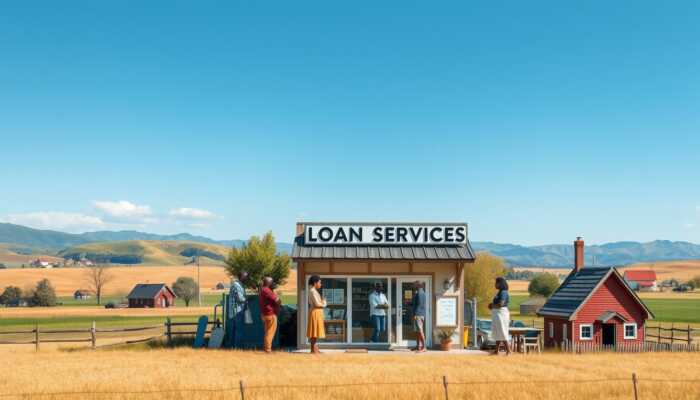
In rural communities, payday loans are often less about convenience than access. When banks, credit unions, and emergency savings are limited, high-cost borrowing can become one of the only fast options available.
This article focuses on how payday loan trends affect rural borrowers specifically: access barriers, fee pressure, repayment outcomes, and the wider effect on local households and businesses.
For the broader policy picture, see payday loan bans and their impact on communities, which covers the wider regulatory debate this page supports.
Why Rural Payday Loan Trends Look Different
Rural borrowers often face a narrower set of choices than urban consumers. A payday loan may be used for the same reasons everywhere — car repairs, utility bills, rent gaps, medical costs — but the path to repayment is usually harder in small towns where wages are lower, branch networks are thinner, and credit alternatives are less visible.
That difference matters. The dominant trend in rural lending is not simply higher usage; it is higher dependence on expensive short-term credit because the surrounding financial ecosystem offers fewer backup options. That is why this page stays focused on rural access and local effects rather than trying to compete with broader market-trends coverage.

The Core Tradeoff: Fast Cash Now, Tighter Budgets Later
A payday loan can feel immediate relief when a bill is due and cash flow is thin. In rural areas, that speed is especially persuasive because the alternatives may involve a long drive, a delayed approval process, or a credit check that excludes the borrower altogether. The downside is equally immediate: fees, interest, and short repayment windows can absorb the next paycheck before it reaches household essentials.
If you want the broader mechanics behind that cost structure, the article on payday loan disclosures is a useful companion because it explains how loan terms, fees, and repayment language should be read before borrowing.
| Rural lending reality | What it means in practice | Typical borrower outcome |
|---|---|---|
| Limited bank and credit union access | Fewer storefront alternatives, fewer lending relationships, and more travel friction | Borrower is more likely to choose the fastest available loan, even if it costs more |
| Higher fee pressure | Short repayment terms and high APRs can quickly consume the next paycheck | Household budgets tighten, and repeat borrowing becomes more likely |
| Lower backup savings | Less room to absorb an emergency without borrowing | A one-time shock can turn into a multi-paycheck debt cycle |
| Sparse local competition | Fewer lenders can mean fewer negotiated options and less transparency | Borrowers may accept terms they would likely reject in a larger market |
How Rural Communities Feel The Impact
The cost of a payday loan is not just a borrower problem. In small communities, the drain on household cash flow often shows up in local stores, service businesses, and family budgets. When a larger share of income goes toward fees and debt rollover, less money stays in the local economy.
That pattern can affect more than sales. It can influence how families plan groceries, transport, childcare, and medical visits. It can also increase stress, which is one reason payday loan use is often tied to broader financial strain rather than a single isolated emergency.

What The Current Trend Line Suggests
The current direction of payday lending is shaped by two forces that often move together: tighter regulation in some states and continued demand in communities where credit access remains uneven. Rural borrowers may encounter fewer storefront lenders than they once did, but online origination and mobile-first lending have changed how access works rather than removed the need altogether.
That is why the trend conversation should not stop at “more or fewer loans.” For rural communities, the more useful question is whether lenders are easier to compare, whether disclosures are clearer, and whether borrowers are being pushed toward safer alternatives when cash needs are urgent.
If you are comparing this angle with broader demographic analysis, the companion piece on payday loan trends by education level helps show how borrowing patterns vary across different consumer groups. For a policy-driven view, payday loan law loopholes explains how local rules can still leave room for high-cost lending structures.
Where The Strongest Alternatives Start
For rural borrowers, the best substitute is usually not another fast loan with similar terms. It is a smaller, clearer source of short-term support that leaves room for repayment without restarting the cycle.
- Local credit unions that may offer lower-cost small-dollar loans
- Community nonprofits that can help with emergency expenses
- Installment-style borrowing with longer repayment periods
- Budget adjustments that preserve cash for the next due date
For a practical next step, review payday loan alternatives for rural residents before taking on another short-term loan. If you are already comparing repayment options, payday loan repayment tips can help you structure the next few pay cycles more safely.
What Borrowers Should Check Before Using A Payday Loan
The goal is not to treat every payday loan as identical. Some borrowers use them once and move on; others get trapped by repeat borrowing. The difference usually comes down to whether the loan fits the timeline of the next paycheck and whether all costs are understood up front.
That is also where rural borrowers should be especially careful. A loan that looks manageable in a town with multiple financial options can become a poor fit when the borrower has fewer chances to refinance, consolidate, or replace the debt with something less expensive.
A Safer Borrowing Checklist
- Confirm the full cost, including fees and rollover charges.
- Make sure repayment fits the next two pay periods, not just the next one.
- Compare at least one alternative before signing.
- Avoid using one loan to cover another unless the new terms are clearly better.
- Keep a written repayment plan tied to income, bills, and due dates.
A Practical Next Step For Rural Readers
If your main question is whether payday lending is helping or hurting rural communities, the answer usually depends on who has access to cheaper credit, who does not, and how long the debt remains outstanding. The people most exposed to harm are the ones with the fewest off-ramps.
That is why the broader bans-and-regulation page remains the best place for policy context, while this article stays centered on rural access and community-level effects. Together, they give a clearer picture than either one alone.
Read The Broader Community-Impact Analysis
For the policy side of the story, including bans, state variation, and community outcomes, review the main analysis of payday loan bans and community impact. It gives the wider context this rural-focused article supports.
If you are still comparing options as a borrower, start with rural alternatives rather than another short-term loan.
Frequently Asked Questions
Are Payday Loans Still Popular In Rural Areas?
Yes, but popularity is only part of the story. In rural areas, usage often reflects limited alternatives, not stronger preference. Borrowers may choose payday loans because they are fast and available when other credit options are not.
Why Are Payday Loans Riskier For Rural Borrowers?
They can be riskier because the same short repayment window hits households with fewer savings, fewer lenders to compare, and less room to recover if a payment is missed.
What Is The Biggest Warning Sign Of A Payday Loan Cycle?
If a borrower needs a new loan to cover the old one, the debt is no longer solving a short-term problem. It is starting to take income away from essential spending and savings.
What Should Rural Consumers Read Next?
A good next stop is the guide to payday loan disclosures, followed by rural alternatives if borrowing is still on the table.

Megan Hannford is an insightful author at QuickLoanPro, where she explores a diverse array of general topics related to finance, personal development, and lifestyle. With a passion for empowering readers through accessible information, she distills complex concepts into engaging content that resonates with a wide audience. Megan holds a degree in Communications and brings her expertise in writing and research to create valuable resources that guide individuals toward informed financial decisions.


The issue of payday loans in rural communities is indeed a pressing one, and your exploration of the topic sheds light on a complex and often overlooked financial landscape. The reliance on payday loans as a “financial lifeline” for many underscores the systemic challenges faced by those in areas with limited access to banking services. As someone who hails from a rural background, I have witnessed firsthand how individuals can feel trapped by high-interest loans in desperate situations. It’s a painful cycle that can perpetuate financial instability, rather than alleviate it.
Your perspective really resonates with me. Growing up in a rural area, I’ve seen how difficult it can be to navigate financial challenges without the resources that urban areas often take for granted. Payday loans can seem like a quick fix, but as you pointed out, they often create a cycle of debt that’s hard to escape.
It’s really interesting to hear your perspective, especially coming from a rural background. The experience of feeling trapped by high-interest loans is something that too many people face. It can be difficult to find sustainable alternatives when traditional banking services are scarce or non-existent.
It’s really fascinating to think about how payday loans are viewed differently in urban versus rural settings. In rural communities, it makes sense that traditional banking options aren’t as accessible and that alternative financial products, like payday loans, rise to fill that gap. I’ve seen this firsthand in my own life — growing up in a small town, there were limited options for emergency funds. I remember my neighbor struggling to get through the month on a fixed income and having to resort to these high-cost loans. It was a bit of a double-edged sword because, while it provided immediate relief, it often led to a cycle of debt that was hard to escape.
Your exploration of payday loans in rural communities brings to light a persistent and often overlooked issue. Living in a small town myself, I’ve seen how limited access to traditional banking options can leave individuals feeling cornered. High-cost borrowing isn’t just about convenience; it’s often a last resort for families facing unexpected expenses, such as medical bills or urgent repairs. I’ve seen friends and neighbors struggle with these loans, rolling over debt because they have no alternative. It’s a cycle that can feel inescapable.