
When payday loans are banned, the biggest change is not just fewer storefront lenders—it is a shift in how people cover emergencies, what they pay to borrow, and where financial pressure lands in a community. For state-by-state context, see this overview of payday loan bans by state.
What a ban usually changes
A payday loan ban can reduce high-cost borrowing and repeated fee cycles, but it can also make short-term cash harder to find for households with thin credit files. The policy question is whether communities gain more from lower debt harm than they lose from reduced access to fast cash.
Bans, Regulation, And Alternatives At A Glance
The clearest way to understand payday loan bans is to compare them with regulated access and other short-term options. That comparison also helps explain why this topic overlaps with broader policy pages, including state law differences in payday loan terms and CFPB payday loan protections.
| Policy setup | What borrowers experience | Community effect |
|---|---|---|
| Full payday loan ban | No legal payday storefronts or online offers in the banned market. | Lower fee pressure, but more need for substitutes like credit unions or emergency aid. |
| Regulated access | Loans remain available, but with caps, disclosures, or cooling-off rules. | Some access remains, though debt cycles may continue if protections are weak. |
| Alternatives only | Borrowers shift toward installment loans, credit unions, or cash-advance apps. | Less predatory risk, but outcomes depend on whether alternatives are truly affordable. |
What Communities Tend To Gain — And Lose
The strongest arguments for bans focus on harm reduction. When very high-cost short-term loans disappear, fewer residents get trapped in repeated fee cycles, fewer households stack debt to cover one emergency, and there is less pressure on already fragile budgets. Communities can also see indirect gains from lower stress around rent, utilities, transportation, and medical bills.
Access To Credit
A ban can protect consumers from abusive pricing, but it may also leave people with fewer immediate borrowing choices if local banks and credit unions do not step in.
Emergency Borrowing
Households still need a way to handle car repairs, rent gaps, and medical expenses. In ban states, those needs often shift to friends, family, overdrafts, or installment products.
Financial Stress
The best community outcome is not just fewer loans; it is fewer households stuck in a cycle of catch-up payments, repeated fees, and worsening instability.
This is where the topic connects to the broader impact cluster, including the article on how payday loan trends affect rural communities. Rural borrowers often face the sharpest access problem after a ban because alternative lenders, bank branches, and transportation options may be limited.
Who Usually Benefits Most From A Ban?
Consumers who repeatedly borrowed at very high cost, households already under debt strain, and communities with heavy storefront concentration usually see the clearest upside. The tradeoff is that people with urgent cash needs may need other forms of relief fast, which is why bans work best when paired with realistic alternatives.
Why Some Bans Change Lender Behavior More Than Borrower Behavior
A ban can push lenders out of a market, but it does not automatically solve the underlying reason people used payday loans in the first place: income volatility. If wages are irregular and savings are thin, borrowers may move to another expensive product unless the market offers a better substitute. That is why policy outcomes depend on the surrounding ecosystem, not just the ban itself.
- Credit unions and banks can soften the impact if they offer small-dollar emergency loans.
- Installment products may be safer than payday loans, but only if fees and terms are transparent.
- Community aid, budgeting support, and employer advances can reduce the need for high-cost borrowing.
If your focus is the borrower side rather than the policy side, a related explainer on how payday loans affect personal finances gives a useful individual-level view of the same problem.
What to read next
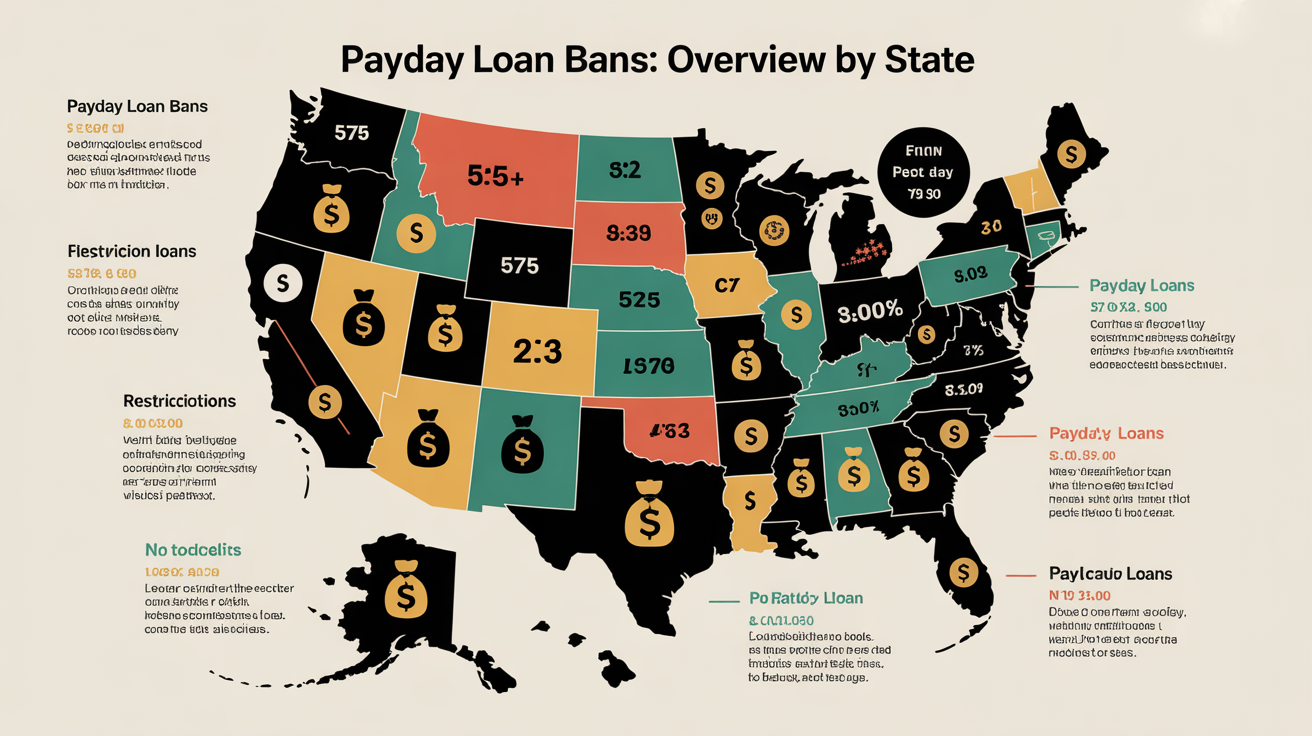
If you want the policy map behind this topic, the best next step is the state-by-state guide. It shows where bans exist, where restrictions are partial, and how state rules shape the market.
Common Questions About Payday Loan Bans
Which States Ban Payday Loans?
Several states prohibit payday lending outright, while others allow it with caps or licensing rules. The details vary, so the state-by-state overview is the best place to check current rules.
Have Payday Loans Been Shut Down?
In some markets, yes, but often only in the legal form used by storefront lenders. Borrowers may still see other short-term products that serve a similar role, which is why bans do not always eliminate high-cost borrowing altogether.
What Happens After A Payday Loan Ban?
The most common outcome is a drop in payday lending activity, followed by a shift toward other borrowing tools, fee-based products, or community support. Whether that shift helps or hurts depends on how affordable the alternatives are.
What Happens If I Never Pay Back A Payday Loan?
Collectors may continue to pursue the debt, fees can add up, and your finances can stay under pressure for a long time. The exact outcome depends on state law, the lender’s practices, and whether the debt is sold or reported.
Can You Go To Jail For An Unpaid Payday Loan?
Generally, no. Unpaid consumer debt is usually a civil matter, not a criminal one, although collection activity and court actions can still create serious consequences.
For readers comparing policy rules with practical borrowing limits, the CFPB overview and state law guide are the most useful companion pages, especially if you want to understand how bans, limits, and enforcement work together.



Jacob Harrison is a dynamic author specializing in a broad range of topics for QuickLoanPro. With a keen eye for detail and a passion for making financial concepts accessible, he helps readers navigate the complexities of personal finance, loans, and budgeting. Jacob’s insightful articles aim to empower individuals with the knowledge they need to make informed financial decisions, blending informative content with practical advice. Through his engaging writing style, he strives to connect with audiences, providing them with valuable resources for their financial journeys.


It’s interesting to see how personal loans are becoming a go-to option for so many in New Orleans. Having lived there myself, I remember the stress that unexpected expenses can bring, especially in a city where the cost of living can be unpredictable. It’s great to hear that QuickLoanPro emphasizes competitive rates and fair terms.
It really is eye-opening how personal loans have become more common in places like New Orleans. The unpredictability of expenses here can really take a toll on people. I remember when I lived there, even small things like car repairs or medical bills felt much more significant against the backdrop of the city’s fluctuating costs. It’s interesting how financial products trying to bridge that gap have evolved.
You’re spot on about the unpredictability of expenses in New Orleans. I think that sense of financial uncertainty is something a lot of people can relate to, especially in a city where life can throw unexpected challenges your way. Along with that, personal loans can definitely be a useful option for managing those stressors when they arise.
It’s interesting to see how the landscape of personal loans in New Orleans is shifting, especially in light of recent payday loan bans. The mention of evaluating risks and alternatives really resonates with me; it highlights the need for individuals to be informed and proactive in managing their financial situations.
Ah, the world of personal loans—a double-edged sword if there ever was one! It’s like that friend who always knows how to have a good time: they can either help you out of a jam or lead you into some regrettable decisions. I get it; life is full of unexpected twists, like stepping in a puddle while distracted by your phone. Suddenly, you’re $200 short because—surprise!—we all know that brand new pair of shoes isn’t water-resistant.
You make a great point about personal loans being like that unpredictable friend. It’s a real balancing act; they can bail you out when life hits hard, but if you’re not careful, they lead you down some sketchy paths. I’ve definitely experienced that “surprise!” moment when a sudden expense pops up and makes me question my choices—nothing worse than realizing you’ve just lost your budget to a whim.
You’ve nailed it. Personal loans do have that split personality. They can seamlessly glide into your life just when you need a little extra cash, but they also have a tendency to morph into something much more sinister if we’re not careful. It’s funny how financial decisions can reflect our everyday escapades—like cracking your phone screen while dodging a puddle. One minute you’re on the path, and the next, you’re confronted with an unexpected cost that wasn’t part of the plan.
“Absolutely, it’s all about striking that balance! If you ever find yourself in a pinch or just want to explore your options before diving in, check out this helpful resource to navigate the world of personal loans safely!”
https://quickloanpro.com/payday-loans-harvey-la
Your insights into the impact of payday loan bans and the state of personal loans in New Orleans resonate deeply, especially given the complex web of economic and social dynamics in the region. As you mentioned, personal loans can be a lifeline for many during financial emergencies. However, I find it critical to address the systemic issues that often lead individuals to rely on these financial products in the first place.
Your examination of payday loan bans raises important questions about the balance between reducing predatory lending practices and ensuring access to quick financial relief in times of crisis. While it’s heartening to consider that a ban could alleviate the burden of triple-digit fees and the cycle of debt many borrowers find themselves in, I find myself reflecting on the broader social implications of such a policy shift.
This post brings up an incredibly important and nuanced issue around payday loans and their bans. It really resonates with me, especially considering the financial anxiety that so many people face today. The contrast between losing access to immediate cash and reducing the burden of high-interest debt creates a challenging dilemma for many communities.
You raise an important point about the nuanced effects of payday loan bans. While the reduction in exorbitant fees is a clear benefit, it’s concerning to consider how limiting access to quick cash can exacerbate financial stress for those already scrapping by.