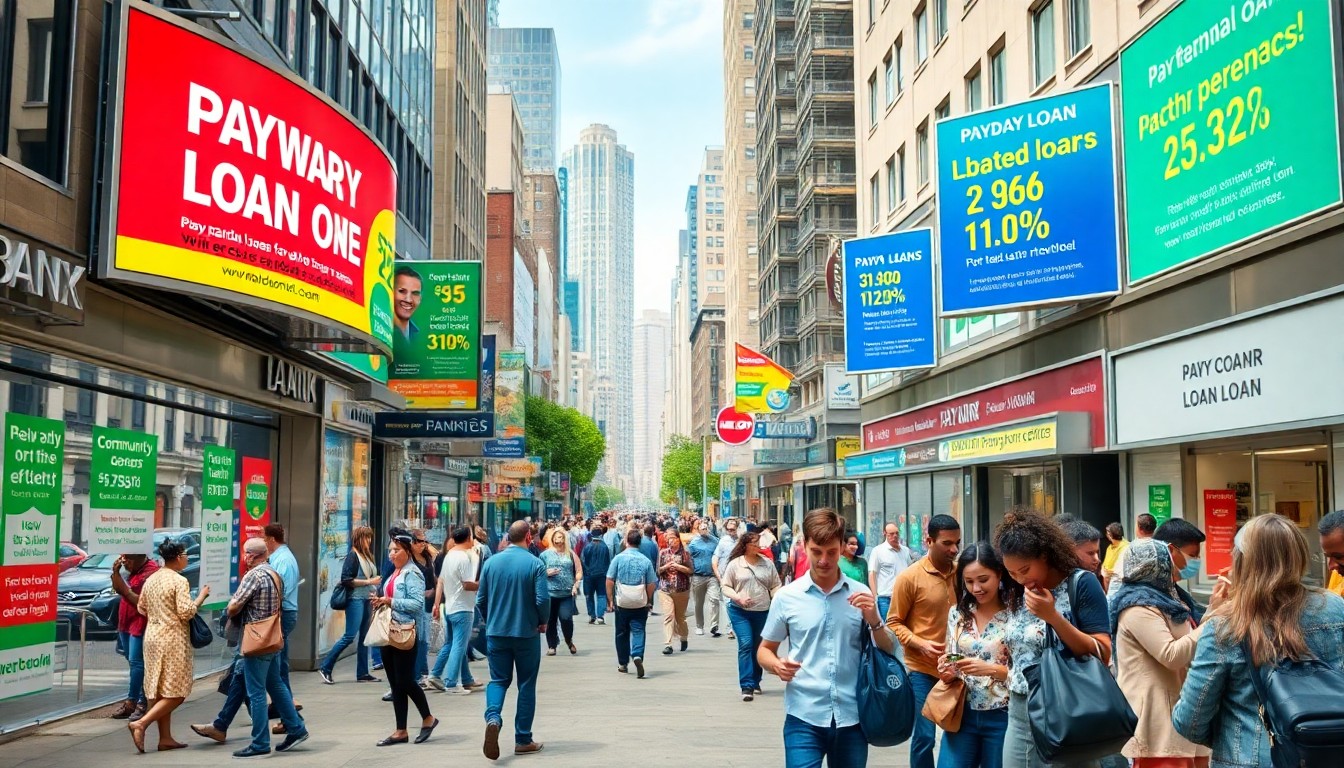
Urban Payday Loan Demand Is Shaped Less By Impulse Than By Pressure. In cities, high living costs, uneven access to mainstream credit, and fast-moving expenses can make short-term borrowing feel like the only available option.
For a broader market view, compare this urban angle with the 2025 payday loan data and trends page, which covers the wider industry picture.
Why Urban Areas See Stronger Payday Loan Pressure
Cities concentrate the conditions that make payday borrowing more likely: rent spikes, transportation costs, medical bills, unstable shifts, and limited emergency savings. When those pressures arrive at once, even a small cash shortfall can become urgent.
That does not mean every city borrower is the same. The clearest pattern is that urban residents often need money quickly, face fewer low-cost credit options, and make decisions under time pressure rather than from long-term planning.
- Demand Driver high-cost living with limited cash reserves.
- Risk Driver short repayment windows that can stack fees.
- Access Issue weaker access to banks, credit unions, or fair credit.
- Safer Path compare alternatives before borrowing.
Borrower Profiles That Appear Most Often In Cities
The urban pattern is not limited to one age group or one income band. The most common borrowers tend to share one thing: they are balancing multiple expenses while trying to cover a temporary gap.
- Young Adults often carry rent pressure, student debt, and modest savings.
- Low-Income Households use short-term credit to cover recurring basics like bills, groceries, or transportation.
- Renters In Underbanked Neighborhoods may have fewer branch options and fewer affordable credit products.
- Workers With Variable Schedules are more exposed to timing mismatches between pay and expenses.
Why City Borrowers Are More Exposed To Debt Traps
The problem is usually not the first loan. It is the second and third decision after the first due date arrives.
If the borrower cannot repay in full, fees can add up quickly, and the next paycheck may already be spoken for. That is how a one-time cash fix can turn into a repeating cycle.
For a deeper look at what that cycle can do to credit and repayment habits, see payday loans and credit recovery.
What Regulation Changes In Urban Markets
City borrowers are affected not only by personal finances but also by the rules that govern payday lending in each state. Some states limit fees and loan access more tightly than others, while looser markets can make payday loans easier to obtain but more expensive to carry.
That is why state rules matter so much in urban lending. They shape the pricing, the number of repeat loans allowed, and how much disclosure lenders must provide before a borrower signs anything.
If you want a broader legal breakdown, connect this article to payday loan laws in 2025. That page covers the wider state-by-state picture, while this one focuses on how those rules play out in dense, high-cost cities.
Federal Oversight And Borrower Protections
The CFPB has focused on the risks tied to short-term, high-cost lending, especially where borrowers may be pushed into a cycle of renewals or repeated borrowing. That matters in cities because urban borrowers are often easier to reach through online ads and app-based loan offers.
Borrowers benefit most when lenders are required to explain repayment terms clearly and assess the ability to repay before issuing the loan.
Digital Lending Changed The Way Urban Borrowers Shop
Online and mobile payday lending have made borrowing faster, but not necessarily safer. A borrower can now compare offers, complete an application, and receive a decision quickly, which is useful in an emergency and dangerous when the choice is made too fast.
For a related technology angle, see tech innovations in the payday loan industry.
Safer Options Before You Borrow
Urban borrowers usually have more choices than they think, but the best option depends on timing. The right move is to compare the actual cost, repayment speed, and risk of repeat borrowing before taking a payday loan.
- Credit Unions often lower cost and more flexible than storefront payday loans.
- Community Development Financial Institutions designed to serve underbanked borrowers with more manageable terms.
- Installment Loans may spread repayment over longer periods, which can reduce pressure on the next paycheck.
- Employer Advances Or Earned Wage Access may work for a short timing gap if fees are low and the pay timing is clear.
- Nonprofit Lenders And Budget Reset Tools can help if the problem is recurring rather than one-time.
If the issue is a rejected application, it may help to read what to do after a payday loan denial before trying another high-cost lender.
If you are comparing broader alternatives, personal loans as payday alternatives can be a useful next step when credit and income allow it.
When The Urban Context Changes The Decision
The city version of payday borrowing is usually about speed, not strategy. That is why the best decision often depends on whether the need is truly immediate or whether a lower-cost option can cover the same gap within a few days.
The Bigger Economic Effect On Cities
High payday loan usage does more than affect an individual borrower. It can drain spending power from neighborhoods, reduce local business activity, and make it harder for households to build a financial buffer.
When a share of income is absorbed by fees and rollover costs, less money circulates through the community. That makes the issue both a household concern and a city-level economic concern.
This is also why the topic overlaps with broader trend coverage: the urban story is one slice of the larger market, but it has distinct consequences for housing stability, transportation, and day-to-day cash flow.
A Practical Next Step
If you are researching the broader market rather than the city-specific lens, the best companion page is Payday Loan Data Insights and Trends for 2025. It owns the general trend and data intent, while this page stays focused on how urban pressure changes borrower behavior.
For a narrower behavioral angle, you can also look at payday loan trends and insights on demographics or age-group trends to see how urban demand overlaps with other borrower segments.
Frequently Asked Questions

Oliver Pearson is a dedicated writer at QuickLoanPro, where he explores a wide range of general topics, focusing on financial literacy and innovative lending solutions. With a keen eye for detail and a passion for empowering readers, Oliver simplifies complex financial concepts, making them accessible to all. His ability to engage audiences with informative and relatable content has established him as a trusted voice in the financial writing community.


It’s fascinating to see how the dynamics of urban living are shaping financial behaviors, particularly regarding payday loans. As you’ve highlighted, the unique pressures of city life—rising costs, stagnant wages, and unexpected expenses—can quickly spiral into crises for many individuals.
It’s refreshing to see how you’re grasping the link between urban living and financial behaviors. The situation has become quite intricate, hasn’t it? City life can often feel like a juggling act; we’re constantly trying to manage high rents, groceries that seem to cost an arm and a leg, and maybe even student loans creeping back into our lives. All of these factors create a unique financial landscape, particularly for those living paycheck to paycheck.
This post really touches on a crucial issue facing many urban communities today. It’s fascinating yet concerning to see how economic factors intertwine with the increasing reliance on payday loans. Personally, I’ve seen friends and family members struggle to make ends meet due to rising costs and stagnant wages, and it’s disheartening to witness them turning to these high-interest loans out of sheer desperation.
The rise in payday loan usage really underscores the broader conversation about financial literacy and the accessibility of traditional banking. In urban settings, where expenses can spike unpredictably, people often turn to these loans out of sheer necessity. However, it’s crucial not just to understand the immediate financial pressures, but also to seek out long-term solutions—like community financial education initiatives that empower individuals to manage their resources more effectively.
It’s interesting to see how urban economic pressures are shifting people’s financial behaviors. The increasing reliance on payday loans is definitely concerning. I’ve seen friends get caught in that cycle; it’s like putting a band-aid on a serious wound. I wonder if community initiatives or financial literacy programs could help bridge the gap since so many folks feel trapped without access to traditional banking. It’d be cool to see local governments or nonprofits step in to offer alternative solutions—like emergency funds or interest-free loans. What do you all think? Can we tackle the root causes alongside managing the immediate needs?
It’s interesting to see how urban economic pressures really shape the reliance on payday loans. I’ve noticed in my own city that the convenience often outweighs the long-term risks for many people. It makes me think about how financial literacy plays such a crucial role in these decisions. For example, if folks were more informed about alternatives like credit unions or community lending programs, maybe they’d feel empowered to seek better options.
It’s interesting how urban life is such a double-edged sword when it comes to financial pressure. On one hand, cities offer tons of opportunities, but on the other, the cost of living can feel suffocating. I’ve seen friends in New Orleans caught in that payday loan cycle, where a missed paycheck can spiral into a much bigger problem.
You raise a really good point about urban life being a double-edged sword. Cities can be vibrant and full of opportunities, but the cost of living often doesn’t match the salary scales, leaving many people in a tough spot, like your friends in New Orleans.