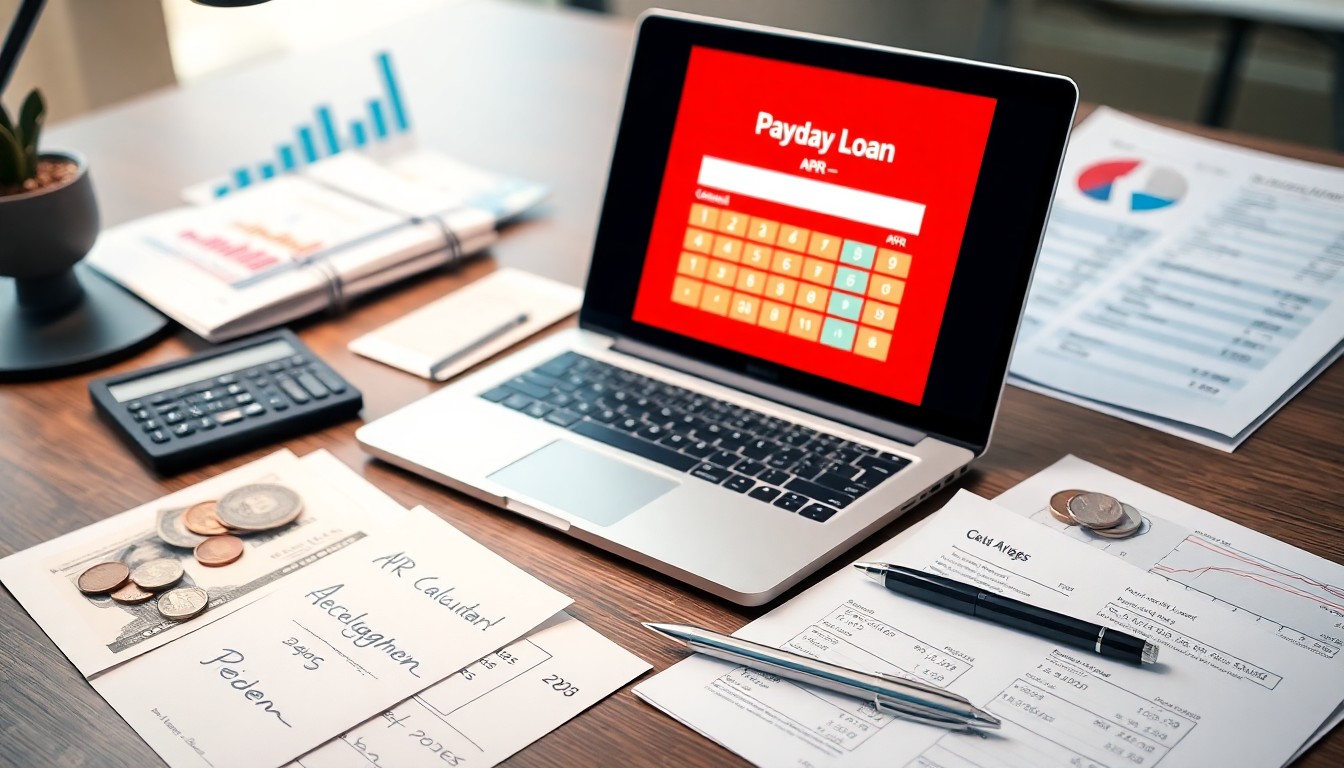
APR shows the true yearly cost of borrowing, which is why it matters so much with payday loans. A good calculator helps you turn a short-term fee into a clear annual rate so you can compare offers on equal terms.
If you want the broader cost picture first, see our guide to calculating payday loan costs. If your main goal is payment timing rather than APR, the interest calculator guide is the better fit.
What this calculator should tell you fast
- the loan amount you’re actually borrowing
- the fees added on top of that amount
- the loan term, usually in days or weeks
- the APR, which lets you compare offers fairly
- the total dollar cost, not just the sticker rate
How Apr Calculators Help You Judge A Payday Loan
APR matters because payday loans are usually short-term, so the yearly rate can look extreme even when the cash advance itself seems small. The calculator converts a short repayment window and any upfront fee into an annualized number, making the loan easier to compare against other borrowing options.
That comparison is the real value. A lender advertising the same loan amount may look cheaper at first glance, but a higher fee, a shorter term, or a rollover charge can push the APR far above what you expected. If you also want to compare repayment structure, it helps to pair this page with the payday loan repayment calculator so you can see both the rate and the payment burden.
How To Use The Calculator Without Skewing The Result
The fastest way to get a useful APR estimate is to enter clean, complete inputs. Payday loan pricing can change dramatically when a fee or a few extra days are left out, so accuracy matters more here than with many other loan types.
1. Enter the loan amount
Use the exact amount you will receive, not the amount you hope to repay.
2. Set the term
Choose the true repayment period in days or weeks, not a rounded guess.
3. Add every fee
Include origination fees, processing charges, and any required add-ons.
4. Review the annualized result
Use the APR to compare the loan against other offers, not as a stand-alone approval signal.
Example: A $500 Payday Loan With A $50 Fee
If you borrow $500 for 14 days and pay a $50 fee, the fee is 10% of the loan amount for only two weeks. When annualized, that short-term charge produces a very high APR, which is exactly why payday loans can look far more expensive in APR terms than they do in cash-out terms.
- Loan amount: $500
- Term: 14 days
- Fee: $50
- What to watch: the APR, plus the total repayment amount
That same loan can look very different if the term changes or the fee changes. A longer term can lower the annualized percentage, while a higher fee can push it up quickly. This is why APR is a comparison tool, not just a math exercise.
What To Compare Before You Borrow
APR is the headline number, but it should not be the only number you look at. The best choice is the loan that fits your repayment ability without forcing you into renewals, late fees, or another loan to cover the first one.
- Repayment Date Can you pay it back on the scheduled day?
- Fee Structure Is the lender charging one upfront fee or multiple charges?
- Rollover Risk What happens if you cannot repay on time?
- Lender Transparency Are the costs written clearly before you apply?
- Alternatives Would a lower-cost option reduce the chance of repeat borrowing?
For a broader view of risk, the payday loan pitfalls guide explains the common traps that make a short-term loan much more expensive than it first appears. If you already know you need a different structure, compare those costs against the payday loan alternatives before you sign anything.
When To Use Apr, Interest, Or Repayment Calculators
Use the right tool for the question you are asking. APR tells you the annualized cost, interest calculators focus on the borrowing charge itself, and repayment calculators show how payments fit your budget.
If you are choosing between lenders, APR is usually the best starting point. If you are checking whether a payment plan is realistic, the repayment calculator is more useful. If you want to see the cost of the financing charge alone, use the interest calculator.
Where Apr Calculators Can Mislead You
APR calculators are useful, but they are only as good as the information you put in. They may miss lender-specific details, especially if the fee structure is complicated or if the loan agreement includes extra charges that are not obvious at first glance.
Fees not included
Late penalties, rollover charges, and service fees can change the real cost materially.
Wrong term length
Entering 30 days instead of 14 days can make the APR look much lower than it truly is.
State rules ignored
Different state regulations can affect what fees and rates are even allowed.
If you want a fuller look at the legal side, review payday loan laws by state before treating any calculator result as final. Rules can cap fees, limit rollovers, or change what a lender must disclose.
A Practical Decision Path Before You Click Apply
- Check the loan amount, term, and fees.
- Run the APR estimate and note the total cost.
- Compare that result with at least one other lender or alternative.
- Confirm whether you can repay on time without rolling the loan over.
- Only move forward if the terms still fit your budget after the full cost is clear.
That last step is where many borrowers save money. If the APR looks high and the schedule feels tight, a short-term loan can become expensive very quickly. In that case, it is worth exploring a safer backup before borrowing at all.
Need The Interest-Focused Version Instead?
If you are comparing payment cost or want to see how the charge itself changes without the APR framing, use the dedicated interest calculator guide. It is the cleaner choice when you care more about repayment math than annualized borrowing cost.
Frequently Asked Questions

Jacob Harrison is a dynamic author specializing in a broad range of topics for QuickLoanPro. With a keen eye for detail and a passion for making financial concepts accessible, he helps readers navigate the complexities of personal finance, loans, and budgeting. Jacob’s insightful articles aim to empower individuals with the knowledge they need to make informed financial decisions, blending informative content with practical advice. Through his engaging writing style, he strives to connect with audiences, providing them with valuable resources for their financial journeys.


I find it really interesting how you broke down the APR and its importance in understanding payday loans—often, folks just look at how much they’ll pay back without considering those hidden costs. It reminds me of a friend who took out a payday loan a while back and didn’t realize the total costs until it was too late; he got hit with fees he didn’t even expect. It’s kind of alarming that so many people get trapped in those cycles without realizing they could be making better financial choices just by being informed.
Your insights on the significance of APR in borrowing, especially concerning payday loans, really resonate with me. Many borrowers often overlook the total cost of a loan by focusing solely on the interest rate. The example you provided about a payday loan with a 300% APR starkly illustrates how quickly debt can accumulate, potentially trapping borrowers in a cycle of borrowing that compounds their financial burden.
Your exploration of APR in the context of payday loans really strikes a chord. It’s fascinating how often borrowers overlook the true cost of loans simply by not paying enough attention to APR. It reminds me of when I first started managing my finances; I took out a small loan without fully understanding the fees included. The realization hit me hard when the repayment turned out to be far higher than I anticipated.
You bring up such an important point about the often-overlooked costs of loans, especially with payday lending. I’ve had a similar experience when I first started digging into my finances. There was a time when I took out what I thought was a manageable credit card, only to realize later that the interest rates were much more than I expected. It’s easy to get caught up in the initial excitement of having access to cash without fully grasping the long-term implications.
I really appreciate how you highlighted the importance of understanding APR when it comes to loans, especially payday loans, which can sometimes get a bad rap! It’s something that too many people overlook, but knowing the total cost of borrowing can make a massive difference in financial decision-making.
It’s true that the conversation around payday loans can get pretty heated, often overshadowing the nuances involved. Understanding APR is such a crucial aspect because it really lays bare the total cost of borrowing. Many people underestimate how quickly fees can stack up, especially with the short repayment periods typical of these loans.
You bring up an important point about payday loans and the conversation around them. The focus on APR really does offer a clearer picture of what borrowers are getting into. It’s interesting how many people see a quick cash solution without fully grasping the long-term implications. Those short repayment periods can catch you off guard, and it’s easy for fees to snowball if you’re not careful.
It’s interesting how understanding APR can truly transform our approach to borrowing. When I first started looking into loans, I remember being overwhelmed by the numbers. It wasn’t until I used an APR calculator that I began to see the full cost of my potential loans, including those hidden fees.