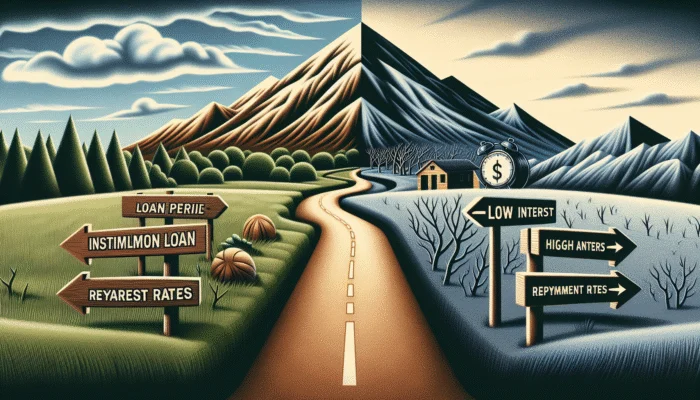
If you need cash and are weighing speed against cost, the better choice usually depends on how long you need to repay and how much room you have in your budget. For most borrowers, installment loans are the safer long-term fit, while payday loans are the faster but far more expensive stopgap.
Quick decision
Choose an installment loan if you want fixed payments over time, a larger borrowing limit, and a lower overall cost. Choose a payday loan only if you have a very short gap, no lower-cost option, and a plan to repay the full amount on your next paycheck.
If you are still comparing safer short-term options, start with alternatives to payday loans before you commit.
The Fastest Way To Compare The Two
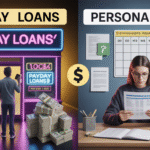
The core difference is simple: installment loans spread repayment over several months or years, while payday loans usually come due in one lump sum on your next payday. That difference changes everything else, including the monthly payment, the total cost, the risk of missed payments, and whether the loan can realistically fit your budget.
| Feature | Installment loan | Payday loan |
|---|---|---|
| Repayment | Fixed monthly payments over a set term | Usually due in full on your next payday |
| Typical cost | Often about 6% to 36% APR, depending on credit and lender | Can exceed 400% APR once fees are included |
| Loan size | Often from a few hundred dollars to tens of thousands | Usually much smaller, commonly $100 to $1,000 |
| Credit impact | Can help build credit when paid on time | Often not reported unless it goes to collections |
| Best use case | A planned expense you can repay in manageable installments | A very short emergency gap when no better option exists |
How The Repayment Structure Changes The Risk
An installment loan is built for budgeting. You borrow a set amount, then repay it through scheduled installments over months or years. That structure makes the payment predictable, which is why installment loans are often used for car repairs, medical bills, home improvements, education costs, and other expenses that cannot be paid all at once.
A payday loan is built for speed, not affordability. It is usually due within two to four weeks, and the lender expects repayment in one lump sum. That short timeline can create immediate pressure on your next paycheck, especially if you still have rent, groceries, utilities, or childcare to cover.
That is why the question is not just which loan is easier to get. The better question is which one you can repay without putting your next month at risk. For many readers, the answer starts with the structure of the loan before the advertised speed. If your budget is already tight, it is worth reviewing how payday loans affect your finances before making a decision.

What Installment Loans Are Designed To Do
Installment loans are meant to spread the cost of borrowing over a fixed term. The lender gives you a lump sum, and you pay it back in equal amounts on a monthly schedule. That can make larger expenses much easier to handle because you are not forced to clear the entire balance at once.
In practical terms, that means a $3,000 or $10,000 expense is more likely to be manageable through a personal installment loan than through a payday loan. The payment may last several months or several years, but the tradeoff is usually a much lower total cost than a payday product.
Installment loans can also be more flexible in amount and term. Depending on the lender and your credit profile, terms may run from a few months to several years, and rates may vary based on credit, income, and debt-to-income ratio. Borrowers with stronger credit often qualify for better pricing, while those with weaker credit may still be able to get approved, but at a higher rate.
What Payday Loans Are Designed To Do
Payday loans are short-term loans meant to bridge a very short gap until your next paycheck. They are often marketed as fast and convenient, and in some cases they require little more than proof of income, a bank account, and basic identification. That convenience is exactly why they are popular in emergencies.
The problem is cost. Because the loan is due so quickly, the fees can be extremely high when translated into APR. A payday loan may look small on paper, but once fees and renewal charges are added, the total cost can climb fast. If repayment is missed, the loan can roll over, late fees can stack up, and the debt can become harder to escape.
If you are trying to understand the mechanics of these products in a more local context, you may also want to compare state-specific rules such as payday loans in Georgia or payday loans in Arizona, since regulations can change how costly or available they are.
Which Should You Choose?
Choose an installment loan if:
- You need more than a few hundred dollars.
- You want fixed monthly payments and a clear payoff date.
- You can handle a longer repayment schedule.
- You want a lower total cost and possible credit-building benefit.
Choose a payday loan only if:
- You have a very short-term cash gap.
- You expect a paycheck within days and know the exact repayment date.
- You have exhausted lower-cost options.
- You can repay in full without triggering overdrafts or new borrowing.
If the answer is anything other than a clear and confident yes, it is usually worth exploring cash advance apps vs payday loans or other lower-cost options before taking on a payday product.
Cost, Fees, And Borrowing Limits
The biggest financial difference between the two loan types is not just the headline rate. It is the total cost over time. Installment loans usually come with lower APRs, though the exact rate depends on your credit, income, and the lender’s underwriting criteria. Some lenders may also charge origination fees or late fees, so the full cost still deserves a close look.
Payday loans are usually much smaller but much more expensive. They are often capped between $100 and $1,000, depending on state law and the borrower’s income. Even when the dollar amount looks manageable, the fee structure can make repayment surprisingly difficult because the amount due is compressed into a very short period.
That difference in loan size matters. If you need a modest bridge for a bill and can repay very soon, a payday loan may appear convenient. But if your need is larger than a few hundred dollars, or if the timing of your next paycheck is uncertain, an installment loan is usually the more workable structure.
Why Apr Can Be Misleading If You Look At It Alone
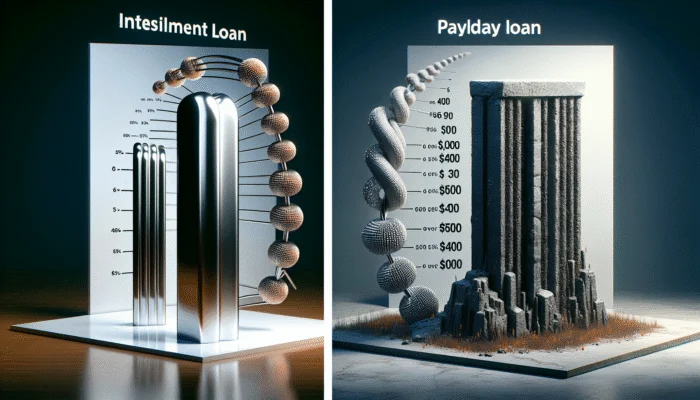
APR is important, but it is not the only number that matters. A lower APR on a longer-term installment loan can still cost more overall if you stretch repayment for years. On the other hand, a payday loan’s very short term can make the fee feel smaller in dollar terms, even while the implied APR is dramatically higher.
The better comparison is total repayment. Ask yourself how much you will pay back in all, how quickly it will leave your budget, and what happens if your income changes before the loan is fully repaid. That is the practical difference that matters to most borrowers.
How Fees Affect The Real Price
Installment loans may include origination fees, late fees, or prepayment rules depending on the lender. Payday loans often include finance charges that can be especially costly for the short term, plus possible rollover fees or bank fees if repayment fails. For both products, the agreement matters more than the marketing headline.
That is why reading the loan terms is essential. The advertised rate can hide how expensive the loan becomes once fees, payment timing, and penalties are added. If you are comparing multiple offers, focus on the total amount due at payoff rather than just the monthly payment.
Eligibility, Credit Impact, And What Lenders Look For
Installment lenders typically look at credit score, income, existing debt, and repayment history. A stronger credit profile can improve your approval odds and lower your rate. In some cases, installment payments reported on time may help you build credit over time, which is useful if you want access to better loans later.
Payday lenders usually care less about credit and more about proof that you have a job or regular income. That makes payday loans easier to access for some borrowers, including people with bad credit. But the tradeoff is the cost and the risk of default, overdraft charges, or collections if the payment cannot be made on time.
Missing an installment payment can hurt your credit and lead to late fees. Missing a payday loan payment can be even more disruptive because the lender may try to debit your account on the scheduled date. If your finances are already strained, the risk is not just one late fee; it is the possibility of a cascading cash-flow problem.
Safer Alternatives Worth Comparing First
If your goal is to solve a short-term cash problem without paying payday-level costs, there are usually better options to compare first. A lower-cost installment product, a credit union loan, a small emergency loan, or even a short-term cash advance app may be less damaging than a traditional payday loan depending on your situation.
QuickLoanPro’s alternatives to payday loans guide is a useful next stop if you are trying to avoid a high-cost short-term loan altogether. If your situation is broader and you want a closer look at structured borrowing, the main installment loans page is the right companion page for deeper detail.
You can also compare the mechanics of other short-term products, especially if you are deciding between a loan and a cash advance. That can help you avoid choosing the fastest option when a less expensive one would work just as well.
If you want the better long-term fit, start here
Installment loans are usually the stronger choice when you need more time, want fixed payments, and care about the total cost. Payday loans make sense only when the amount is small, the timing is immediate, and repayment is certain.
Compare your options on the installment loans page, then review lower-cost alternatives to payday loans before you decide.
What The Answer Usually Comes Down To
For most borrowers, installment loans are better than payday loans because they are easier to budget, cheaper in the long run, and less likely to create a repayment crisis. Payday loans should be treated as a last-resort option for a very short cash emergency, not as a routine borrowing strategy.
That does not mean installment loans are risk-free. A bad loan can still strain your budget, especially if the term is too long or the rate is too high. It simply means the installment structure usually gives you more control and more room to recover if something changes.
If you are deciding today, use this test: can you repay the loan comfortably without missing other essentials? If the answer is yes and the amount is small, a payday loan may be possible but still expensive. If the answer is no, the installment structure or a lower-cost alternative is usually the better path.
Frequently Asked Questions
Are Installment Loans Better Than Payday Loans?
Usually, yes. Installment loans normally cost less, give you more time to repay, and are easier to fit into a monthly budget.
What Are The Disadvantages Of An Installment Loan?
They can still be expensive if the term is long or the rate is high, and missed payments can hurt your credit and add fees.
Can You Get A Payday Loan With Bad Credit?
Often yes, because payday lenders usually focus more on income than on credit history, but the borrowing cost is typically much higher.
How Much Would A $5,000 Personal Loan Cost A Month?
It depends on the rate and term, but a longer term lowers the monthly payment while increasing the total interest paid over time.
What Should I Do If I Cannot Repay On Time?
Contact the lender as soon as possible, review your repayment options, and avoid rolling the debt forward without understanding the full cost.

Megan Hannford is an insightful author at QuickLoanPro, where she explores a diverse array of general topics related to finance, personal development, and lifestyle. With a passion for empowering readers through accessible information, she distills complex concepts into engaging content that resonates with a wide audience. Megan holds a degree in Communications and brings her expertise in writing and research to create valuable resources that guide individuals toward informed financial decisions.


You’ve provided a clear comparison between installment loans and payday loans that emphasizes the significant differences in structure and costs. While both types appeal to borrowers at different stages or needs, it’s essential to dissect the implications they have not only on personal finances but also on larger societal behaviors and trends.
It’s fascinating to examine the stark differences between installment loans and payday loans as you’ve highlighted here. Having navigated both types of borrowing in the past, I truly appreciate the way you’ve broken down the fundamentals.
Your breakdown of the differences between installment and payday loans provides valuable clarity for those navigating their borrowing options. It’s interesting to see how the choice between these types of loans can significantly impact a borrower’s financial health.
It’s nice to hear that the breakdown resonated with you. The differences between installment and payday loans can sometimes feel overwhelming, especially when financial pressures are looming over someone’s head. It’s easy to see how a rushed decision could lead to a cascade of issues down the line.
Thank you for your thoughtful comment! If you’re interested in exploring your borrowing options further, check out this insightful resource to help you make informed decisions.
https://quickloanpro.com/payday-loans-laplace-la
This is such a timely topic! I remember when I was in a pinch a while back, and I contemplated a payday loan. Thankfully, I stumbled upon an installment loan option that turned out to be a better fit for my budget. The peace of mind with fixed payments over a few months made a huge difference. It’s wild how easily people can get trapped in the payday loan cycle, though, especially when they’re just looking for a quick fix.
Your analysis of the trade-offs between installment loans and payday loans is quite compelling and strikes a chord with many people navigating financial challenges. I would like to dig a little deeper into the implications of these financial products, particularly considering the psychological and societal impacts they can have on borrowers.
It’s interesting how the choice between installment loans and payday loans often comes down to a tight deadline. I remember a friend who once needed cash urgently, and they opted for a payday loan without really understanding the full cost. They ended up stuck in a cycle of debt that was hard to escape. Your emphasis on carefully reviewing repayment terms and considering alternatives really resonates with me. I think financial education plays a huge role in making better choices. Have you come across any successful financial literacy programs that help people navigate these options? It could really change the conversation around borrowing!