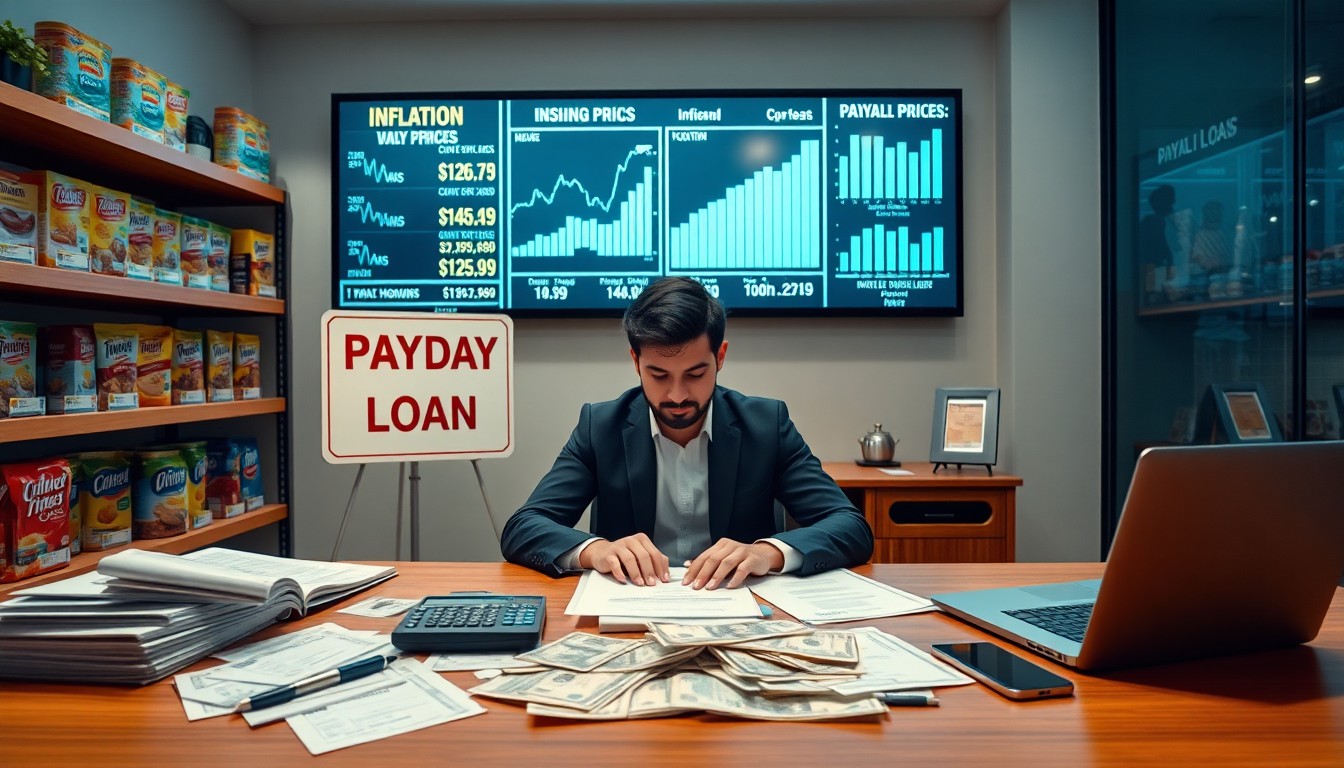
Inflation makes every shortfall feel bigger, which is why payday loans can look like a fast fix when cash is tight. In practice, they only make sense in narrow situations where the repayment is certain and the cost of delay is worse than the cost of borrowing.
Fast Decision Use a payday loan only if the expense is urgent, the payoff is unavoidable, and you can repay on the next payday without skipping rent, utilities, or essentials.
- Good fit: one small emergency, no cheaper option, repayment already mapped out.
- Bad fit: covering ordinary inflation pressure, rolling debt, or filling a recurring budget gap.
- Safer first checks: alternatives to payday loans, employer advances, and a short-term budget reset.
If you already know the loan would be expensive, the planning page on payday-loan financial planning is the better next stop. This article stays focused on the inflation question: when a payday loan can bridge a real emergency, and when it is likely to deepen financial strain.
Payday Loans And Inflation: The Decision That Matters
When prices rise faster than wages, borrowers often need to cover the same household basics with less breathing room. A payday loan can close a temporary gap, but inflation also makes the next paycheck feel smaller, which raises the risk of missing repayment or needing another loan soon after.
That is why the question is not whether payday loans exist or how they work in general. The real question is whether borrowing today protects you from a larger loss tomorrow. For many readers, the answer is no. For a narrow group with a confirmed payday, a one-time emergency, and no cheaper source of funds, it may be the least bad option.
| Option | Best use during inflation | Main drawback | When it usually wins |
|---|---|---|---|
| Payday Loan | True emergency that must be paid now and can be repaid in full next payday. | Very high APR and a short repayment window can trigger repeat borrowing. | Only when speed matters more than cost and the loan will not crowd out essentials. |
| Personal Loan | Bigger expense, more time to repay, or a need to consolidate debt. | Approval can take longer and may involve credit checks. | When you can wait for a lower-cost option. |
| Credit Card | Short-term cash-flow relief if the balance can be repaid quickly. | Ongoing interest can still be costly if the balance lingers. | When the rate is clearly lower than payday-loan pricing and repayment is realistic. |
| Friends, Family, Or Employer Advance | One-off gap with a known repayment date. | Can strain relationships or reduce the next paycheck. | When it avoids expensive borrowing and the terms are clear. |
What Inflation Changes About Borrowing
Inflation does two things at once: it pushes living costs up and it shrinks the cushion between paydays. That combination makes payday loans feel more tempting, because a small emergency can land on top of a much tighter budget.
It also makes repayment more fragile. A loan that looked manageable when you borrowed it can become difficult if groceries, fuel, rent, or utilities rise before your next paycheck arrives. That is where inflation turns a short-term loan into a broader budget problem.
When It Usually Backfires
You are borrowing to cover ongoing inflation stress, not a one-time emergency, or you already expect to roll the balance forward.
What To Check First
Compare the total repayment amount, confirm the due date, and make sure the next paycheck can absorb the hit without creating another gap.
The Real Risks: Fee Pressure, Rollover Pressure, And Budget Shock
The biggest danger is not simply that payday loans are expensive. It is that the repayment arrives all at once, just when inflation may already be eating into the rest of your spending plan. That can leave borrowers short on rent, transportation, food, or utilities.
Once that happens, the loan stops being a bridge and starts becoming a pressure point. Some borrowers then take a second loan to cover the first, which is how a temporary fix becomes a cycle of debt.
If you want to understand the broader consequences before you decide, the page on payday-loan pitfalls explains the most common failure points in more depth.
Common Warning Signs Before You Borrow
- Repayment would leave you short on a basic bill.
- You do not have a clear plan for the exact payday repayment date.
- You are using the loan to cover a recurring gap rather than a single emergency.
- You are considering a second loan to avoid missing the first payment.
- The lender is unclear about fees, APR, or automatic withdrawal timing.
Better Alternatives During High-Cost Months
For most households, the best inflation strategy is to look for lower-cost funding before choosing a payday loan. That does not always mean waiting for a perfect solution. It means choosing the option least likely to make next month worse.
Alternatives Worth Checking First
- Personal Loans Often better for larger expenses because they usually offer more time to repay and lower cost than a payday loan. See personal loan options if you need a broader comparison.
- Employer Or Salary Advances Useful when you need the money quickly and can tolerate the smaller next paycheck.
- Borrowing From Friends Or Family Best only when expectations are written down and the repayment timing is realistic.
- Budget Reallocation Helpful when the emergency is small enough to be solved by cutting nonessential spending for a pay period.
- Credit Cards Can be less expensive than payday loans if the balance is repaid fast and the interest rate is manageable.
If your goal is to reduce reliance on short-term borrowing altogether, consider the longer view in replace payday loans with savings. For readers who want a broader comparison of lower-cost paths, the alternatives guide is the most direct next step.
If You Still Plan To Borrow, Do It With A Repayment Plan Already Set
A payday loan should never be the starting point. It should be the last option after you have checked cheaper funding, trimmed the budget, and confirmed the exact source of repayment.
That repayment plan should be simple: what the loan covers, what date it comes due, what account it will pull from, and which bill you will not let slip because of it. If that picture is not clear, the loan is too risky for an inflation-stressed budget.
For a deeper step-by-step repayment approach, use payday-loan repayment tips. If the debt is already creating strain, the recovery page on financial recovery plans for payday loans is the better fit.
A Practical Rule For Inflation Months
If the loan helps you avoid a bigger loss, can be repaid in full on the next payday, and does not force you to skip essentials, it may be defensible. If any one of those points fails, the better choice is usually a lower-cost alternative or a budget reset.
What To Check Before You Sign
Total Repayment
Do not look only at the amount borrowed. Confirm the full amount you will owe, including fees.
Due Date
Match the due date to the actual payday and verify that other bills are still covered.
Automatic Withdrawal
Know exactly when the lender will pull funds so you do not accidentally trigger overdrafts.
Backup Plan
If the paycheck is smaller than expected, know which expense gets adjusted first.
Before You Borrow, Compare The Stress On Next Month’s Budget
That is the real test during inflation. A payday loan may solve today’s emergency, but the repayment can turn next month into a second emergency.
If you want a broader budgeting frame before making a decision, the cluster page on financial planning for payday loans remains the best companion piece. If you are already under pressure, payday loans and financial stress addresses the emotional and cash-flow side of the same problem.
Frequently Asked Questions
What Are Payday Loans?
Payday loans are short-term loans designed to be repaid on the borrower’s next payday, usually for urgent cash needs rather than long-term borrowing.
How Do Payday Loans Work?
A lender approves a small loan quickly, and repayment is usually taken from your next paycheck through a check or automatic withdrawal.
How Does Inflation Affect Payday Loans?
Inflation raises everyday expenses and can make the next paycheck tighter, which increases the chance that repayment will strain your budget.
What Alternatives Exist To Payday Loans?
Personal loans, credit cards, employer advances, borrowing from family or friends, and short-term budgeting changes are usually safer places to start.

Oliver Pearson is a dedicated writer at QuickLoanPro, where he explores a wide range of general topics, focusing on financial literacy and innovative lending solutions. With a keen eye for detail and a passion for empowering readers, Oliver simplifies complex financial concepts, making them accessible to all. His ability to engage audiences with informative and relatable content has established him as a trusted voice in the financial writing community.



This is such a pertinent discussion, especially considering the challenges many people face with unexpected expenses. I remember a time when I found myself needing a quick fix for car repairs right before payday. Although I considered a payday loan, I ultimately opted for a personal loan with a lower interest rate. It made me realize how important it is to explore alternatives before jumping into high-interest options.
It’s interesting to see payday loans highlighted alongside their risks and alternatives. I’ve noticed that many people turn to these short-term solutions out of sheer necessity, often unaware of the potential pitfalls. In my experience, exploring alternatives like credit unions or community assistance programs can sometimes alleviate that urgent need without the burden of high-interest payments.
The discussion around payday loans strikes me as particularly relevant today, especially given the economic pressures many individuals face. The immediacy and ease of obtaining a payday loan can indeed provide a quick solution to urgent financial crises, but as you’ve pointed out, the accompanying risks are significant. I’ve seen firsthand how reliance on these loans can spiral into a debt cycle; a colleague of mine found herself caught in this situation, using one loan to pay off another, which only deepened her financial woes.
Your exploration of payday loans brings to light an incredibly important and often misunderstood facet of personal finance, and I appreciate the clarity you provide in outlining their purpose and potential pitfalls. The immediacy of payday loans can undoubtedly be a lifeline for many in times of desperate need, such as when facing unexpected medical expenses or necessary car repairs. However, I believe it’s equally vital to discuss the emotional strain that often accompanies reliance on such financial products.
It’s really fascinating to dive into the nuances of payday loans and their role in personal finance. I think your point on the immediacy of these loans resonates particularly well with those of us who have faced unexpected financial hurdles, like urgent medical bills or unexpected car repairs. However, I’ve also seen firsthand how easily consumers can slip into a cycle of debt when the high-interest rates kick in.
Your exploration of payday loans really highlights the tough spot many find themselves in. I’ve seen friends struggle with unexpected financial burdens, and while payday loans can offer a quick fix, the high-interest rates often create a longer-term headache. It made me think about the importance of financial literacy and access to better alternatives, like credit unions offering low-interest loans or community support programs. Perhaps more conversations around budgeting and emergency funds could empower people to find sustainable solutions instead of resorting to such high-risk options. Are there community resources or tools that you’re aware of that help people avoid these pitfalls?
Your breakdown of payday loans really sheds light on an important topic that many people find themselves grappling with, especially in times of financial uncertainty. It’s true that these loans can offer a quick solution to pressing needs, like medical bills or car repairs, and I think it’s crucial to recognize the psychological aspect at play here. When faced with unexpected expenses, the emotional stress can prompt individuals to opt for these fast cash solutions without fully considering the long-term implications.
Ah, payday loans—the financial equivalent of that friend who offers you a slice of pizza but charges you double for it later. Sure, they can save you in a pinch, like when your car decides to play dead right before payday. But here’s the kicker: sometimes, that “quick fix” can lead to a game of financial whack-a-mole!
Your post highlights an important and often overlooked issue regarding the psychology of borrowing in times of inflation. The urgency that comes with financial strain can cloud judgment, making payday loans seem like a viable solutions. However, your emphasis on assessing the situation carefully before using these loans is crucial.
You’ve hit the nail on the head! It’s incredible how the heat of financial pressures can turn rational thought into a mirage, making payday loans look like a shiny knight in armor when, let’s be honest, they’re often more of a jester with a trick up their sleeve.
You’ve raised some crucial points regarding payday loans, especially in the context of inflation affecting personal finances. I find it particularly interesting how the urgent nature of financial distress can cloud one’s judgment, making payday loans seem like a necessary lifeline rather than an expensive pitfall.
You’ve raised an essential topic that merits deeper reflection, particularly in the current context where inflation is affecting so many aspects of daily life. The idea that payday loans can appear as a quick, accessible fix to urgent financial issues is a double-edged sword. While they do offer immediate relief in certain circumstances, relying on them without a clear repayment strategy can exacerbate existing financial stress—something that is already amplified by rising prices across various sectors.
Your analysis of payday loans in the context of inflation raises some important points worth expanding upon. The urgent appeal of these loans can indeed feel like a lifeline during moments of financial stress, especially when exacerbated by rising costs of living. However, as you’ve highlighted, this apparent solution is fraught with risks that often extend far beyond the immediate cash crisis.