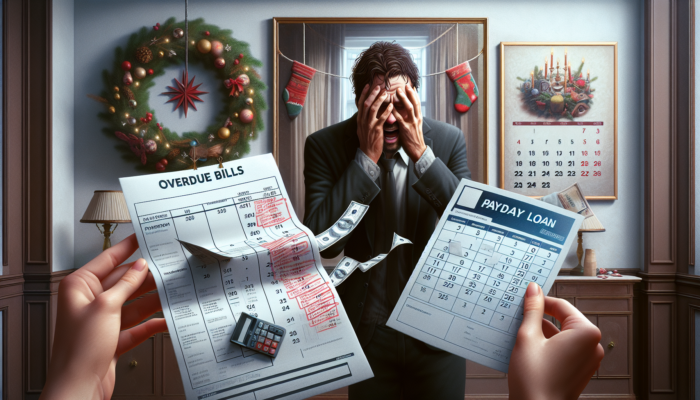
January can expose the gap between holiday spending and the bills that arrive right after it. When cash is tight, post-holiday financial relief becomes the real issue, and payday loans are only one possible response.
January Decision Snapshot
If holiday spending left you short, the best move is to compare the cost and repayment pressure of each option before borrowing. Payday loans can fill a same-week gap, but they are usually the most expensive choice in the room.
What Makes January Different
The holiday season often compresses a lot of spending into a short stretch: gifts, travel, dining, school breaks, and year-end events. Then January arrives with rent, utilities, loan payments, insurance bills, and credit card statements that may be larger than expected.
That timing matters. People do not usually search for payday loans in January because they want a loan in the abstract; they are trying to solve a cash-flow problem that feels immediate, uncomfortable, and time-sensitive. If that sounds familiar, start with the broader seasonal context in this post-holiday guide, then narrow the decision to what works for your next 7 to 30 days.
This is also why January is a useful moment to slow down and compare alternatives before borrowing. A payday loan may solve a same-day gap, but the repayment date can arrive before the rest of your budget has recovered. If you have even a little flexibility, you may be better served by a lower-cost option or a temporary bill strategy.
Useful Rule Of Thumb if the bill can wait until your next paycheck with a few adjustments, try a budget fix first. If the expense is urgent and unavoidable, compare the cheapest available short-term option before choosing a payday loan.
For readers weighing broader borrowing paths, alternatives to payday loans is the better next stop than rushing into the first offer you find.
When A Payday Loan Enters The Picture
The Cash Gap Is Small, But Timing Is Tight
Payday loans most often come up when a borrower needs a small amount quickly and cannot wait for a slower application or a late bill cycle. January creates those moments because holiday overspending tends to collide with normal monthly expenses. A flat tire, overdue utility bill, or rent shortfall can push someone toward a lender that promises fast approval.
The Repayment Date Is Close
The short repayment cycle is the core risk. If the next paycheck is already spoken for, the loan may simply move the problem forward by a few weeks. That is why the decision should focus on whether you can repay on time without creating another shortfall.
There Is No Cheaper Backup In Reach
When savings are gone and friends or family are not an option, a payday loan can look like the fastest available bridge. Even then, the decision should be made with full awareness of fees, APR, state rules, and the likelihood of repeat borrowing.

Timing Matters More Than Most Borrowers Expect
January is not only the month after holiday spending; it is also a month when household cash flow can change quickly. Seasonal jobs may end, overtime may disappear, and prices can feel higher because inflation has already eaten into the budget. That combination creates a narrow window where people often feel forced to decide fast.
For a more practical view of how timing can change the borrowing decision, the seasonal context in payday loans for seasonal expenses helps show why short-term cash pressure is not always a loan problem. Sometimes it is a timing, budgeting, or bill-priority problem first.
The Hidden Cost Of Rolling A January Loan Forward
The biggest danger is not just the fee on one payday loan. It is the risk that the loan becomes part of the next month’s problem, then the next one after that. Borrowers who miss the due date may face additional fees, renewed interest, or the need to borrow again to cover the original balance. That is how a temporary fix becomes a debt cycle.
If you need a deeper explanation of how damage can build over time, payday loan pitfalls and credit recovery after payday loans are the right supporting reads. They explain why the total cost matters more than the headline amount.
The original post’s strongest warning is still the right one: payday loans can provide short-term relief, but they should not become the default recovery plan. That advice is especially relevant in January, when many borrowers are already starting the year with less breathing room than they expected.

A January Recovery Plan That Does Not Rely On High-Cost Borrowing
The goal after the holidays is not just to survive until the next payday. It is to restore enough stability that the same problem does not keep coming back. That usually starts with a short, practical plan rather than a broad resolution.
1. Protect The Essentials First
Rent or mortgage, electricity, heat, transportation, and minimum debt payments should be ranked before anything discretionary. If a payday loan would only be used to cover a nonessential purchase, it is usually the wrong tool.
2. Rework The Calendar, Not Just The Budget
Call creditors, landlords, or service providers before the due date when possible. A change in payment timing can do more for January cash flow than a loan with a harsh repayment deadline.
3. Look For Cheaper Short-Term Credit
A credit union loan, personal loan, or employer assistance program may take a bit more time to arrange, but the repayment structure is often far easier to manage than a typical payday loan.
4. Set One Recovery Target For The Month
A realistic January goal might be building a small emergency cushion, paying one overdue bill, or stopping the habit of using short-term borrowing for everyday expenses. Keep the goal specific and measurable.
If you are trying to break the cycle entirely, there is value in reading the broader support material on alternatives to payday loans and the cluster-level resource on payday loans once you have a clear sense of whether borrowing is still necessary.
Need A Fast Next Step?
If January is already tight, compare your cheapest option first and only move to a payday loan if the repayment fits cleanly into the next paycheck.
What To Compare Before You Borrow
A January loan decision should be built around total cost and repayment fit, not speed alone. Before signing anything, look at the amount due, the repayment date, fees, and whether the lender allows any flexibility if your paycheck shifts.
| What to review | Why it matters in January | Better outcome to look for |
|---|---|---|
| Total Repayment Amount | A small loan can still become expensive if fees are layered on quickly | Clear, upfront cost with no surprise charges |
| Payoff Date | The due date may collide with rent, utilities, or another bill | Enough time to repay without creating a second gap |
| Apr And Fees | High-cost borrowing is especially damaging when January income is already stretched | A lower-cost product or a smaller total fee burden |
| Fallback Plan | If repayment slips, the next move matters as much as the first loan | A clear backup plan that does not depend on repeated borrowing |
For borrowers who want a stronger practical framework before making a decision, when and how to use emergency loans offers a better lens than choosing the first quick-cash product that appears online.

January Questions Borrowers Ask Most Often
The article’s original FAQ was broad, but a tighter January-focused set is more useful. These are the questions that tend to matter once the holiday bills land and cash is already thin.
If you are still comparing options after reading this, the best next step is to move from “fast money” thinking to “best fit” thinking. That usually means checking seasonal-worker borrowing guidance or returning to the broader payday loans hub only after you know what you can realistically repay.

Oliver Pearson is a dedicated writer at QuickLoanPro, where he explores a wide range of general topics, focusing on financial literacy and innovative lending solutions. With a keen eye for detail and a passion for empowering readers, Oliver simplifies complex financial concepts, making them accessible to all. His ability to engage audiences with informative and relatable content has established him as a trusted voice in the financial writing community.



You’ve highlighted a significant issue that many of us face after the holiday season. I’ve found that the financial strain often goes hand-in-hand with emotional stress. After the excitement of gift-giving and celebrations, it’s a harsh reality to confront the bills that follow.
This post highlights a critical yet often overlooked aspect of holiday spending—the psychological and financial aftermath that many face come January. The concept of a “financial hangover” resonates deeply, as it reflects not just the immediate monetary repercussions but also the broader cultural pressures to spend during the holiday season.
You’ve really captured the essence of what many experience post-holiday season. The psychological and financial aftermath can indeed be pretty overwhelming. The term “financial hangover” is spot on. It’s not just about the bills that start rolling in after indulging in festive spending, but also about the stress and pressure that comes from feeling like we need to keep up with societal expectations during the holidays.
You’ve touched on something that resonates with so many of us. The post-holiday letdown can feel like a weight on our shoulders. It’s interesting how, in the rush of gift-giving and celebrations, we end up chasing a certain kind of joy that can leave us more stressed afterward, both emotionally and financially.
You’ve hit on something really significant. The holiday season often feels like a whirlwind, driven by expectations that can push us to overspend. That “financial hangover” can linger long after the festivities are over, affecting not just our wallets but also our mental well-being as we reflect on our choices.
You bring up such an important point about the broader cultural pressures tied to holiday spending. It can feel overwhelming, can’t it? People often buy gifts or plan extravagant celebrations because they feel that’s what they’re supposed to do, rather than what they genuinely want or can afford.
You’re right, it can definitely feel overwhelming. The expectations around holiday spending often come from a mix of tradition and societal pressure. It’s like there’s this unwritten rulebook that suggests more is always better, making it tough for people to feel comfortable with simpler celebrations or gifts that truly reflect their values.
I completely relate to how overwhelming those expectations can feel during the holidays. It’s interesting to think about how much those societal pressures are intertwined with traditions that should ideally bring us joy. It’s like we end up chasing this idea of a perfect holiday experience instead of focusing on what makes us feel fulfilled and connected to our loved ones.
You bring up such an important point about the psychological and financial aftermath of holiday spending. The term “financial hangover” really captures that uneasy feeling many of us experience in January—all the excitement and joy can quickly turn into anxiety as we face the bills and realize how much we’ve overspent. It’s interesting how we often feel the pressure to conform to certain holiday spending norms, whether it’s buying elaborate gifts, hosting big gatherings, or participating in seasonal traditions that can strain our budgets.
Your exploration of the holiday spending aftermath resonates deeply, as many of us can relate to the financial challenges that arise in January. The cycle of joy followed by financial strain is unfortunately all too common. I believe it’s crucial to not only address the immediate need for cash solutions like payday loans but also to foster a mindset shift around holiday spending.
It’s so true that January can feel like a financial hangover after all the holiday fun. I’ve definitely been there, where the excitement of gift-giving leads to overspending. I think what stands out to me is the cycle of dependency on payday loans and how it can turn into a kind of quicksand. You end up trying to fix one problem with another, and it often just makes things worse in the long run.
Your perspective on the holiday financial hangover resonates deeply with many of us. It’s perplexing how the season of giving can lead to such financial strain. I’ve experienced this myself, finding that the joy of holiday spending often overshadows the practicalities of budgeting. It’s a cycle that’s hard to break, especially when companies aggressively market sales and limited-time offers, making it so tempting to overspend.
It’s true—there’s a strange juxtaposition during the holiday season. The excitement of giving often clouds our judgment around spending, and those clever marketing strategies from companies only add fuel to the fire. There’s something about that festive spirit that encourages a bit of indulgence, making it all too easy to overlook the less glamorous aspects of our financial health.
You’ve captured that holiday tension really well. It’s fascinating how the excitement of giving can sometimes transform into a pressure cooker of spending. I find it interesting how the marketing strategies not only push us toward spending more but often shift the focus from the feeling of connection that comes from giving to the actual gifts themselves.
You know, in the midst of all that holiday cheer, it’s easy to lose sight of our financial health; I came across this helpful guide on payday loans in Wisconsin that sheds light on navigating those tricky money situations we might face this season.
‘Payday Loans in Wisconsin: A Comprehensive Guide’
https://quickloanpro.com/payday-loans-in-wisconsin-a-comprehensive-guide/.
It’s interesting to hear that you relate to the holiday financial hangover. The cycle you mentioned is definitely one I’ve found myself in, and it seems so common these days. The way companies market to us really taps into that spirit of giving, making it feel like an obligation to spend more than we might be comfortable with.
This post really resonates with me because I think the aftermath of holiday spending is something that a lot of us experience but perhaps don’t talk about enough. Just last year, I found myself in the same situation—overspending on gifts and experiences, thinking it was all in good fun, only to face pretty significant financial strain as the new year rolled around.
I can totally relate to your experience with post-holiday spending. It’s so easy to get swept up in the excitement of the season, isn’t it? The pressure to give the perfect gifts or plan those memorable experiences can feel overwhelming. It’s something we don’t often talk about, but it can really impact our mental and financial wellbeing as the new year begins.
Your exploration of the financial consequences of holiday spending strikes a deep chord for many, especially as the festivities often overshadow the fundamentally practical aspects of budgeting. The “financial hangover” you describe is indeed an all-too-common experience, with statistics showing that a significant portion of Americans find themselves in debt post-holidays. This period can consequently be a time of reflection for individuals on their spending habits and the psychological triggers behind holiday expenditures.
The phenomenon of post-holiday financial stress is certainly a significant issue many of us face each January. It’s intriguing how the excitement of giving and celebrating can so quickly lead to anxiety when reality sets in. I’ve found that planning ahead—setting a dedicated holiday budget or saving throughout the year—can help mitigate this financial hangover.
You’ve highlighted a significant issue that many people face in the aftermath of the holiday season—the financial burdens that can linger well into January. I’ve observed similar trends among friends and family, where the joy of gifting and celebration can quickly turn into stress as bills arrive.
You’ve touched on something that resonates with so many of us. The contrast between the joyful celebrations and the subsequent financial pressures can be really hard to navigate. I’ve seen it in my own circle too—people gearing up for the holidays and then facing the reality of credit card bills in January. It’s almost like there’s this unspoken cycle we all get caught up in.
Your discussion on the financial repercussions of holiday spending resonates with many, as it highlights a cycle that traps individuals in reliance on quick cash solutions like payday loans. From personal experience, I’ve observed that the immediate satisfaction of gift-giving can often overshadow the long-term implications of overspending.
The financial hangover you mention is something I think many people can relate to, especially with the allure of holiday spending often leading to January blues. It’s curious how our societal norms around gift-giving and celebrations can inadvertently steer us into harmful financial patterns. I’ve been in that situation myself—feeling the high from generous spending during the holidays, only to feel the weight of my credit card bill come February.
This resonates with so many of us! I’ve always noticed that the post-holiday period can feel like a financial reset, but not always in a good way. The idea of turning to payday loans is concerning, though—while they might offer a quick fix, they often come with high-interest rates that just prolong the struggle.
You’ve hit the nail on the head, and it’s an issue that many of us feel, especially right after the holiday festivities. The post-holiday financial reset can be a harsh reality check. It’s easy to get caught up in the moment—spending a bit more on gifts and gatherings—only to face a looming budget crunch come January.
Your discussion on the impact of payday loans after the holiday season highlights a significant concern that many face. The emotional allure of the holiday spirit often leads individuals to overspend, and as you rightly pointed out, this can spiral into a financial hangover come January. I’ve observed this firsthand; it seems almost like we willingly suspend our budgeting principles in favor of short-term festive pleasures, only to feel a wave of anxiety as the credit card bills arrive in January.
It’s definitely true that January can feel like a financial hangover after the holiday season! Personally, I’ve had my share of post-holiday budgeting headaches, and I find that sometimes the emotional toll can be just as impactful as the financial strain. It’s easy to get caught up in the excitement of gift-giving, but when that credit card bill rolls in, reality hits hard.