Payday loan ads are built to create urgency, simplify risk, and make quick cash feel routine. If you know how to read them, the message becomes much easier to evaluate against the real costs.
What Payday Loan Ads Are Really Doing
They are not just promoting a product; they are steering attention toward speed, convenience, and approval odds while often leaving fees, APR, and repayment pressure in the background. For broader market context, readers can compare this page with payday loan stats and industry numbers.
- Ad claims often emphasize speed over total cost.
- Approval language can be more persuasive than precise.
- Urgency cues are designed to reduce hesitation.
- The safest response is to compare the ad against the full repayment terms.
A Quick Way To Judge An Ad
A payday loan ad should be treated like a sales pitch, not a financial shortcut. The best first question is simple: does the ad tell you what the loan actually costs, how fast repayment begins, and what happens if you miss the due date?
| Common ad claim | What it sounds like | What borrowers should verify | Red flag if this is missing |
|---|---|---|---|
| “Quick cash today” | Speed and relief | Funding time, repayment date, and whether the loan is due on the next payday | The ad hides timing pressure or repayment mechanics |
| “Easy approval” | Low friction | Eligibility rules, income checks, and whether approval is actually conditional | Words like “guaranteed” or “no questions asked” without details |
| “Low fee” or “low cost” | Affordable borrowing | APR, finance charges, rollover rules, and total dollar cost | The ad talks about fee size but not annualized cost |
| “No credit check” | Access for everyone | Whether the lender uses income verification, bank activity, or other underwriting steps | The pitch removes risk screening from the story entirely |
| “Guaranteed approval” | Certainty | Any exclusions, state restrictions, and actual underwriting standards | A promise that is too strong for a credit product |
- Loan amount and total finance charge
- APR and fee disclosures
- Repayment date and rollover rules
- State-specific limits or bans
They lean on urgency, fear, and relief. When a bill is due, “instant cash” can feel more persuasive than reading the fine print.
Where Payday Loan Ads Show Up And Why That Matters
The strongest ads are usually the ones readers see repeatedly. That repetition can normalize payday loans and make them feel like a standard budgeting tool rather than a high-cost last resort.
This is where media placement becomes part of the message: television, social media, search, direct mail, radio, display ads, and billboards all work differently, but they share the same goal—move the borrower from awareness to action as quickly as possible.

Repeated exposure can also create a false sense of safety. The more often a consumer sees payday loan messaging, the more ordinary it can feel, which is one reason these ads can influence decisions even when the long-term costs are severe.
The Psychology Behind The Pitch
Most payday loan ads are designed around a few predictable triggers. Urgency suggests you need to act now. Scarcity suggests the offer may vanish. Social proof suggests other people trust the product. And fear makes the immediate problem feel larger than the future cost.
- Urgency “Act now” language lowers careful comparison.
- Scarcity Limited-time framing compresses decision time.
- Relief The ad sells emotional comfort before the borrower sees full repayment math.
- Trust Cues Friendly visuals and testimonials can make a risky product feel routine.
If you want a deeper look at how those tactics are used in practice, compare this analysis with payday loan ads that work. For a broader product-side view, payday loan insights helps place advertising in the wider borrowing picture.
That context matters because a persuasive ad is not the same thing as a manageable loan.
What Misleading Payday Loan Ads Often Leave Out
The most misleading ads do not always make false statements outright. More often, they focus on a small favorable detail and quietly push the critical facts to a footer, a disclosure page, or fine print that many borrowers never reach.
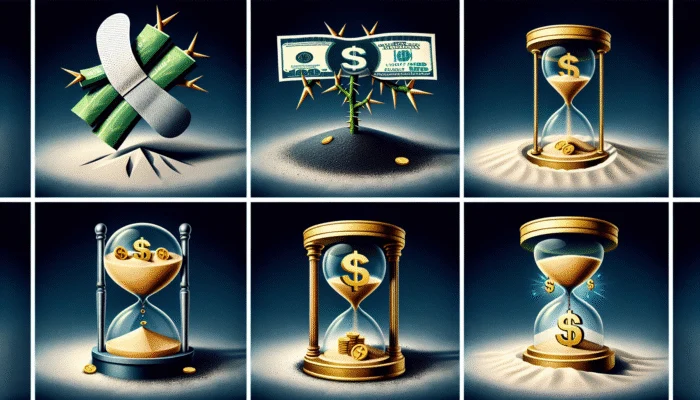
The ad says “fast approval,” but not how much the loan costs if repayment stretches or renews.
The ad says “easy money,” but not that the loan may come due on the next paycheck.
The ad says “low fee,” but not the APR or how the total cost compares with other forms of credit.
How To Spot A Predatory Ad In Seconds
- Look for vague approval language that avoids specific eligibility details.
- Check whether fees are visible without hunting through small print.
- Watch for wording that makes speed sound more important than cost.
- Be cautious if the ad discourages comparison shopping or time to review terms.
- Pause if the offer sounds too universal, too easy, or too certain.
If you want to judge whether a loan is legal or restricted in your state, the more useful next step is to review payday loan caps in the U.S. and the related state regulations guide before acting on any ad claim.
Ethics, Regulation, And Why This Category Keeps Drawing Scrutiny
Payday loan advertising sits at the intersection of consumer demand, regulatory oversight, and ethical concern. That is why the topic keeps appearing in lawsuits, enforcement actions, and state-level debates about whether the product itself, or the way it is marketed, is the bigger problem.
Ads aimed at low-income households, younger borrowers, or people with weak credit histories can be especially sensitive because the audience may have fewer lower-cost options available. That does not make every ad deceptive, but it does raise the stakes for clear disclosures and honest cost framing.
The legal side matters because advertising claims are not separate from lending terms. If a promotion overstates approval odds, understates cost, or hides material limitations, it can become a consumer-protection issue rather than a marketing issue.
If You Are Deciding Whether To Trust An Ad
Start with the ad, but finish with the terms. Compare the offer against total cost, repayment timing, and your state’s rules before moving forward.
For broader industry context, the strongest companion page is payday loan stats. For a more action-oriented next step, readers can also review alternatives to payday loans before choosing a high-cost product.
Frequently Asked Questions
Can Payday Loans Advertise?
Yes, but their advertising is subject to federal and state rules, including requirements around truthful disclosures and limits on deceptive claims.
Why Are Payday Loans Banned In Some Places?
Some states restrict or ban payday lending because of the high cost of borrowing, rollover risk, and the potential for repeated debt cycles.
What Is The 3-7-3 Rule?
The term can refer to a disclosure pattern used in lending marketing, but borrowers should focus on whether the ad clearly shows the loan’s total cost, not just a shorthand rule.
How Can I Avoid Predatory Payday Loan Ads?
Ignore urgency, verify APR and fees, compare repayment timing, and check state rules before you respond to any offer.
What Should I Compare Before Applying?
Compare the total dollar cost, APR, repayment date, and alternatives such as lower-cost emergency loans or payment plans.

Jacob Harrison is a dynamic author specializing in a broad range of topics for QuickLoanPro. With a keen eye for detail and a passion for making financial concepts accessible, he helps readers navigate the complexities of personal finance, loans, and budgeting. Jacob’s insightful articles aim to empower individuals with the knowledge they need to make informed financial decisions, blending informative content with practical advice. Through his engaging writing style, he strives to connect with audiences, providing them with valuable resources for their financial journeys.



It’s striking how pervasive payday loan advertisements have become, shaping our perceptions so efficiently. I can’t help but think about how this relentless marketing targets not just financial vulnerabilities, but also the emotional states of people in distress. For instance, during times of economic downturn, such ads seem to surge, preying on anxiety and urgency.
You’ve highlighted an essential aspect of payday loans that often goes overlooked: the emotional dimension behind these advertisements. It’s striking how these marketing strategies are finely tuned to resonate with what people are feeling in moments of need. When economic uncertainty looms, the language of urgency and quick relief in these ads can be deeply appealing.
You raise such a critical point about the emotional manipulation woven into these payday loan advertisements. They really do know how to catch people at their most vulnerable moments, don’t they? During tough times, when stress and anxiety are peaking, these ads find a way to slip in and offer that tempting solution, almost like a siren’s call.
“You’re absolutely right; the emotional impact of these ads can be profound. If you’re interested in understanding more about the effects of payday loans during economic downturns, check out this insightful resource.”
https://quickloanpro.com/payday-loans-westwego-la
This is such an important discussion, and I appreciate how you’ve laid out the complexity behind payday loan advertisements. It’s fascinating—and a bit alarming—how these ads manipulate urgency and convenience to mask their true costs. I remember when I was first navigating my finances in college; I faced a situation where a last-minute expense almost pushed me toward a payday loan. I was constantly bombarded with ads that emphasized speed as if it was the only factor to consider.
Your exploration of payday loan advertisements really sheds light on an often overlooked aspect of consumer behavior: the way marketing can manipulate our perceptions of urgency and risk. It’s fascinating how these ads focus on speed and simplicity, essentially equating quick access to funds with financial stability. This reminds me of the broader cultural shift towards instant gratification that we see across many platforms, from fast food to instant streaming services.
You’ve made some excellent points about the deceptive nature of payday loan ads. It’s interesting how they craft their messages around urgency and convenience, which can easily lead someone to overlook the true costs involved. I remember a friend who got caught up in that urgency—they took out a payday loan thinking it would be a quick fix for a sudden expense but ended up struggling with repayment due to the high fees.